What Should I Not Miss in Dubrovnik?
The honest shortlist of what not to miss in Dubrovnik: the city walls, the Stradun, Fort Lovrijenac, the cable car, Lokrum and the food, with real prices and crowd timing.
What Should I Not Miss in Dubrovnik?
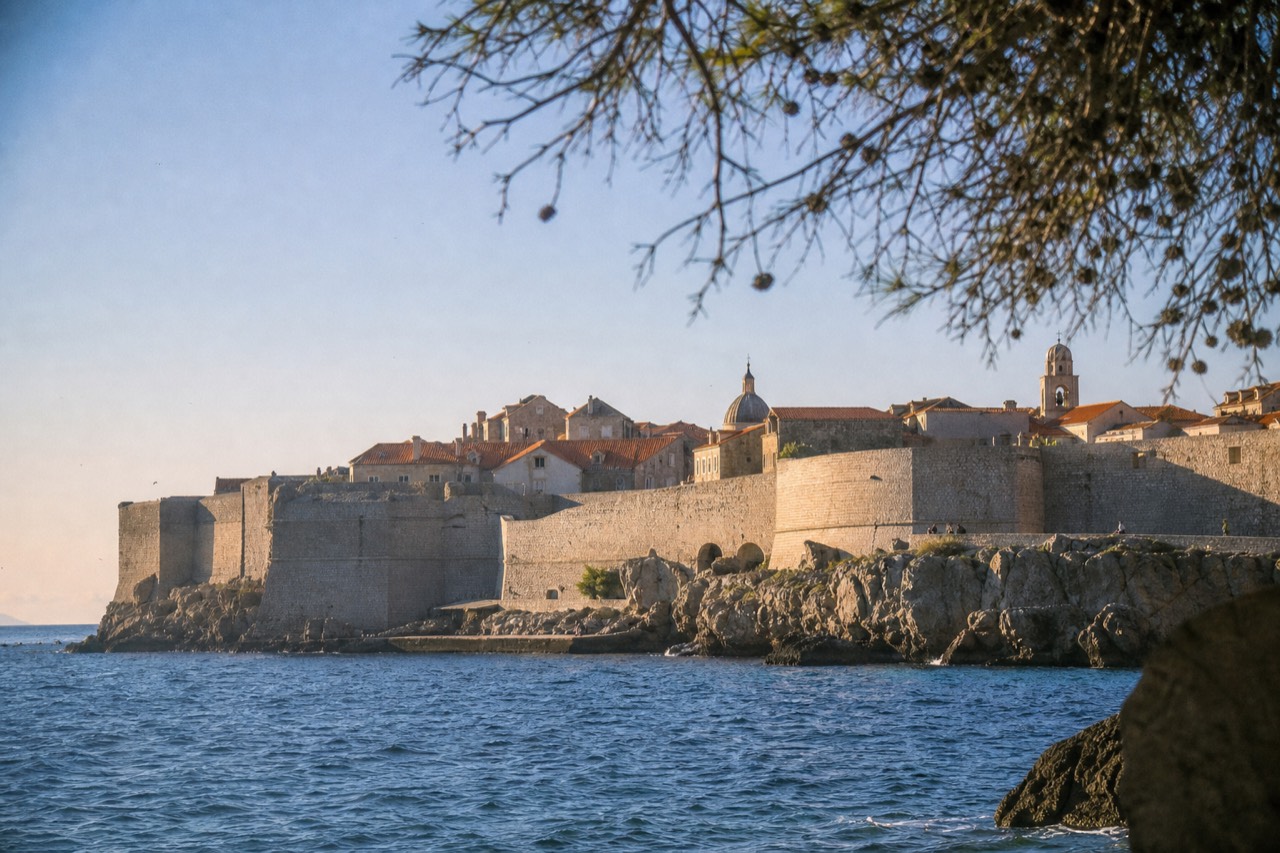
If you have one day, do not miss the city walls circuit, the Stradun and Pile Gate, Fort Lovrijenac across the bay, and a swim or a drink at the sea edge. The walls ticket is 40 euro in main season and covers Lovrijenac too, so the two unmissable sights arrive on one ticket. Everything else on this page is a bonus layered on that core.
I have been guiding travellers through this city since 2015, and the honest answer to this question has barely changed in all that time. Dubrovnik rewards depth over breadth. The Old Town is small, 24.7 hectares inside the walls, and you can cross it on foot in twenty minutes if you hurry. The mistake almost everyone makes is hurrying.
Start with the walls. The circuit is 1,940 metres long, up to 25 metres high, and thick enough on the land side, 4 to 6 metres, that it has outlasted sieges, earthquakes and a modern war. The operator's stated hours at the time of check are 08:00 to 19:30, and the single best piece of timing advice I can give is to be at the gate when it opens. The counters at the Old Town entrances update the headcount every 15 minutes, and on a September day the numbers climb from 5,419 people at 08:00 to a 7,739 peak at 10:00. Walk the walls early, then let the crowds have the Stradun while you are up above them.
The walls ticket, 40 euro for an adult in main season from 1 March to 30 November, is actually a combination: it includes Fort Lovrijenac, the Western Outer Wall and the Collection of Coins of the Republic of Ragusa. There is no family ticket, only adult and child 7 to 18 at 15 euro, with under 6 free. In December the adult price drops to 20 euro. If you want the full breakdown, the city walls tickets guide covers every option, and the Dubrovnik Pass worth-it question answers whether the 40-euro one-day pass beats the standalone ticket.
A guided walk is the cheapest way to make the stones mean something.
That is the difference between seeing Dubrovnik and understanding it.
Alex was a fantastic guide, she explained the complex history of Dubrovnik to give a lasting impression of the history of the area. Really appreciated that she aimed for shaded areas on a boiling September day. The food recommendations for after were much appreciated too! Great tour for a first experience of the old town!
Sophie
What Should You Not Miss in Dubrovnik, Croatia?
The four essentials inside the city are the walls circuit, the Stradun, Fort Lovrijenac and the view from Mount Srd. The Stradun is 298 metres long and has been the city's spine since the 1272 Statute fixed its plan. Lovrijenac stands on a 37-metre sea rock, and the cable car lifts you 367 metres to a station at 405 metres above the sea.
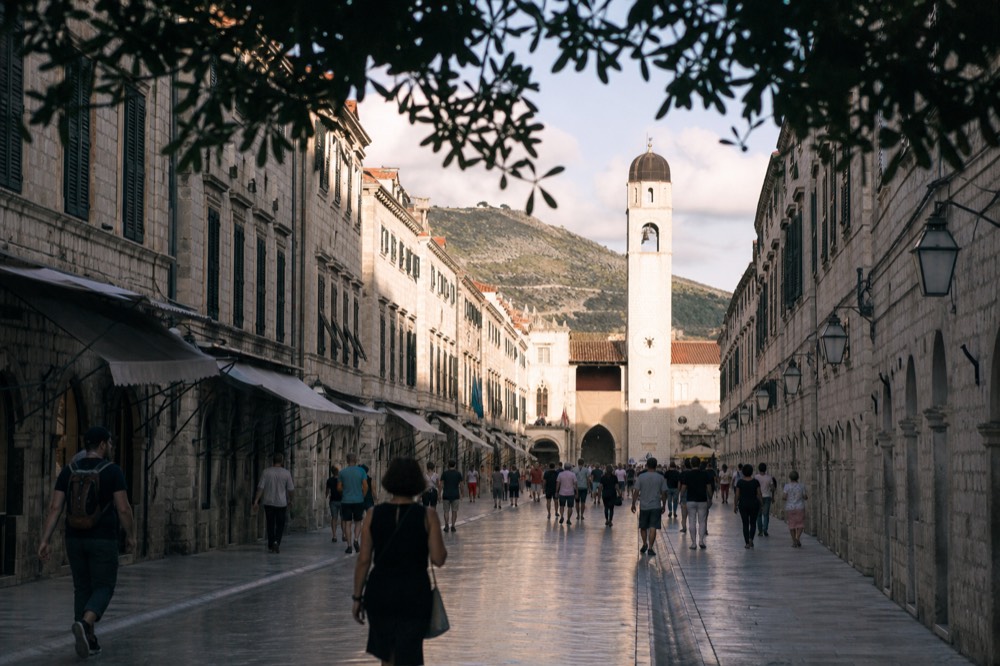
The Stradun is the one street every visitor walks, and it deserves better than a fast crossing. Limestone polished by centuries of feet, baroque facades rebuilt after the earthquake and fire, and at each end a fountain: Onofrio's at the Pile end, the bell tower and Luža square at the other. Walk it once early, before the day-trippers arrive, and once at night when the lanterns come on. The Stradun guide maps the side lanes worth turning into, and the Onofrio fountain page explains the water system that still feeds it.
Fort Lovrijenac is the most under-visited of the essentials, partly because it sits across a small bay and people assume it needs a separate expedition. It does not. The walls ticket includes it, the walk around the bay takes minutes, and from its terraces you look back at the full walled silhouette you just walked on. Game of Thrones fans know it as the Red Keep; everyone else knows it as the best photograph in the city. The Fort Lovrijenac guide covers the practical details.
The cable car is the fourth essential, and it is the one I would defend hardest. The numbers are almost comical for a three-minute ride: two cabins, 32 plus 1 passengers each, travelling 778.2 metres of track at 6.5 metres per second, rising from a lower terminal at 38.0 metres to the Mount Srd station at 405.0 metres. The operator claims a view range of up to 60 km on a clear day, and on a clear day you believe it. An adult round trip is 30 euro, a child 4 to 12 round trip is 8 euro, under 4 is free. It is closed January to March, which matters if you are planning a winter visit. The cable car guide has the full month-by-month timetable.
For the full picture, the walls themselves deserve their own numbers. The circuit that reached its shape in the 13th century was only finished in 1660 with the Bastion of St Stephen, and along its length you pass 16 towers, 3 fortresses, 6 bastions, 2 corner fortifications, 3 bulwarks with rows of turrets, 3 moats, 2 flank fortresses, 1 breakwater and 2 drawbridges. The operator, the Society of Friends of Dubrovnik Antiquities, publishes all of this on its own site, and the Old Town has been a UNESCO World Heritage property since 1979, inscribed under criteria (i), (iii) and (iv) with a 1,188.6-hectare buffer zone around the 24.7-hectare core.
| Essential | Adult price | Time to allow | Best time of day |
|---|---|---|---|
| City Walls + Lovrijenac | 40 euro main season, 20 euro December | 2 to 3 hours | 08:00 opening |
| Cable car round trip | 30 euro | 1 to 2 hours on Srd | Sunset |
| Lokrum Island | 30 euro, boat included | Half a day | Morning boats |
| Stradun and Old Town lanes | Free | 1 to 2 hours | Early or after 20:00 |
What to Not Miss in Dubrovnik?
Beyond the classics, the three experiences I would not skip are the sea from a kayak, Lokrum island, and a drink at the cliff-edge Buža bar. Lokrum costs 30 euro including the return boat, kayaking tours start around $35 per person, and Buža costs nothing to enter, only what you drink. All three put the Adriatic at the centre of the day, which is the point.
Lokrum is the easiest yes in Dubrovnik. The 30-euro ticket covers both the reserve entry and the return boat transfer, whether you ride the official boat or arrange your own transport. Boats leave the City Harbour at 09:00, then every 15 minutes from 10:00 to 18:00, and the ticket office at Luža works 08:00 to 18:00. A ticket stays usable for three days, which almost nobody knows. There is a botanical garden, a monastery, peacocks, rocky swimming spots and a small salt lake. Give it half a day, not an hour. The Lokrum island guide and the Lokrum ferry answer cover the practical questions.
Kayaking is the other sea-level essential. Paddling from a beach below the walls out toward Lokrum and the Betina Cave gives you the only view of the city that most visitors never get: from the water, looking up. Guided day and sunset tours start from $36.50 per person and carry a 4.9 rating across 4,286 reviews, and a two-hour Lokrum and Betina Cave kayak tour runs from $35.49 per person. One family's review of that tour mentions the swimming break at Betina Cave as the highlight, with water clear enough that the memory outlasts the paddle. The kayaking guide compares every operator and route.
Buža bar is the third. It is a hole in the wall on the seaward side, nothing more than tables on a cliff ledge above open water, and it is the place Dubrovnik stops feeling like a museum. Arrive an hour before sunset, order whatever is cold, and watch the light go orange over Lokrum. The Buža bar guide explains how to find the unmarked door.
If you are visiting in the swimming season, the sea itself deserves a line. The September average for this coast is about 23.6 degrees, a long-run open-water average rather than a beach thermometer, and sheltered bays run warmer: the Croatian met service's Dubrovnik buoy read 27.0 to 27.4 degrees on a September day against that 23.6 mean. August averages 25.8, October 21.0. You can swim comfortably from June into early October, which is one more reason autumn beats July here.
| Month | Average sea temperature | Swimming verdict |
|---|---|---|
| June | 22.5 degrees | Comfortable |
| July | 24.9 degrees | Warm |
| August | 25.8 degrees | Warmest month |
| September | 23.6 degrees | Warm, bays warmer still |
| October | 21.0 degrees | Refreshingly cool |
What Should You Not Miss in Croatia?
From a Dubrovnik base, the unmissable Croatia-and-beyond list is the Elaphiti islands by boat, the oysters and walls of Ston, and the border-crossing day trips to Mostar and Kotor. The most-reviewed Elaphiti cruise runs 8 hours from $59.16 per person at 4.9 across 10,312 reviews, and the Mostar and Kravica waterfall trip starts at $35 per person.
The Elaphiti cruise is the single most popular bookable day out of the city, and the numbers say why. The full-day cruise with lunch runs about 8 hours from $59.16 per person, rated 4.9 across 10,312 reviews, with a fish picnic lunch and drinks on a boat that keeps to the shade. One review calls it a wonderful way to get out of the heat and the crowds for a day, with lunch described as phenomenal and generous. If you want the alternative, a Regina Maris cruise runs from $74.58 per person at 4.8 across 6,751 reviews, and a luxury pirate-ship version on the Karaka sails from $65 per person. The Elaphiti islands guide and the boat tours guide compare them all.
Ston, on the Pelješac peninsula, is the food day trip. Its walls are the longest fortification system in this part of Europe, and the oyster farms below them produce the shellfish that appears on every serious table in Dubrovnik. A dedicated oyster, mussel and wine tasting tour in Ston with lunch runs from $157 per person, rated 4.9 across 111 reviews. The cheaper route is to go independently and buy oysters at the source, which the Ston oysters guide explains.
Mostar and Kotor are the two border-crossing classics, and both are genuinely worth the early start. The Mostar and Kravica waterfall day trip starts at $35 per person and carries a 4.6 rating across 10,019 reviews, one of the most-reviewed products in the whole region. A reviewer's advice from a recent trip: bring euros, expect a long day, and know that the guide makes the border formalities painless. The Montenegro day trip starts at $58 per person at 4.4 across 5,611 reviews, and one guest noted the border crossing in September took only 15 minutes. The Mostar day trip guide and the Kotor day trip guide cover both borders in detail.
Wine belongs on the Croatia list too. The wine tasting guide and the Plavac Mali page explain what to order when the list is all Croatian.
| Day trip | Starts from | Duration | Rating |
|---|---|---|---|
| Elaphiti islands cruise with lunch | $59.16 | About 8 hours | 4.9 across 10,312 reviews |
| Mostar and Kravica waterfalls | $35 | Full day | 4.6 across 10,019 reviews |
| Montenegro day trip | $58 | Full day | 4.4 across 5,611 reviews |
What Can't You Miss in Dubrovnik?
The things you cannot miss are the ones that cost nothing: sunset from the water or the walls, the evening Stradun after the day-trippers leave, and a free pay-what-you-want walking tour if the budget is tight. Three free walks run on GuruWalk, including a Game of Thrones and history walk rated 4.74 across 444 reviews. You tip what you think it was worth, nothing more.
Sunset is a daily event here and the city stages it well. The cable car runs until midnight in June, July and August and until 23:00 in the second half of September, which makes a summit sunset entirely practical. A panoramic sunset cruise on the Karaka, adults only, runs 1.5 hours from $59 per person at 4.8 across 833 reviews, and a shorter Cavtat sunset cruise with a cold platter and unlimited drinks starts at $23.66 per person. The sunset spots guide lists the free viewpoints, including the one above Buža that costs nothing at all.
Food is the other unmissable, and I say that as someone who has eaten his way down every lane off the Stradun. The signature dishes are black cuttlefish risotto, green pasta with a truffle-and-prosciutto sauce, and anything grilled over olive wood in a konoba. A three-hour food and drink walking tour with a local guide runs from $165.64 per person and is rated a perfect 5 across 704 reviews; one guest describes a guide full of stories, generous food, and wine at every stop. The what to eat guide and the food tour guide cover both the dishes and the tour.
If the budget is thin, the free walks are real and good. On GuruWalk, the Ancient Old City tour runs 1 hour 45 minutes and is rated 4.87 across 2,242 reviews, the Game of Thrones and history walk runs 1 hour 30 minutes at 4.74 across 444 reviews, and the Magical Dubrovnik Nights history and legends walk runs 1 hour 45 minutes at 4.9 across 288 reviews. They are pay-what-you-want, and the guides earn their tips. The free walking tour guide compares all three against the paid options.
One closing thought on timing, because it changes everything above. September and October are the busiest cruise months, ahead of July and August, with 101,246 and 100,132 cruise passengers in those two months of 2025. The sea is still 23.6 degrees on average in September, the cable car runs late, and the walls open at 08:00. Come in autumn, walk early, swim in the afternoon, and you will not miss a thing. For everything the city offers beyond this shortlist, the Things to Do in Dubrovnik homepage keeps the full catalogue.
Common Questions About What Not to Miss in Dubrovnik
What should I not miss in Dubrovnik?
The city walls circuit, the Stradun, Fort Lovrijenac and the Mount Srd cable car are the four essentials. Add a swim at Lokrum or a kayak below the walls if you have a second day. The 40-euro walls ticket in main season includes Lovrijenac, so two of the four arrive together.
How Many Days Do I Need to See Dubrovnik?
Two full days cover the essentials without rushing: the walls and Old Town on day one, the cable car, Lokrum or a boat trip on day two. A third day opens up an Elaphiti cruise or a Mostar day trip. The how many days guide breaks down one-day through four-day plans.
Is the Dubrovnik City Walls Walk Worth It?
Yes. The 1,940-metre circuit is the single best experience in the city, and the 40-euro main-season adult ticket also includes Fort Lovrijenac, the Western Outer Wall and the coin collection. Walk it at the 08:00 opening to stay ahead of the crowds, which peak around 10:00.
What Is the Best Month to Visit Dubrovnik?
September and October combine warm sea, 23.6 and 21.0 degrees on average, late cable car hours and the lowest heat. Be aware they are also the two busiest cruise months of the year, ahead of July and August, so book early and walk the walls at opening time.
Can You Visit Dubrovnik on a Budget?
Yes. The Stradun, the lanes, the viewpoints and sunset from the cliffs cost nothing. Three pay-what-you-want walking tours run on GuruWalk, and the December walls ticket drops to 20 euro. The budget guide and the free things to do guide list the rest.