What Is the Shortest Ferry Ride From Italy to Croatia?
The shortest ferry crossings from Italy to Croatia are the northern Adriatic routes into Istria, while Dubrovnik has no direct ferry from Italy at all. Here is how the routes, costs and alternatives actually compare.
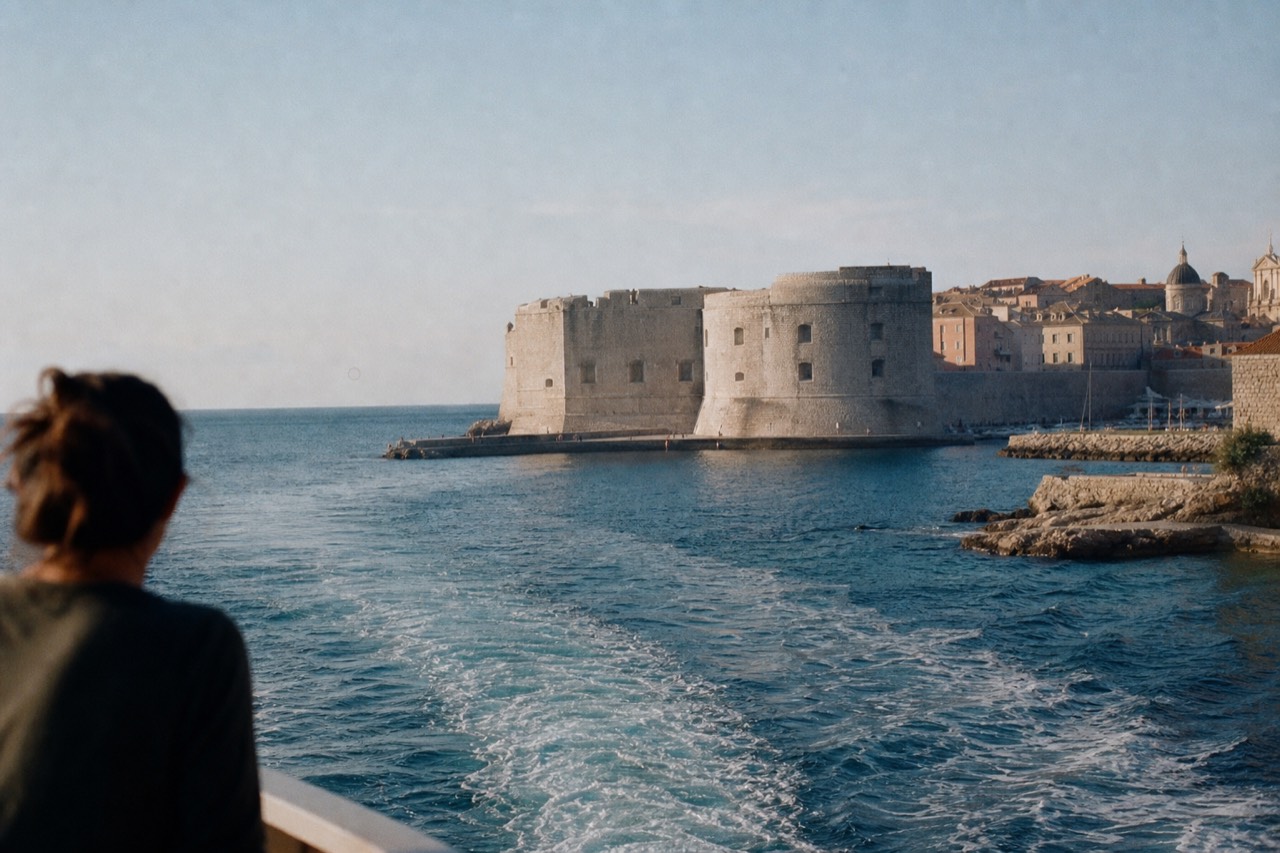
What Is the Shortest Ferry Ride From Italy to Croatia?
The shortest ferry crossings from Italy to Croatia are the northern routes across the top of the Adriatic, from Italian ports such as Trieste and Venice to the Istrian coast and the Kvarner region. The further south you go, the longer the crossing becomes, and the fewer direct options exist. No ferry from Italy calls at Dubrovnik.
The geography drives everything here. Italy's heel and Croatia's Dalmatian islands look close on a map, but the regular international ferry network hugs the northern Adriatic, where the sea between the two coastlines is at its narrowest and the crossing distances are at their shortest. Crossings into Istria and the Kvarner gulf are the quick hops. Crossings aimed further south, such as the routes from Ancona and further down the Italian coast toward Split, involve much longer sailings and mostly run overnight or as long day crossings.
That asymmetry surprises a lot of travellers planning a two-country trip. People imagine picking any two points on opposite shores and finding a boat between them. In practice you choose from a small set of corridors: the far north into Istria, the mid-Adriatic routes into Zadar and Split, and almost nothing else. Dubrovnik, right at the southern end of the Croatian coast, sits outside the international ferry network entirely, which is the single most useful thing to know before you plan an Italy-plus-Dubrovnik itinerary.
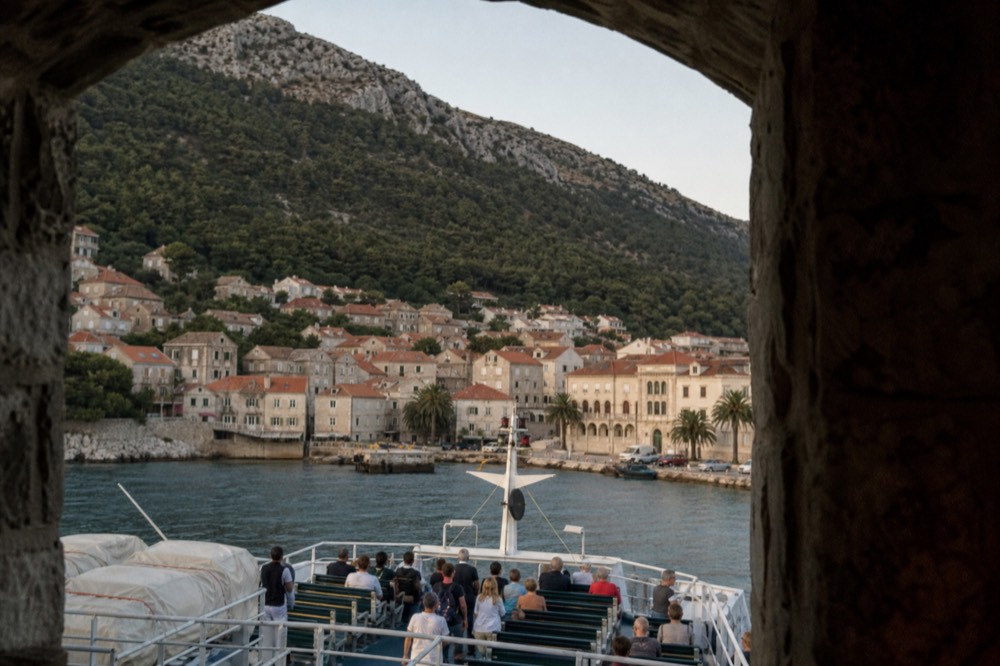
Here is the shape of the network in plain terms, without sailing times, because schedules and durations change by season and I will not quote a number I cannot stand behind:
| Italian departure side | Croatian arrival side | Character of the crossing |
|---|---|---|
| Trieste and Venice area | Istrian ports such as Pula, Rovinj and Porec | The shortest hops on the whole map, seasonal, popular with cyclists and city-breakers |
| Northern and mid-Adriatic ports | Kvarner region and Zadar area | Short to medium crossings, a mix of seasonal foot-passenger and car-carrying ferries |
| Ancona and the central Italian coast | Split | Long crossings, often overnight, the main car-ferry corridor into central Dalmatia |
| Any Italian port | Dubrovnik | No regular direct international ferry exists |
Seasonality matters as much as distance. The quick Istrian hops in particular are heavily summer-weighted: they multiply in July and August and thin out or disappear entirely in the shoulder months and winter. If you are travelling outside high summer, check the operator's live listing for the specific week you are travelling rather than trusting a route that existed in August. A route that runs three times a day in peak season may run twice a week in June and not at all from November to spring, and a missed connection in the north can cascade into a lost night somewhere you never planned to sleep.
There is also a practical difference between foot-passenger and vehicle travel that the map does not show. The short northern hops are built around people, bicycles and the occasional motorbike, and loading a car onto them is often impossible or requires booking far ahead. The long central routes are the opposite: they exist largely because of cars, motorhomes and freight, and the foot-passenger experience on them is closer to a mini cruise, with cabins, reclining seats and restaurants on board. Knowing which kind of crossing you are buying changes what you pack, when you board and whether you sleep aboard or arrive the same day.
If your final destination is Dubrovnik rather than Istria or Split, the practical move is usually to ferry into the north or centre, then travel down the Croatian coast, and to budget your Dubrovnik time around the things that genuinely need a half day. Once you arrive, a guided orientation saves a surprising amount of wasted walking. Our Italy to Croatia ferry routes guide covers the corridor in detail, and the getting around Dubrovnik overview picks up the story once you are on the Croatian side.
Is There a Ferry From Italy to Dubrovnik, Croatia?
No. There is no regular direct ferry from any Italian port to Dubrovnik. Travellers combining Italy and Dubrovnik either fly, take a long ferry into a northern or central Croatian port and continue overland, or sail into a port such as Split and travel down the coast. The sea route to Dubrovnik from Italy simply does not exist as a scheduled product.
This is the fact that breaks the most itineraries, so it is worth being blunt about it. Dubrovnik's ferry terminal handles domestic routes along the Croatian coast and to nearby islands, plus seasonal connections within the region, but the international Italy to Croatia ferry network stops well north of the city. Anyone who has seen Dubrovnik from the water, with the walls rising straight out of the sea, tends to assume a boat must arrive there from everywhere. The walls are real: 1,940 metres of circuit, up to 25 metres high in places, encircling a UNESCO-listed old core of 24.7 hectares, inscribed in 1979 under criteria (i), (iii) and (iv). The Italian ferry is not.
The workarounds are straightforward once you accept the geometry. Fly into Dubrovnik directly, which is what most short-trip visitors do. Or ferry from Italy into the north, treat the ride down the Croatian coast as part of the holiday, and arrive in Dubrovnik by bus, car or domestic coastal ferry. That second option is genuinely better than it sounds: the drive down the Adriatic coast road, with a stop somewhere like Ston on the Pelješac peninsula, is one of the nicer day-journeys in the region, and the Ston and Pelješac guide explains why the walls and oysters there are worth the detour.
A third option deserves a mention because it fools people every year: arriving by sea on a cruise ship. Dubrovnik is a major cruise port, and plenty of visitors do see the city from the water, but they arrive on a vessel that calls for a day, not on a ferry they boarded in Italy with a rucksack. The distinction matters for planning, because cruise arrivals are managed by the Port Authority under a daily passenger limit, while ferry and flight arrivals are simply your own problem to schedule. The cruise port guide covers what a sea arrival actually looks like in practice.
Once you are in the city, the question stops being how you arrived and becomes how you get your bearings fastest. The E-Tuk Tuk Tour in Dubrovnik is built exactly for that arrival day: about 1 hour 45 minutes in an open electric tuk-tuk, rated 5 across 1,799 reviews, from $59.24 per person. It covers the panorama points above the town, the kind of viewpoints that would otherwise cost you a hot uphill walk on your first afternoon, and it does it without you needing to have figured out the bus map yet.
The Port Authority's own cruise-destination page explains the arrival management behind those figures, including the daily passenger limits, at portdubrovnik.hr.
What Is the Cheapest Way to Get From Italy to Croatia?
For most travellers the cheapest way from Italy to Croatia is a budget flight into a Croatian airport, or a bus across the land border in the north. The ferry is rarely the cheapest option once you count cabin and vehicle costs, especially on the longer central Adriatic crossings, though the short Istrian hops can compete on price in season.
Cost comparisons across this route are messy because the options are so different in kind. A ferry ticket for a foot passenger on a short northern crossing is a different product from an overnight cabin on a car ferry to Split, and a budget airline seat is a different product again, priced by demand on the day you book. So treat the table below as a planning map of where the value usually sits, not as a price list. Check the operator's live listing or the airline for the actual number on your date. Everything else covered here is indexed on Things to Do in Dubrovnik.
| Option | Usually cheapest when | Trade-off |
|---|---|---|
| Budget flight, Italy to Croatia | Booked ahead, travelling light | Airport transfers at both ends; you see nothing of the coast |
| Bus across the northern land border | Travelling from Trieste or Venice toward Istria | Slow, but very cheap and no sea legs needed |
| Short Istrian ferry hop | In season, on foot, booked early | Seasonal; can sell out in peak weeks |
| Long ferry to Split with a car | When you need the car in Croatia | Cabin plus vehicle fees stack up; rarely the budget choice |
| Ferry plus domestic travel to Dubrovnik | When the journey itself is the point | The most expensive and slowest way to reach Dubrovnik from Italy |
A few hidden costs deserve a line of their own, because they are what turn a "cheap" crossing into an expensive one. On the long overnight routes the advertised deck fare is not the sleeping fare: a cabin or a reserved reclining seat costs extra, and arriving exhausted after a night in a chair is a real price even when the ticket was not. On the vehicle routes, the car fee is charged in addition to every passenger fare, and fuel on the Croatian side is not free either. And on any route, the last transfer of the day, a taxi from a Croatian port to a hotel booked in the wrong town, can quietly cost more than the crossing itself. Budget for the door-to-door journey, not the sailing.
One honest note on the "cheapest" framing: if your real destination is Dubrovnik, the cheapest answer is almost always to fly there directly rather than to route through the ferry network at all. The Croatian Bureau of Statistics counted about 4.2 million overnight stays in the Dubrovnik destination in 2025, and the vast majority of those visitors did not arrive by international ferry, because they could not. The statistics release that ranks Dubrovnik and Rovinj joint first is published by the Croatian Bureau of Statistics.
Is Istria Part of Italy or Croatia?
Istria is part of Croatia, with a small slice of the peninsula in Slovenia and a sliver in Italy around Trieste. Its culture is genuinely bilingual, with Italian spoken alongside Croatian in many towns, which is exactly why the question gets asked so often. The ferry routes from Italy land there because it is the closest Croatian coast, not because it is Italian.
The confusion is understandable and it is not ignorant. Istria's towns carry Italian and Croatian names side by side, menus often run in both languages, and the architecture of places like Rovinj owes an obvious debt to the Venetian world across the water. The peninsula spent centuries under Venetian and then Habsburg rule before the borders of the modern states settled into the shape you see now. None of that makes it Italian today. It is Croatian territory, and the Italian-speaking community there is a protected minority with its own schools and institutions, which is a point of local pride rather than ambiguity.
For a ferry planner, the practical takeaway is simpler than the history: Istria is the closest Croatian landfall to Italy, so it hosts the shortest crossings, and it is a destination in its own right rather than a mere transit zone. Rovinj, jointly first with Dubrovnik among Croatian destinations by overnight stays in 2025, is an Istrian town. Travellers who hop the northern ferry expecting a mere waypoint routinely end up staying a day or two longer than planned, and that is a good outcome, not a mistake.
It also changes what you should pack for the crossing itself. Because the Istrian ferries are short, seasonal and foot-passenger friendly, the classic move is to travel light, land in Rovinj or Porec, spend a night or two, and then continue south by bus or train-free coastal transport toward Zadar and Split. That is the itinerary shape the ferry map was built for, and it is a genuinely pleasant one. What it is not is a shortcut to Dubrovnik: from Istria you are still looking at the better part of a long travel day, or an overnight stop, before you reach the southern coast.
Is Croatia Prettier Than Italy?
No honest answer exists, because the two coastlines are beautiful in different ways. Croatia offers a dramatic, mountain-meets-sea karst coastline, walled medieval towns and extraordinarily clear water, while Italy offers greater variety, richer art cities and the depth that comes with scale. Most travellers who love one also love the other.
I will say this much as a Dubrovnik-based opinion: the Croatian coast does one thing Italy cannot, which is compress the drama. In Dubrovnik you can stand on a 37-metre sea rock at Fort Lovrijenac in the morning, walk the 298 metres of the Stradun at midday, and be looking down on the whole ensemble from Mount Srd in the afternoon, with the cable car covering the 367 metres of elevation in 3 minutes 30 seconds. Italy has individual views to match any of those, but few towns pack them into a walkable footprint like this one.
The water question is less subjective than the beauty question. The long-run September average for this coast is about 23.6 degrees, from a NOAA 1991 to 2020 open-water climatology, and August averages 25.8, figures that hold up against an independent EU dataset to within about a degree. Those are open-sea averages rather than beach readings, and sheltered bays run warmer, but they tell you the swimming season on the Croatian side of the Adriatic is real and long. The Dubrovnik Tourist Board's own pages on the city's landmarks, including the fortress on its sea rock, are at experiencedubrovnik.com.
Where the comparison gets interesting is the crowd picture, and here the data runs against the cliché. The received wisdom says the Mediterranean is unbearable in July and August and quiet in autumn, and in Dubrovnik the sea-borne arrivals actually peak in September and October, ahead of both midsummer months. The city's counting system, six counters at the Old Town entrances updating every 15 minutes, exists precisely because the pressure is not where people assume it is. If your dream is an empty Stradun, the month matters more than the country, and the Dubrovnik in October guide is the honest place to start.
If you are combining both countries, the fairest verdict is this: use the ferry to see the Istrian and Kvarner coast, which is the part of Croatia Italy most nearly touches, and give Dubrovnik its own dedicated days at the end. For more on pairing the two, see our site's full coverage of Things to Do in Dubrovnik and the best time to visit guide.
For arrival-day orientation without the climb, the Hop-On Hop-Off Yellow Bus Tour with audio guide is the other strong option: about 1 hour 30 minutes for the full circuit, rated 4.9 across 1,147 reviews, from $35.46 per person. It is a good fit if you prefer to sit and listen rather than ride with a guide, and it pairs well with a later walk of the walls.
And if you have already decided to make the journey down the coast rather than fly, the day trips from Dubrovnik are where the ferry-free itinerary pays off. The Ston and Korcula day trip with wine tasting is the natural one, about 11 hours, from $81.69 per person, rated 3.8 across 131 reviews, and it stitches together the walls of Ston, an island and a tasting glass in a single day.
Common Questions About Ferries From Italy to Croatia
What is the shortest ferry ride from Italy to Croatia?
The shortest crossings are the northern Adriatic routes from the Trieste and Venice area into Istrian ports such as Pula, Rovinj and Porec. These are quick seasonal hops and the closest thing to a direct link between the two coastlines. Further south the crossings get longer, and no ferry from Italy reaches Dubrovnik.
Is there a ferry from italy to dubrovnik, croatia?
No regular direct ferry runs from any Italian port to Dubrovnik. You can fly in, or ferry into the north or centre of Croatia and continue to Dubrovnik by bus, car or domestic coastal ferry.
What is the cheapest way to get from italy to croatia?
Usually a budget flight into a Croatian airport, or a bus across the northern land border. Foot-passenger tickets on the short Istrian ferries can compete in season, but the long car-ferry crossings with cabins are rarely the cheapest route.
Is istria part of italy or croatia?
Istria is part of Croatia, with small portions in Slovenia and Italy. Its Italian-speaking minority and Venetian-flavoured towns explain the confusion, but the peninsula is Croatian territory and hosts the shortest ferry crossings from Italy.
Can you take a car on the ferry from Italy to Croatia?
Yes, on the longer central Adriatic routes toward ports such as Split, which are the main car-ferry corridors. The short Istrian hops are more foot-passenger oriented and their vehicle capacity is limited, so check the operator's live listing for your dates.
Do the ferries from Italy to Croatia run all year?
The short northern routes are strongly seasonal, with the most sailings in July and August and reduced or suspended service outside the warm months. The long central routes toward Split run more of the year, but frequency still drops outside summer. Always check the operator's live listing for your specific week.