What Is the Best Kept Secret in Dubrovnik?
The best kept secret in Dubrovnik is Buža Bar, a cliff-edge drink spot outside the city walls with no sign and a hole-in-the-wall entrance. Here is how to find it, plus what not to do, when to avoid the city, and whether the beaches are any good.
What Is the Best Kept Secret in Dubrovnik?
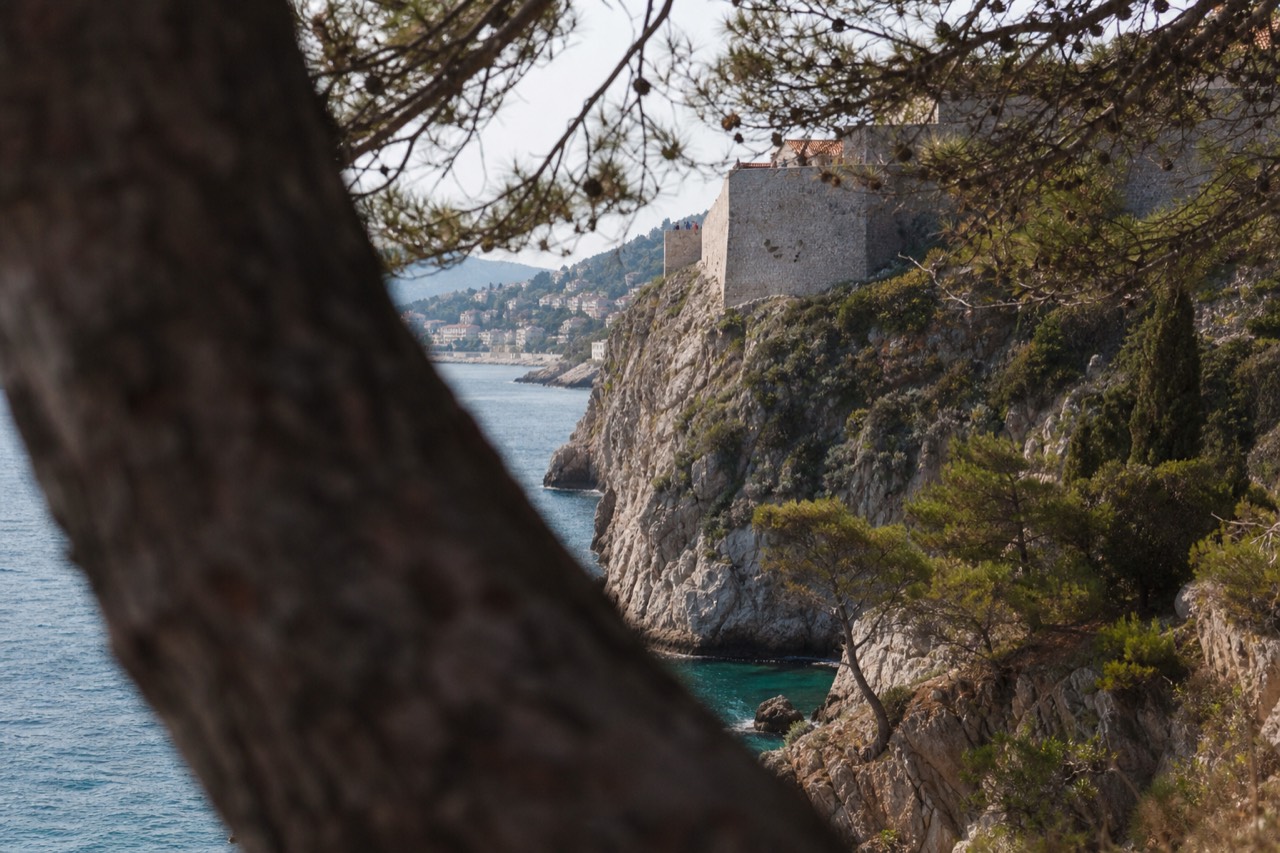
The best kept secret in Dubrovnik is Buža Bar, a tiny cliff-edge bar perched on the rocks outside the southern city walls. You enter through an unmarked doorway in the wall itself, found by walking the lane behind the Franciscan Monastery toward the sea and looking for a plain hole in the stone. The terrace sits above open water, where from the railing you look straight down at swimmers and the island of Lokrum beyond.
I have sent more first-time visitors down that unmarked stairway than to any single ticketed sight in the city, and the reaction is always the same delight at having found something the guidebooks compress into a single line. The bar is genuinely hard to stumble into by accident, which is exactly why it has kept its word-of-mouth character even as Dubrovnik recorded about 4.2 million overnight stays in 2025, sharing first place among Croatian destinations with Rovinj. The name helps too: "buža" simply means hole in the local dialect, and locals have called it that for as long as anyone remembers, so even the name is an inside joke.
The full story of the bar, how to find the doorway and what to order once you are through it, is covered in the site's dedicated guide to Buža Bar and the cliff terrace. The short version for anyone planning a day around it: go late afternoon, after the walls circuit, when the terrace tilts toward the setting sun and the day-trip crowds have started flowing back toward the cruise port. Take cash for small orders, take nothing you would hate to carry down the stone steps, and expect the terrace to close in rough weather because it is, quite literally, built on a cliff.
What makes Buža the honest answer to this question, rather than just a photogenic one, is that it rewards the two things Dubrovnik otherwise makes difficult: walking slowly and looking sideways. The city's headline sights, the walls, the Stradun, the Rector's Palace, are all front-facing and ticketed. The bar is none of those things. It costs nothing to enter, the prices are ordinary terrace prices, and the view it sells, the walls from the outside, is the one view most visitors never actually get, because they spend their whole day looking outward from the top rather than back up from below.
There is a second layer to the secret, and it is timing. The same terrace that feels private at 18:00 feels like a queue at 13:00 on a day when two cruise ships are in port. Dubrovnik's official visitor counting system, six counters at every Old Town entrance updating a headcount every 15 minutes, recorded a real curve on 8 September 2026 that shows the shape of a day: 1,200 people inside the walls at 04:00, 3,139 at 07:00, 5,419 at 08:00, 7,297 at 09:00, a 7,739 peak at 10:00, then 7,205 at 11:00. The official carrying capacity for the Old Town, from the UNESCO carrying-capacity assessment, is 11,275 people. Before 08:00 and after 18:00, the city is a different place, and the secret spots behave like secret spots again.
If you want the walls and the Old Town explained properly before you head to the cliff, the natural pairing is a combined walk. The Old Town and walls combo walking tour covers both in one 3 hours 30 minutes outing, from $50.94 per person, Check availability.
What Is the Secret Cliff Bar in Dubrovnik?
The secret cliff bar in Dubrovnik is Buža Bar, sometimes called Buža II to distinguish it from its slightly larger sibling a few hundred metres east along the walls. Both sit on platforms cut into the seaward cliff below the fortifications, and both are reached through unmarked doorways in the wall. Locals have drunk on these rocks for generations, and the current bars are the formalised version of a much older habit.
The two bars are close enough that you can walk between them in a few minutes along the outside of the walls, and they divide the day between them. The western one, the one most people mean when they say "the hole in the wall", catches the afternoon and evening sun and is the sunset choice. The eastern one catches morning light and is calmer before noon. Neither takes reservations, neither has any indoor seating worth mentioning, and neither is a place you plan a full meal around. This is a drink, a railing and the sea.
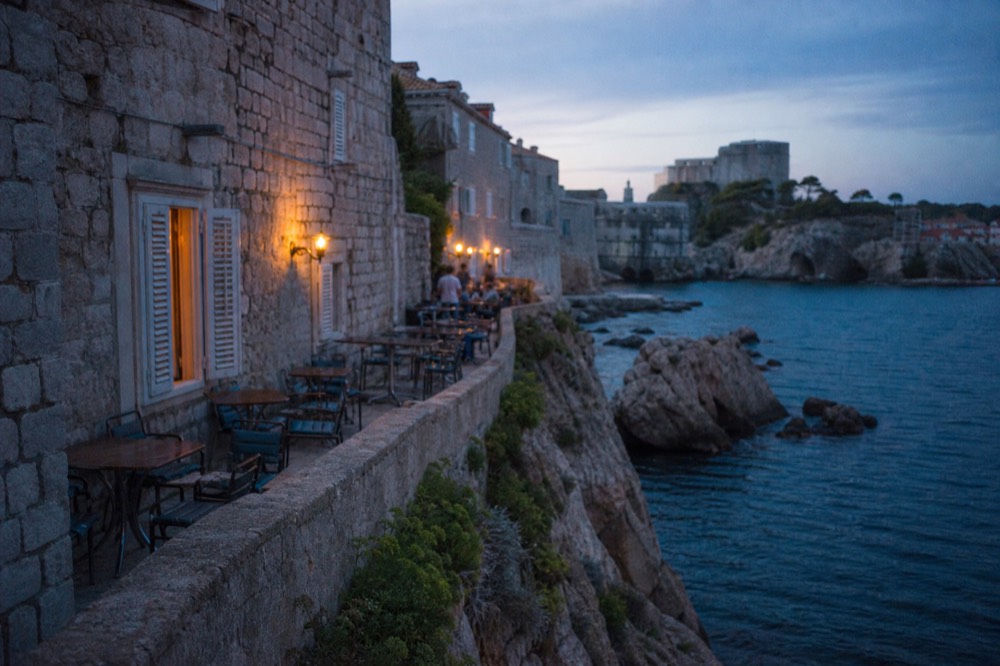
Finding the doorway is the whole game, so here is the route in plain words. From the Stradun, the 298-metre limestone street that forms the city's spine, walk west to the Franciscan Monastery end. Turn right into the narrow lane that runs along the inside of the wall, follow it as it bends toward the sea, and watch the wall on your left for a plain opening with a small sign. Step through and you are outside the city, on a cliff, with a drink in hand. The whole detour from the Stradun takes under ten minutes at a stroll, which is part of the charm: the busiest street in Dubrovnik is a two-minute walk from a terrace that seats a few dozen people.
A few practical notes that make the visit better. The terraces are genuinely on the cliff, so the steps down are uneven stone and not stroller-friendly. Swimming from the rocks below is a local tradition, and on hot days you will see people jumping from the lower ledges, but the rocks are sharp underfoot and the sea is deep immediately. In August the long-run average sea temperature on this coast is 25.8 degrees, from the NOAA OISST 1991 to 2020 climatology, and sheltered spots along the cliff can read warmer still on a still afternoon, so a towel is not a silly thing to carry. And if the bura wind is blowing, expect the terraces to shut early, because a north-easterly gust on an exposed cliff platform is no joke.
The bar also answers a question a lot of visitors ask after their first day: is there anywhere in Dubrovnik that is not polished to a museum sheen? Buža is scruffy in the best way, plastic chairs, a hand-painted sign, staff who have seen every weather the Adriatic can produce. It is the closest thing the Old Town has to a local living room, and it earns its place as the city's best kept secret precisely because nobody has tried to turn it into anything else.
What Not to Do in Dubrovnik?
The main things not to do in Dubrovnik are: walk the walls at midday in high summer, eat on the Stradun's first row of terrace restaurants, drive into the Old Town expecting to park, buy a walls ticket in December when a pass would cost the same in main season, and treat the free pay-what-you-want walking tours as genuinely free. Each mistake costs money, comfort or both, and each is easy to avoid.
The walls timing mistake is the most common. The circuit is 1,940 metres long, up to 25 metres high in places, and almost entirely unshaded limestone, and the operator's stated hours run 08:00 to 19:30. Walking it at 13:00 in July, when the air is at its hottest and the stone radiates heat upward, is miserable and occasionally dangerous. Walk at 08:00 sharp, when the counter data shows the city still holds 5,419 people rather than the 7,739 peak at 10:00, or after 17:00 when the light turns golden and the queue at the Pile gate entrance disappears. The adult ticket is 40 euro in main season, 1 March to 30 November, and 20 euro in December, per the operator's own webshop at citywallsdubrovnik.hr.
The eating mistake is simple economics. The first row of terraces facing the Stradun pays the highest rents in the city and prices accordingly, and the food is aimed at people who will never come back. Walk two streets in any direction, into Prijeko or up toward the cathedral, and the same meal costs meaningfully less. The site's guide to where locals actually eat covers the specifics, but the rule of thumb holds everywhere in the old core: every additional metre of view adds to the bill.
The free-tour mistake is an honesty issue rather than a money trap. Dubrovnik has three genuinely free, pay-what-you-want walks running on GuruWalk, including a 1 hour 45 minute old city walk rated 4.87 across 2,242 reviews. They are excellent value, but the guides work for tips alone, so budget the tip as the real price. Treating the walk as a freebie and slipping away at the end is the single fastest way to sour a local's day, and this is a small city of 41,562 people at the 2021 census, where the person you stiffed may well be pouring your wine tomorrow.
| Common mistake | What it costs | The fix |
|---|---|---|
| Walking the walls at midday in July or August | Heat, crowds, a 40 euro adult ticket spent in discomfort | Start at 08:00 or after 17:00 |
| Eating on the Stradun front row | A premium on every dish and drink | Move two streets off the main street |
| Driving to the Old Town | Traffic and scarce, pricey parking | Park in Gruž or at the Dubrovnik bus station and walk or bus in |
| Skipping the tip on a free GuruWalk tour | The guide earns nothing for two hours | Tip as you would pay any tour |
| Only seeing the Old Town | Missing Lokrum, Lapad and the Elaphiti islands entirely | Give the city at least one island day |
One more mistake worth naming separately: arriving without checking the cruise schedule. The Port Authority limits cruise passengers to 8,000 a day in most cases, and of 243 cruise days a year only 18 exceed that number, but those 18 days land mostly in the shoulder season, not August. A quiet-looking Tuesday in late September can carry more cruise passengers than a Saturday in July, and there is no way to tell from the weather.
When to Avoid Dubrovnik?
Avoid Dubrovnik in the peak cruise windows of September and October, when passenger numbers hit their yearly maximum, and avoid midday in July and August, when heat and crowds stack on top of each other. Cruise passengers peaked in September 2025 at 101,246 and October at 100,132, above July's 96,072 and August's 87,385. The busiest days are not the ones most visitors expect.
That September and October peak surprises people because the marketing story of the Mediterranean is that August is the crowded month. In Dubrovnik it is not, at least not for cruise traffic. The full-year 2025 figure was 625,257 cruise passengers, up from 582,499 in 2024, and 461 cruise calls are scheduled for 2026. The remaining 2026 season schedule alone holds 149 ship calls across 80 cruise days, and the busiest single days in that window are 6 October with 2 ships and up to 5,798 passengers by capacity, 29 September with 2 and 5,675, 30 September with 3 and 5,536, and 15 September with 4 and 5,273. These are ship capacity figures, not people who actually walk ashore, but even a fraction of 5,798 arriving through Pile Gate between 09:00 and 11:00 changes the texture of the morning.
| Month, 2025 | Cruise passengers | What it means for a visit |
|---|---|---|
| July | 96,072 | Hot and busy, but not the cruise peak |
| August | 87,385 | Hottest month, fewer cruise calls than September |
| September | 101,246 | The cruise peak of the whole year |
| October | 100,132 | Second busiest cruise month, milder air |
| November | 28,480 | Quiet, some closures, sea still swimmable early in the month |
The heat is the other avoid-factor. July and August air temperatures push the walls circuit into an endurance event, and the sea, whose long-run August average on this coast is 25.8 degrees per the NOAA OISST 1991 to 2020 climatology, is at its warmest but also at its most crowded at every beach and swimming spot. If heat is your constraint, the shoulder months win: the September average is about 23.6 degrees, October about 21.0, and the crowds thin after the cruise peak passes. The Port Authority's own statistics page at portdubrovnik.hr publishes the monthly figures, and checking it before you book is the single highest-value ten minutes of Dubrovnik trip planning.
The quietest workable window for most travellers is early November through March, with real trade-offs: the cable car closes January to March, the Western Outer Wall section of the fortifications closes December through February, and the December walls ticket drops to 20 euro with no Dubrovnik Pass tier on sale at all. But the city in November is soft-lit, half-empty and dramatically cheaper, and the bars along the cliff, the ones that stay open, feel like they belong to the residents again.
For a fuller month-by-month breakdown, the site's guide to the best time to visit Dubrovnik weighs weather, prices and crowds together. The short version: if you can only travel in the cruise-peak weeks, plan your days against the counter curve, early mornings for the walls, midday on the water or on Lokrum, evenings on the cliff terrace, and the crowds stop being the story.
Is Dubrovnik Good for Beaches?
Dubrovnik is good for swimming and sea access rather than for classic sandy beaches. The best-known beaches, Banje near Ploče and Lapad Bay on the peninsula, are pebble and shingle, and the most memorable swims in and around the city are off rocks, platforms and cliff ledges, including the ledges below Buža Bar itself. The sea is warm for a long season and swimmable from May into October.
Start with the honest framing. If your mental image of a beach is soft sand, Dubrovnik will disappoint: almost everything here is stone or smooth pebble, and water shoes earn their price on the first day. If your image is clear water a few steps from a historic city, it delivers better than almost anywhere on the Mediterranean. The long-run sea temperature averages from the NOAA OISST 1991 to 2020 climatology tell the season's shape: 18.6 degrees in May, 22.5 in June, 24.9 in July, 25.8 in August, 23.6 in September and 21.0 in October. Those are open-water grid-cell averages rather than beach readings, and sheltered bays run warmer, the Croatian met service's Dubrovnik buoy read 27.0 to 27.4 degrees on 8 September 2026 against that 23.6 September mean, but the ranking of the months is reliable.
Banje Beach, just below the Ploče side of the Old Town, is the postcard option, with the walls and Lovrijenac in the frame behind you as you swim. It is also the most crowded and the most expensive for sunbeds. Lapad Bay, a short bus ride west, is the family workhorse: a shallow, sheltered crescent with pine shade, cafés and a promenade, and it is where a lot of the city's actual residents swim. Further out, Sveti Jakov below the Srd slopes is the local favourite that visitors rarely walk down to, a long stairway to a small cove with the Old Town view from a distance. The site's guide to the best beaches in Dubrovnik covers all of them, including the practicalities.
The real beach answer, though, is the same as the secret answer: the best swimming near Dubrovnik is not on a beach at all. It is off the rocks below the walls, off the cliffs of Lokrum, where a 30 euro ticket covers both the reserve entry and the return boat transfer, with boats leaving the City Harbour at 09:00 and then every 15 minutes from 10:00 to 18:00, and off the island beaches of the Elaphiti chain, where the sand at Šunj on Lopud is the genuine sandy exception to the city's pebble rule. A full-day Elaphite cruise with lunch, from $59.16 per person and rated 4.9 across 10,312 reviews, is the easiest way to reach Šunj without planning a ferry timetable, and it pairs the swim with the islands in one ticket.
One swim-safety note that belongs here rather than repeated later: the sea is safe and clean, but the rocks are the hazard. Stone ledges are sharp, sea urchins live in the crevices, and the drop-offs are immediate. Water shoes, a dry bag for anything you take onto a cliff platform, and a check of the bura wind forecast before you commit to a rocky swimming spot will prevent most of the minor injuries that otherwise mark a Dubrovnik holiday.
Where the Secret Fits in a Real Day
A day built around the best kept secret runs: walls at 08:00 sharp from Pile Gate, the Old Town lanes before 11:00, Lokrum or a boat trip through the hot midday hours, then Buža Bar from about 17:30 as the terrace turns golden. That order respects the counter curve, the heat and the bar's own rhythm, and it front-loads the ticketed sights while the city is still cool and half-empty.
The pairing of a guided walk with the cliff terrace is the version I recommend most often to first-timers. A guided walls walk such as the ancient city walls and wars walking tour, 2 hours from $29.58 and rated 4.8 across 1,387 reviews, explains the fortifications while your legs do the 1,940 metres, and one guest review of that tour captures why the context matters: "This well organized tour helped put Dubrovnik's past (and present) into perspective. It's incredible that the city walls have withstood the test of time. Antun was a wonderful guide."
This well organized tour helped put Dubrovnik's past (and present) into perspective. It's incredible that the city walls have withstood the test of time. Antun was a wonderful guide.
linda_a
After the circuit, the cliff bar is a ten-minute walk from the walls' exit, and it answers the question every visitor has at that point: where do I sit down, out of the flow, with a view I have not already photographed? The answer, for those who know where the hole in the wall is, has not changed in generations.
More of the city's planning basics, including how many days to give it and how to split Old Town time from island time, are laid out in the site's Things to Do in Dubrovnik guides, and the practical pages on the walls, the pass and the beaches link out from there. Whichever way you build the day, keep the late afternoon free. The secret is best kept, and best enjoyed, in the hour before sunset.
Common Questions About the Best Kept Secret in Dubrovnik
What is the best kept secret in Dubrovnik?
Buža Bar, the unsigned cliff-edge bar outside the southern city walls, entered through a plain doorway in the stone. It serves drinks on a terrace above open water, costs nothing to enter, and rewards the late afternoon after a walls circuit.
What is the secret cliff bar in Dubrovnik?
It is Buža Bar, sometimes called Buža II, plus a slightly larger sibling a few hundred metres east along the walls. Both perch on platforms cut into the seaward cliff, both are reached through unmarked wall openings, and both are best at golden hour.
What not to do in Dubrovnik?
Do not walk the walls at midday in high summer, do not eat on the Stradun's front row, do not drive into the Old Town expecting parking, and do not treat the free pay-what-you-want GuruWalk tours as free. Also check the cruise schedule before you pick your dates.
When to avoid Dubrovnik?
Avoid the September and October cruise peaks, when passenger numbers top July and August, and avoid midday in July and August for heat. The quietest workable window is November through March, with some seasonal closures as the trade-off.
Is Dubrovnik good for beaches?
It is good for swimming and sea access rather than sandy beaches. Banje and Lapad Bay are pebble and shingle, the clearest swims are off rocks and islands, and the sea is comfortably warm from June into October.