Is Split or Dubrovnik Better for Island Hopping?
Split sits closer to more islands, but Dubrovnik pairs the Elaphiti, Lokrum and Mljet with a walled city you actually want to return to each evening. Here is how the two bases really compare.
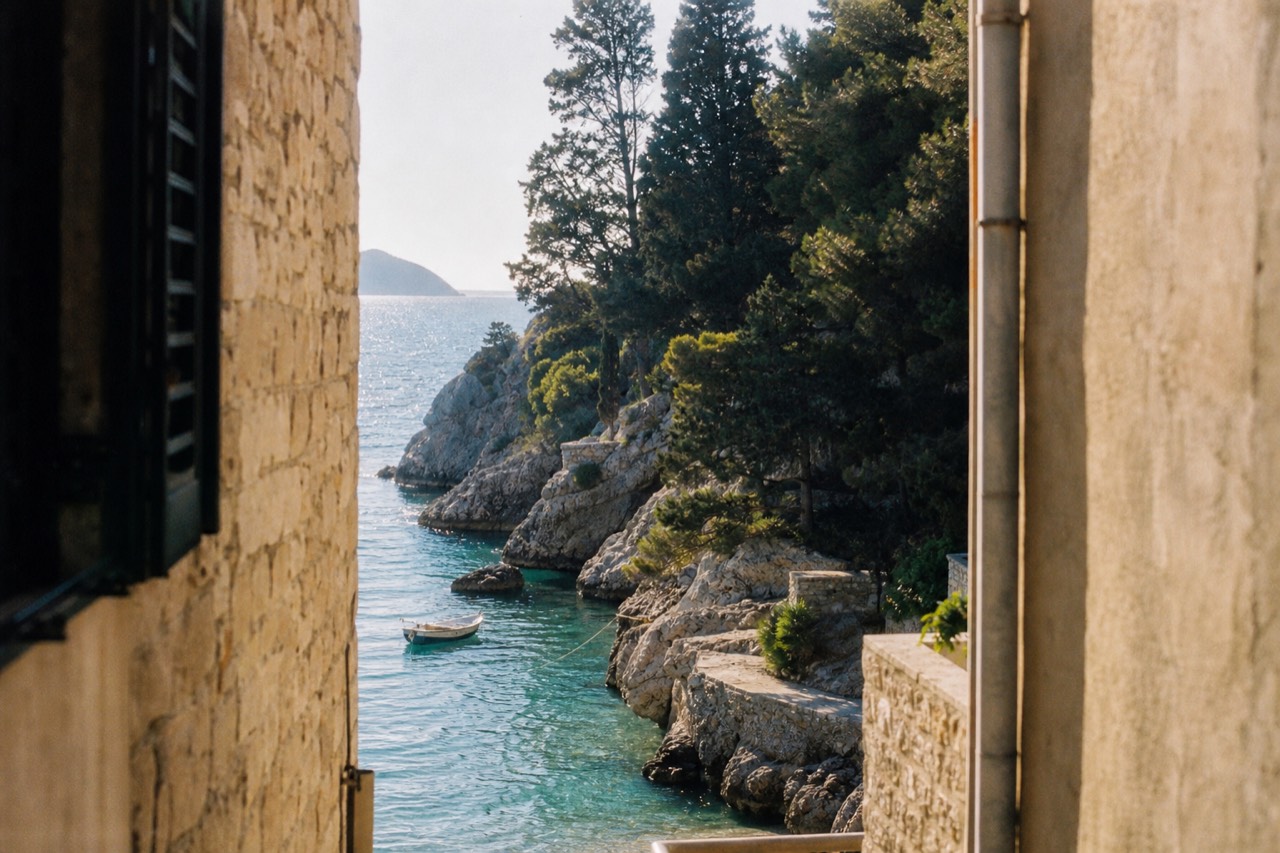
Is Split or Dubrovnik Better for Island Hopping?
Split is the better base if island hopping is the whole point of your trip: it sits directly on the ferry spine of central Dalmatia, with fast catamarans to Hvar, Brač, Vis and Šolta, plus onward routes to Korčula and beyond. Dubrovnik is better if you want a handful of superb islands reached by small boat rather than by scheduled ferry, wrapped around a city worth lingering in. Neither answer is wrong; they solve different trips.
That is the short version, and it is worth being blunt about it, because most comparison articles hedge until the paragraph dissolves. I have planned routes for travellers out of both cities for years, and the question I ask first is never "which city is nicer?" It is "how many of your days are actually island days?" If the answer is four or more out of a week, Split's ferry network earns its keep. If it is two or three, Dubrovnik's boat tours and the islands sitting on its doorstep do the job with far less logistics.
Here is the structural difference, and it explains almost everything else in this article. Split faces a spread of large, inhabited islands with regular year-round ferry and catamaran service, which is what "hopping" implies: island today, different island tomorrow, bags in a locker or a new hotel. Dubrovnik faces the Elaphiti chain, a string of small, car-light islands where the dominant experience is not a ferry crossing at all but a full-day boat tour that leaves from the Old City harbour, stops at two or three islands, feeds you lunch and brings you back before dinner.
The Elaphiti route is genuinely one of the most reviewed experiences on this entire coast: the full-day cruise with lunch runs from $59.16 per person and carries a 4.9 rating across 10,312 reviews. That is not a niche product. It is, in effect, Dubrovnik's answer to three islands in one day without you ever looking at a timetable. If you want the full picture of that chain before committing a day to it, the Elaphiti islands guide breaks down each island, its beaches and its walking time.
| What you want from the trip | Better base | Why |
|---|---|---|
| Four or more island days, island to island | Split | Dense catamaran network between large islands |
| Two or three island days plus a city you love | Dubrovnik | Boat tours bundle several islands into one day |
| Swimming stops, caves, quiet beaches | Dubrovnik | Elaphiti coves, Betina Cave, Sunj beach on Lopud |
| National park islands and hiking | Either | Mljet from Dubrovnik, several park islands from Split |
| No car, no schedules, no planning | Dubrovnik | Guided cruises depart from the Old City harbour |
One more framing point before the detail. The comparison people usually imagine, "Split has more islands nearby," is true but incomplete. What Dubrovnik offers is proximity without transit: Lokrum sits directly across the water from the Old City port, boats leave at 09:00 and then every 15 minutes from 10:00 to 18:00, and the 30 euro ticket covers both the reserve entry and the return boat. You can decide to go to an island over breakfast and be swimming off it before your coffee has cooled. Split cannot quite offer that spontaneity, because its islands mostly begin with a port and a ticket window.
Is It Better to Go to Split or Dubrovnik?
Go to Split if your holiday is built around moving: island to island, ferry to catamaran, and you are happy for the city itself to be a launchpad. Go to Dubrovnik if you want one extraordinary base and day trips that radiate out from it. Split is a working city inside a Roman palace; Dubrovnik is a walled monument you happen to sleep beside. For a first visit to Croatia with islands attached, Dubrovnik is the more memorable choice.
The "go to" question is really a temperament question. Split gives you the Diocletian's Palace core, a lively waterfront promenade, and the sense of a functioning Dalmatian city where tourism is one industry among several. Dubrovnik gives you the 1,940-metre circuit of city walls, the Stradun running its 298 metres through the middle, and a UNESCO-inscribed old core of 24.7 hectares that you will recognise from a dozen screens. Both are extraordinary. They are extraordinary in different ways, and the difference matters at 21:00 when you are tired and deciding whether to walk back through town.
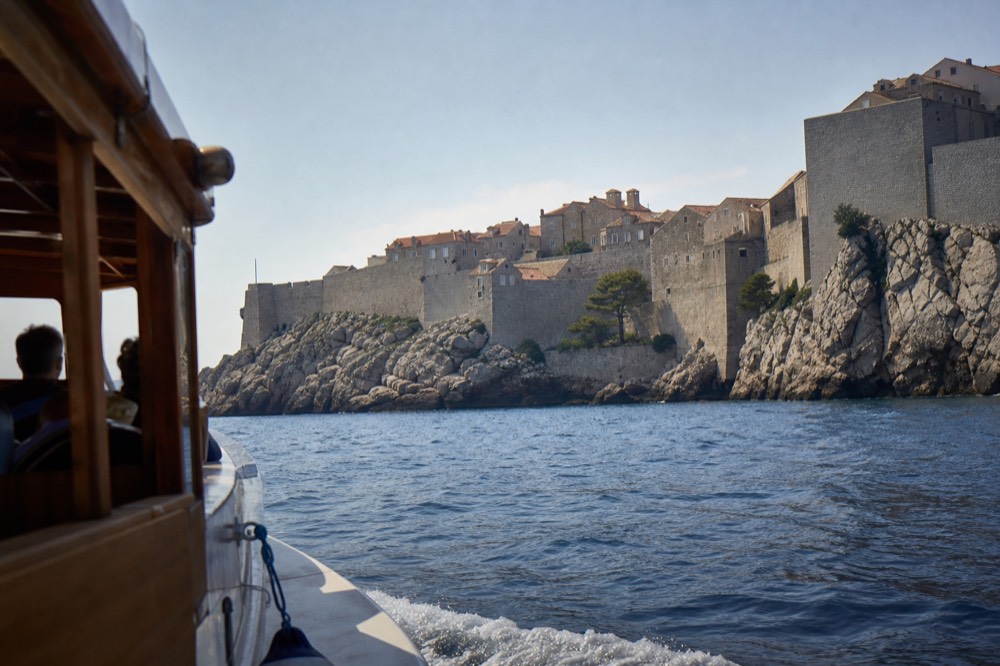
For the island-hopping traveller specifically, there is a subtle argument for Dubrovnik that rarely gets made: the boats are part of the pleasure. Leaving the Old City harbour means passing the fortress walls from the water, watching Lovrijenac on its 37-metre sea rock recede, and getting the single best view of the city for free on the way out. A catamaran terminal in a working port, however efficient, does not do that to you.
There is a counter-argument, and it deserves honesty. Dubrovnik recorded about 4.2 million overnight stays in 2025, sharing first place among Croatian destinations with Rovinj, and the pressure shows in the old core in peak months. Split absorbs its visitors across a wider, flatter city. If crowds are the thing that will ruin your day, that weighs toward Split, or toward visiting Dubrovnik in the shoulder months when the sea is still swimmable, the September average for this coast being about 23.6 degrees as a long-run figure.
And one genuinely underused option from Dubrovnik: the border. A Montenegro day trip from Dubrovnik runs from $58 per person, rated 4.4 across 5,611 reviews, and turns the "not enough islands near Dubrovnik" complaint on its head, because the Bay of Kotor is a drowned river valley that out-dramatises most islands. One recent traveller on that route described a semi-private version with six people total and a guide who was, in her words, fantastic. The border crossing took them 15 minutes in September, which is worth knowing, since border queues are the usual fear.
We booked the semi-private tour. 6 people total. Robert was fantastic! He was so knowledgeable and enthusiastic about everything. The tour was well organized and we had just the right time at the spots. Extremely satisfied with this tour and would certainly recommend to anyone. Also the border in September only took us 15 minutes.
Nithya
Which Islands Can You Actually Reach From Each City?
From Split, the core set is Brač, Hvar, Vis, Šolta and Čiovo, all with scheduled service, plus onward connections to Korčula and the far south. From Dubrovnik, the core set is the three main Elaphiti islands, Koločep, Lopud and Šipan, plus Lokrum across the harbour and Mljet National Park as a full-day trip. Split wins on count and connectivity; Dubrovnik wins on how little effort each trip takes.
The Elaphiti day is the anchor product here and it comes in several formats, which is worth spelling out because the differences are real. The classic full-day cruise with lunch, from $59.16 per person at 4.9 across 10,312 reviews, runs on a traditional boat with a fish picnic lunch. The Regina Maris version, from $74.58 per person at 4.8 across 6,751 reviews, is a larger ship with lunch included. The Karaka, a replica of a historic sailing ship, runs the same chain from $65 per person at 4.8 across 757 reviews. Same islands, three different days.
| Boat day from Dubrovnik | From (per person) | Rating | What it is |
|---|---|---|---|
| Elaphiti cruise, fish picnic lunch | $59.16 | 4.9 across 10,312 reviews | Full day, three islands, lunch on board |
| Regina Maris Elaphiti cruise | $74.58 | 4.8 across 6,751 reviews | Larger ship, lunch included |
| Karaka pirate ship, Elaphiti | $65 | 4.8 across 757 reviews | Replica tall ship, same chain |
| Blue Cave and Sunj Beach, drinks | $63.48 | 4.87 across 3,105 reviews | Cave swim plus Lopud's sandy beach |
| Mljet National Park, 3 islands | $153.99 | 4.9 across 397 reviews | Ten hours, lakes and park entry |
| Self-drive boat, up to 6 people | $259.60 | 4.9 across 266 reviews | Your own itinerary, no skipper needed |
The self-drive option deserves a paragraph of its own, because it is the closest Dubrovnik gets to true "hopping." For from $259.60, a boat for up to six people is yours for roughly eight hours, no licence required, and the Elaphiti chain is small and sheltered enough that a cautious first-timer can do it. Split has nothing quite like this in equivalent water, because its island channels are longer, busier and more exposed. If your fantasy is anchoring wherever the water looks best, that is a Dubrovnik fantasy.
Mljet is the other Dubrovnik ace. The national park with its two inland saltwater lakes is a full-day commitment, from $153.99 per person at 4.9 across 397 reviews, roughly ten hours door to door, and it is the one trip from Dubrovnik that matches the "wild island" feel people imagine when they say island hopping. A combined Mljet and Elaphiti itinerary exists too, from $139.47 per person at 4.8 across 333 reviews, for people who want both in one long day.
From Split, by contrast, the islands come to you on a timetable. Hvar Town is the headline stop, Brač gives you Zlatni Rat's shifting spit of pebbles, Vis hides the Blue Cave on its far side, and Šolta is the quiet local one. The honest weakness of the Split side is that the famous spots are famous, and in July and August Hvar Town and Zlatni Rat carry the kind of density that makes you understand why people started asking which city is "better" in the first place.
Is It Better to Fly to Split or Dubrovnik?
Fly into Split if your itinerary is the central islands and you want the widest choice of flights and onward ferries from one city. Fly into Dubrovnik if the south is your focus, since the Elaphiti, Mljet and Montenegro all sit on its doorstep. Many travellers do neither choice purely: open-jaw tickets into one city and out of the other are the smartest format for a one-way coastal trip with islands attached.
The airport question is less about the airports than about geography. Both cities have small, seasonal airports that swell in summer, and both are a bus or transfer ride from their old centres. What differs is what waits at the end. Land in Split and within hours you can be on a catamaran. Land in Dubrovnik and within hours you can be on a boat tour, on Lokrum, or walking the walls; the islands here do not require a ferry terminal, they require a ticket office at Luža in the Old City Port, open 08:00 to 18:00.
The open-jaw point is worth pressing, because the question "which airport" assumes a round trip from one base, and the Croatian coast resists that assumption. The two cities are connected by bus, by sea where the seasonal schedule allows, and by a coastal drive of a few hours with Ston and its walls, its oysters and the Pelješac peninsula, home of plavac mali and dingač, sitting conveniently in between. An arrival into Split and a departure from Dubrovnik, or the reverse, turns a either-or question into a both answer, and the Pelješac bridge means the drive no longer clips Bosnia at all.
If you must choose one airport and one base, weight it by season as well as by islands. Dubrovnik's shoulder months are a genuine sweet spot: the Port Authority's own figures show cruise passengers peaked in September at 101,246 and October at 100,132 in 2025, above July's 96,072 and August's 87,385, so the town is busiest in early autumn, not midsummer, but the sea is still warm, with the September long-run average at about 23.6 degrees and sheltered bays running warmer still, the Croatian met service's own Dubrovnik buoy reading 27.0 to 27.4 degrees on one early September day against that mean. Split's season is similar, but its island traffic keeps the town itself steadier.
Is Split or Dubrovnik Better for Nightlife?
Split has the broader, later, more local nightlife: bars inside and around the palace cellars, a student population, and nightlife that runs on its own energy. Dubrovnik's nightlife is more compact and more scene-dependent, built around cliff bars, a nightclub inside a fortress, and sunset drinking with the walls in view. For a big night out, Split wins. For one unforgettable drink in an unforgettable place, Dubrovnik wins.
Be specific about what Dubrovnik does have, because it is more than people expect. There is the cliff-side bar carved into the rocks below the walls, where you swim between drinks. There is the nightclub inside the Revelin fortress, which is, objectively, one of the most dramatic dance floors in Europe. There are sunset cruises, the Karaka adults-only panoramic sunset sail from $59 per person at 4.8 across 833 reviews among them, and the shorter Cavtat sunset cruise with a cold platter and drinks from $23.66 per person at 4.9 across 203 reviews. Dubrovnik at night is not thin. It is concentrated.
Split's advantage is volume and ordinariness, used as a compliment. It is a big working city with a year-round population that goes out on weekdays, and the bar strip along the Riva and through the palace keeps going past midnight in a way a town of Dubrovnik's size, 41,562 residents at the 2021 census, simply cannot sustain on locals alone. If your island days end at 19:00 and your nights matter as much as your mornings, that difference compounds over a week.
The island-hopping traveller should also note where the islands themselves stand on nightlife. Hvar, reachable from Split, is the party island of the Croatian coast, full stop. Nothing in the Elaphiti chain competes, and nothing is meant to; Lopud goes quiet when the last day boat leaves. If dancing on an island is on your list, that is a point for the Split base that no Dubrovnik sunset cruise offsets.
Is It Better to Stay in Split or Dubrovnik?
Stay in Split for cheaper beds, more space outside the historic core, and easier logistics if the islands are your priority. Stay in Dubrovnik for atmosphere, walkability and evenings you will actually remember, at a higher price and with thinner value outside the old core. For a trip of four nights or fewer built around boat days, Dubrovnik's compactness wins; for a week or more, Split stretches further.
Accommodation is where the two cities diverge hardest. Dubrovnik's old core has a limited stock inside a fixed footprint, and demand from a destination that shared first place in Croatia with 4.2 million overnight stays in 2025 pushes prices up, particularly inside the walls. Split spreads its visitors across a bigger city with more modern hotel stock and more apartment inventory, so the same budget generally buys more room. That is not a small thing on a trip where you are out on boats all day and only really need a bed and a shower.
Inside Dubrovnik, the neighbourhood question matters more than visitors expect, and the honest split is between the walled core itself, Ploče on the quiet side above the harbour, and Lapad across the bay where most of the modern hotels cluster. If you stay in Lapad you gain a real beach neighbourhood and lose the evening magic of the old town, a trade that suits families and longer stays. The where-to-stay question has its own deep dive, and the neighbourhood-by-neighbourhood breakdown in where to stay for first-timers covers it properly, including the Lapad-versus-Old-Town calculation that most comparison articles skip.
For a fuller picture of how the two cities stack up beyond the islands, the general comparison in Split or Dubrovnik, which is nicer digs into food, cost and pace of life. The short version there, worth repeating here: Split is the better value and the easier city, Dubrovnik is the better memory. Whichever base you choose, the rest of the planning, from walls tickets to boat days, is laid out across Things to Do in Dubrovnik.
The Verdict for an Island-Hopping Trip
Choose Split for a dedicated island-hopping itinerary of five days or more, where Hvar, Brač, Vis and Šolta are the destinations and the city is the base. Choose Dubrovnik for a shorter trip, a slower trip, or a trip where you want islands, walls, cliffs and a second country inside one week. Dubrovnik's islands are fewer but closer, its boat days need no planning, and its evenings are the best on the coast.
My own planning rule, offered as a local who has sent hundreds of travellers in both directions: count your island days. One or two, base in Dubrovnik and book a boat day plus Lokrum. Three or four, still Dubrovnik, adding Mljet and a self-drive day on the Elaphiti. Five or more, or dancing on Hvar specifically on the list, base in Split and finish with two nights in Dubrovnik on the way south, because ending inside the walls is the stronger ending, and because from Dubrovnik you can add the one trip Split cannot offer at all: Montenegro, from $58 per person, or the longer version with an optional boat trip on the bay from $70.99 per person at 4.4 across 3,829 reviews.
Whichever way the verdict lands for you, the practical next step is the same: lock in the boat days first, since the best-reviewed departures fill earliest in peak months, and build the rest of the trip around them. Split rewards a timetable and a ferry app. Dubrovnik rewards a single well-chosen cruise and a lazy walk home through the walls.
Common Questions About Split vs Dubrovnik Island Hopping
Is Split or Dubrovnik better for island hopping?
Split is better for a dedicated island-hopping itinerary with five or more island days, thanks to its dense catamaran network to Hvar, Brač, Vis and Šolta. Dubrovnik is better for shorter or slower trips, because its Elaphiti boat days, Lokrum and Mljet require no ferry schedules at all and the city itself is the stronger base.
Can You Island Hop From Dubrovnik Without a Car?
Yes, completely. The Elaphiti cruises, the Blue Cave and Sunj Beach tour, the Mljet trips and the Lokrum boat all leave from the Old City harbour or Gruž, and the one-day Dubrovnik Pass includes a 24-hour bus ticket if you are staying outside the centre. A car is a liability in Dubrovnik, not an asset.
Which Islands Are Closest to Dubrovnik?
Lokrum sits directly across from the Old City port, with boats at 09:00 and then every 15 minutes from 10:00 to 18:00. The Elaphiti chain of Koločep, Lopud and Šipan is the classic full-day boat route, and Mljet National Park is the farthest of the main options at roughly ten hours round trip.
Is It Better to Fly to Split or Dubrovnik?
Fly to Split if the central islands are your focus and you want the widest onward ferry choice from one city. Fly to Dubrovnik if the south is your focus. Best of all, fly into one and out of the other, and drive or ride the coast between them with a stop on Pelješac.
Is Split or Dubrovnik Better for Nightlife?
Split has the broader and later nightlife, with a year-round local crowd. Dubrovnik's is compact but spectacular: a cliff bar below the walls, a nightclub inside a fortress, and sunset sails from $59 per person on a traditional ship.
Is It Better to Stay in Split or Dubrovnik?
Split stretches a budget further and suits longer stays. Dubrovnik suits trips of four nights or fewer built around boat days, where its walkability and evening atmosphere outweigh the higher room rates.