Is Lapad a Nice Part of Dubrovnik?
Is Lapad a nice part of Dubrovnik? An honest look at the peninsula's beaches, hotels, prices and walkability, and how it compares with staying inside the Old Town.
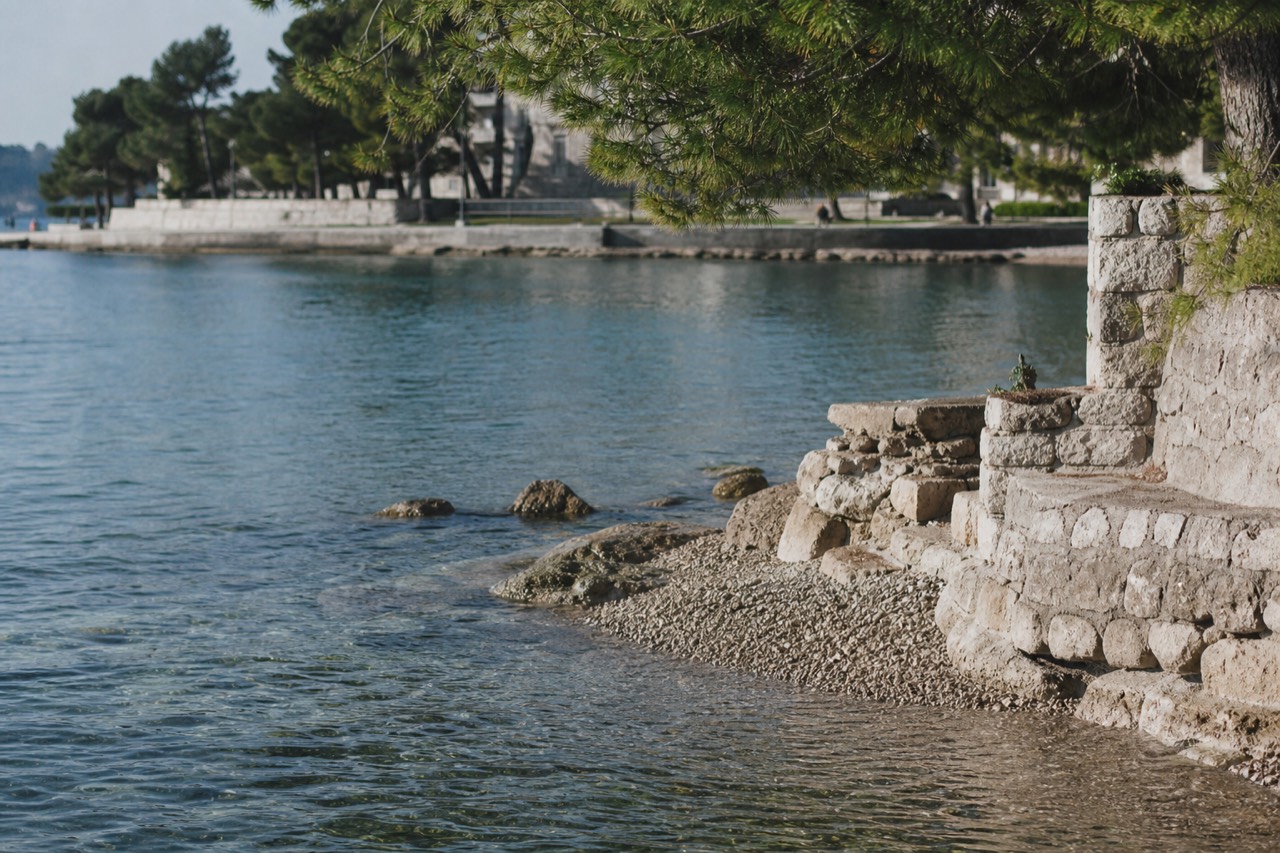
Is Lapad a Nice Part of Dubrovnik?
Yes, Lapad is a genuinely nice part of Dubrovnik, and for many travellers it is the smarter base. It is a green peninsula about ten minutes west of the walled city, built around a bay of swimmable beaches, a car-free seaside promenade, most of the city's hotel rooms and a relaxed strip of cafes and konobas. You trade the postcard view from your window for space, sea access and prices that run noticeably lower than inside the walls.
I walk the Lapad bay path regularly, and it is the part of the city where the rhythm feels least like a theme park. Mornings belong to swimmers and dog walkers along Uvala, the bay at the heart of the peninsula. By late afternoon the promenade fills with families eating ice cream, and in the evening the terrace tables around the bay do a steady trade in pizza and grilled fish. None of it is spectacular. All of it is pleasant, and after a day of crowds on the Stradun, pleasant is exactly what you want.
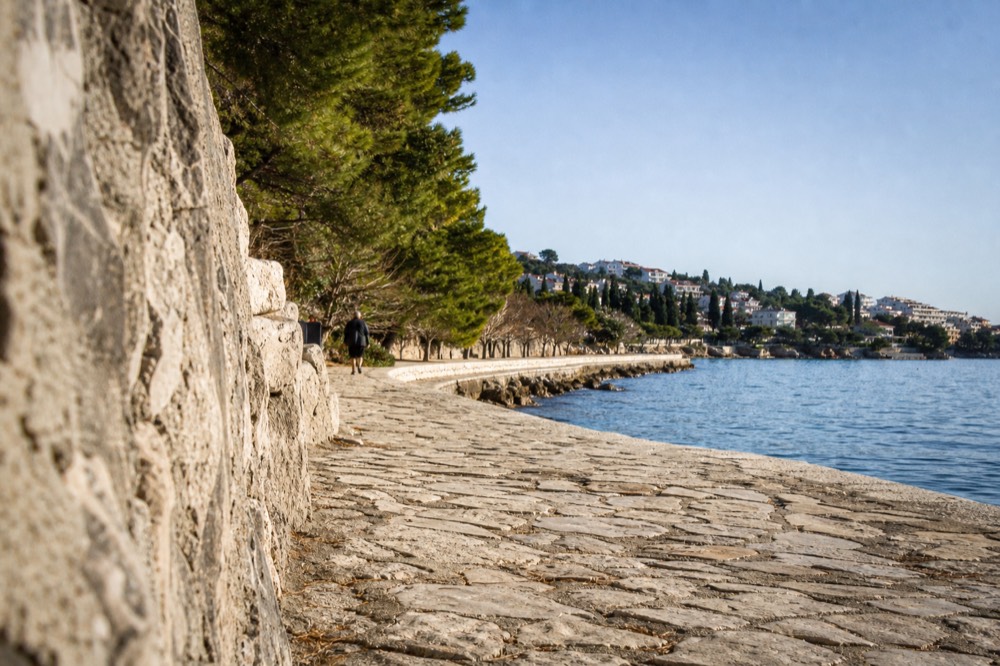
The honest framing is this: Dubrovnik splits into two very different experiences. The Old Town is a 24.7-hectare UNESCO-listed stage set, inscribed in 1979, where you sleep inside the monument and pay for the privilege. Lapad is where the city actually lives at scale, with the bulk of its hotel capacity, its main beaches and enough restaurants that you are not trapped into old-town pricing every night. The city counted 41,562 inhabitants at the 2021 census, and very few of them sleep inside the walls.
The trade-off is a commute. Buses 6 and 7 run from Lapad to Pile Gate, the western entrance to the Old Town, several times an hour through the day and evening, and the ride is short. You will not stumble out of your door onto the Stradun. You will also not pay old-town rates for a room the size of a wardrobe, and you will have a beach five minutes away instead of a twenty-minute walk downhill.
There is a third framing worth naming, because it decides more bookings than any review score: what kind of evening do you want? Inside the walls, the evening is quiet and stone-lit, beautiful but thin on life once the day crowd drains out. In Lapad, the evening is the main event, a slow promenade loop, terrace dinners, children on scooters, the sun dropping into the Adriatic in front of you. Neither is wrong. They are simply different products, and knowing which evening you prefer picks your side of the city for you.
If you are still weighing the whole question of base against budget, our cluster guide on Things to Do in Dubrovnik lays out the city's headline sights, and the deeper neighbourhood breakdown lives in the Lapad area guide.
For the days you do head into the old city, a guided walk beats wandering lost on your first morning, and these three are the formats that suit a Lapad-based visitor best:
What Part of Dubrovnik Is Best to Stay In?
The best part of Dubrovnik to stay in is Lapad if you want beaches, hotels and value, Ploče or Pile if you want to be steps from the Old Town with a view, and Gruž if you are arriving or leaving by ferry or cruise and want practicality above atmosphere. The Old Town itself is best for one or two splurge nights, not a full week. Roughly: Lapad for families and swimmers, Ploče for romantics, Gruž for logistics.
There is no single right answer, only a match between the neighbourhood and the trip you are actually taking. A couple celebrating an anniversary wants different things from a family with two children and a beach bag, and Dubrovnik's districts deliver very different products. Here is the honest comparison:
| Area | Vibe | Walk to Old Town | Beaches | Best for |
|---|---|---|---|---|
| Lapad | Leafy, residential, hotel peninsula | Not walkable, 10 min by bus 6 or 7 | Excellent, several swimmable bays | Families, swimmers, longer stays |
| Old Town | Monument, atmospheric, crowded by day | You are inside it | None, Banje is a walk away | One or two splurge nights |
| Ploče | Quiet, upscale, east of the walls | 5-10 min downhill | Banje beach at the foot | View seekers, couples |
| Pile area | Transition zone at the western gate | 2-5 min | Limited | Old Town access without old-town prices |
| Gruž | Working port, market, ferry terminal | 25-30 min walk or short bus | Limited | Ferry and cruise passengers, budget stays |
The pattern I see again and again: people book the Old Town for a week, love two nights of it, then find the stairs, the cruise-day crowds and the restaurant prices grinding. The Old Town's carrying capacity, from the official UNESCO assessment, is 11,275 people, and on peak days the counters at the gates record a headcount of 7,297 by 09:00. Sleeping inside that is a thrill. Sleeping inside it for seven nights is a workout.
Lapad's hotel stock covers every tier. On the budget end, Hotel Komodor is a three-star a short walk from the bay, rated 7.8 out of 10 across 822 Expedia reviews, about a 29-minute walk from the Gruž cruise and ferry port, with the number 6 bus to Pile Gate at the door. At the top end, Hotel Excelsior sits in Ploče if you decide the old-city view is worth the premium after all.
A note on how these areas behave at different times of year, because the answer shifts with the calendar. In July and August every district is full and loud, and Lapad's advantage is simply having somewhere to breathe. In shoulder season, May, June, late September, the peninsula is at its absolute best: warm sea, open everything, half the crowds. In winter the calculus flips entirely, because the Old Town keeps its shape and atmosphere year-round while much of Lapad's beach life goes quiet, so a cold-month visitor gets more from staying in or beside the walls. For a summer or autumn trip, though, the ranking above holds.
If you are leaning Lapad but want the walls properly explained rather than just walked, the two-hour guided circuit is the one to anchor a day trip into town around:
What Is the Best Part of Dubrovnik to Stay In?
The best part of Dubrovnik to stay in depends on what your days look like. If your trip is built around swimming, boat trips and relaxed evenings, Lapad wins outright. If every day starts and ends inside the walls and you want to walk home at 01:00, Ploče or the Old Town wins. For a first visit of three to four days, a Lapad base with two focused old-city days is the combination I would plan.
The reason Lapad keeps winning for longer stays is the shape of a Dubrovnik day. The old city is at its best early and late: before the excursion groups arrive and after they leave. In the middle of the day, especially in the warmer months, you want to be in the water, and from Lapad the water is minutes away. Lapad beach, the main stretch of the bay, is a sandy-bottomed, shallow-entry beach with cafe service and pine shade, and it is the default swimming spot for half the city's visitors. Copacabana beach, at the northwestern tip of the peninsula, adds water sports. The Lapad beach guide covers the full rundown.
The sea itself is warm through a long season. The September average for this coast is about 23.6 degrees, from the NOAA long-run 1991 to 2020 open-water climatology, and sheltered bays like Lapad's run warmer than that, the Croatian met service's Dubrovnik buoy read 27.0 to 27.4 degrees on one early September day against that 23.6 mean. In practical terms: you can swim comfortably from Lapad from June into October, which is a longer swimming window than most of the Croatian coast offers.
Timing matters more than most visitors expect, and this is the fact that surprises nearly everyone: cruise passengers in Dubrovnik peaked in September at 101,246 and October at 100,132 in 2025, above July's 96,072 and August's 87,385. The old city is not busiest in high summer, it is busiest in early autumn. A Lapad base gives you somewhere calm to retreat to on the heaviest days, and the Port Authority's own schedule of remaining calls lets you plan around the peak days rather than discovering them on arrival.
One more practical note that belongs in any honest Lapad verdict: the peninsula is built on a hillside. The bay and promenade are flat, but many hotel driveways climb away from it, and the walk back up after dinner is real. Ask for a room location near the promenade level if stairs are a concern, because the same terrain that gives the upper hotels their sea views gives them stairs. Pack accordingly, too: the streets between the bay and the upper hotels are stepped lanes rather than roads, so a wheeled suitcase is a shoulder-carried suitcase for the last hundred metres in much of the peninsula.
The bus connection deserves a fair hearing as well, because it is the single thing sceptics raise against Lapad. In practice it is a normal city bus, frequent through the day, running until late evening in the season, and the ride to Pile Gate is short enough that you never plan your day around it. Buy tickets at the kiosk or from the driver, check the last departure back if you are dining late in the old city, and the commute stops being a consideration at all. Visitors who base in Lapad for a week rarely mention the bus by day three.
Which Part of Dubrovnik Is Best to Stay In?
For a first-time visitor, the best part of Dubrovnik to stay in is Lapad with a clear conscience. Families get the beach, couples get sunset terraces, budget travellers get rooms that cost less than old-town closets, and everyone gets a ten-minute bus to the walls. Only travellers with limited mobility who cannot manage buses, or anyone in town for a single night, should base elsewhere.
The walls themselves deserve a proper block of any first visit, and doing them with a guide changes what you are looking at. The circuit is 1,940 metres long, up to 25 metres high, and the adult ticket is 40 euro in main season, 1 March to 30 November, dropping to 20 euro in December. A standalone ticket is walls plus Fort Lovrijenac combined, and there is no family ticket, only adult and child 7 to 18 at 15 euro, with under 6 free. The city walls tickets guide has the full breakdown, and the Dubrovnik Pass question is covered in detail there too.
A guest review of that walk captures why the guided version earns its price: "This well organized tour helped put Dubrovnik's past (and present) into perspective. It's incredible that the city walls have withstood the test of time. Antun was a wonderful guide."
This well organized tour helped put Dubrovnik's past (and present) into perspective. It's incredible that the city walls have withstood the test of time. Antun was a wonderful guide.
linda_a
Getting in from Lapad for a morning walls walk is simple. The operator's stated hours at the time of check are 08:00 to 19:30, and the smart play is the first entry: the counters recorded 5,419 people inside the Old Town at 08:00 on one September morning, rising to a 7,739 peak at 10:00. Catch an early bus, walk the circuit while the stones are still cool, and be back on a Lapad beach by lunch. That is the day shape the peninsula is made for.
For the evenings you do not want to bus anywhere, Lapad's own restaurant strip holds up well. The peninsula has everything from wood-fired pizza terraces to proper konobas grilling the day's catch, at prices meaningfully below the equivalent inside the walls. It is not a foodie destination in the way the old city's best tables are, and for those nights the Dubrovnik restaurants guide is the list worth booking from.
What Is the Nicest Part of Dubrovnik?
The nicest part of Dubrovnik, in the sense of the place you would actually want to wake up in, is the Lapad bay: pine shade, swimmable water, a flat evening promenade and honest prices. The most beautiful part is unambiguously the Old Town, and the two are not the same thing. Beauty you visit, livability you live in, and a well-planned trip uses both.
That distinction is the whole answer to this question. People arrive with a photo of the Stradun, the 298-metre limestone main street, and assume the nicest place to stay is on it. Then they discover that the old city empties of life after the day-trippers leave, that many of its buildings are holiday apartments rather than homes, and that a swim requires a hike. Lapad inverts every one of those points and gives up only the postcard.
If you want both experiences in one stay, split the booking. Two or three nights in Lapad for the beach and boat-trip days, then a final night inside or beside the walls for the evening and early morning old city, when it belongs to the people staying in it. Boat trips, which are the best day out from the city, leave from the Old City port and from Gruž, both easy from Lapad: the Elaphiti islands cruise guide covers the full-day options, most of which include lunch and run about 8 hours.
For a first day that covers the most ground without exhausting you, the combo walk pairs the Old Town circuit with the walls in one guided block, about 3 hours 30 minutes from $50.94 per person, rated 4.8 across 1,183 reviews, and the e-tuk-tuk panorama ride suits anyone whose knees have opinions about Dubrovnik's stairs, at 1 hour 45 minutes from $59.24 per person and rated 5 across 1,799 reviews. Between the two, most Lapad-based visitors get everything they came for.
One last verdict point in Lapad's favour: the sunset. The peninsula faces west across the water, and the evening light over the Adriatic from the bay promenade is the quiet rival of the famous views from Mount Srd, whose cable car costs 30 euro round trip for the adult ticket and is closed January to March. You can watch Lapad's version for the price of a beer. That, in a sentence, is the peninsula: not the most dramatic thing in Dubrovnik, but the part you would happily return to.
And that, finally, is the honest answer to the question this page exists for. Lapad is not the reason anyone books a flight to Dubrovnik, the walls and the limestone lanes are, but it is the reason a lot of visitors leave with good memories instead of sore legs and an empty wallet. It is nice in the way a good neighbourhood anywhere is nice: it works, it welcomes you, and it lets the famous part of the city stay special by keeping everyday life somewhere sane. Base there, visit the monument, swim at sunset, and you will understand why locals speak of the peninsula with real affection.
However you split your days, these are the three products that fit a Lapad base best:
Common Questions About Staying in Lapad, Dubrovnik
Is Lapad a nice part of Dubrovnik?
Yes. Lapad is a green, residential peninsula with the city's best concentration of swimmable beaches, most of its hotel capacity, a flat seaside promenade and prices well below the Old Town. The trade-off is a ten-minute bus ride to Pile Gate, which most visitors consider a fair exchange after a day of old-town crowds.
Can You Walk From Lapad to the Old Town?
You can, but most people should not plan on it. The walk from the Lapad bay to Pile Gate takes roughly 40 minutes along a busy road with sections without shade or pavement. Buses 6 and 7 run the same route in about ten minutes, several times an hour, and late into the evening.
Does Lapad Have Good Beaches?
Yes, and they are the main reason to stay there. Lapad beach sits at the head of the bay with shallow, sandy-bottomed entry, cafe service and pine shade, and Copacabana beach at the peninsula's tip adds water sports. The sea is comfortably swimmable from June into October.
Is Lapad Cheaper Than the Old Town?
Generally yes, on both rooms and dinners. Old Town accommodation carries a heavy premium for the address, and its restaurants price for a captive audience. Lapad's hotel and konoba prices run noticeably lower, which is why it dominates the family and longer-stay market.
Where Should First-Timers Stay in Dubrovnik?
Most first-timers are best in Lapad for three or four nights, with the old city visited on focused morning trips, and optionally one final night inside or beside the walls for the evening atmosphere. The first-timers guide covers the full decision, including the Ploče and Gruž alternatives.