Is It Easy to Rent a Car in Dubrovnik?
Renting a car in Dubrovnik is straightforward at the airport and in the city, but whether you should is another question. A local specialist explains where, when and why.
Is It Easy to Rent a Car in Dubrovnik?
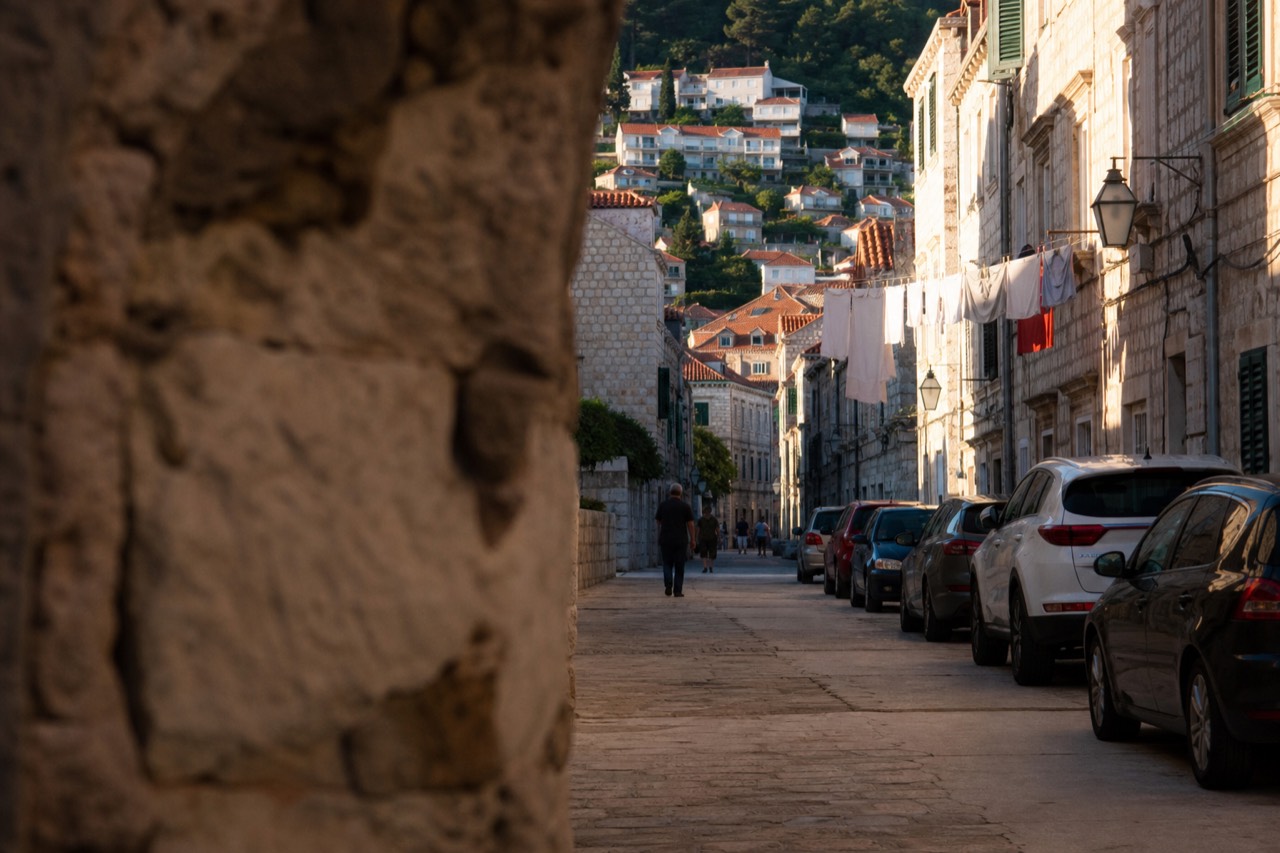
Yes, renting a car in Dubrovnik is genuinely easy. Most rental desks are clustered at Dubrovnik Airport, agencies also operate in the city itself, and Croatian roads are well signed and in good condition. The paperwork follows standard European practice: a driving licence, a credit card in the driver's name and a passport. What is not easy is driving once you have the car, since the Old Town is pedestrianised and nearby parking is scarce and expensive.
I have spent years walking visitors through this exact decision, and I always separate the two questions. Renting the car takes twenty minutes. Living with the car takes your whole trip. Those are different problems, and treating them as one is how people end up with a vehicle they neither use nor enjoy, parked at a meter somewhere behind Pile Gate, quietly accruing fees while they walk the walls on foot like everyone else.
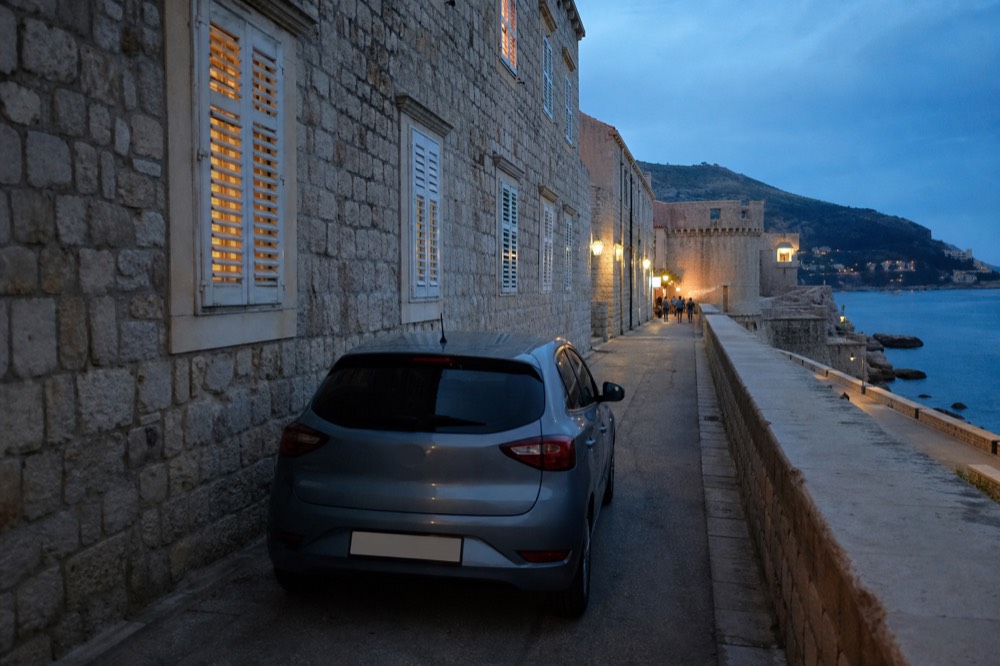
The airport is where most rentals start. Every major international brand and several Croatian agencies have desks in the arrivals hall or a shuttle ride away, and in shoulder season you can often walk up and drive off within the hour. In July and August that changes: the airport serves a destination that recorded 4.2 million overnight stays in 2025, sharing first place in Croatia with Rovinj, and the rental fleet gets stretched thin on peak Saturdays when multiple cruise calls and charter flights land together.
That last point deserves emphasis, because it is the single most useful planning fact for this whole topic. Cruise passengers at the Port of Dubrovnik peaked in September 2025 at 101,246 and in October at 100,132, both above July's 96,072 and August's 87,385. September and October, not midsummer, are the two busiest cruise months. If you are renting a car in early autumn, book ahead for the same reason you would in July. The city's own counting system, six counters at every Old Town entrance updating a headcount every 15 minutes against an official carrying capacity of 11,275 people, exists precisely because the pressure is not confined to the weeks you would expect.
For the nuts and bolts of agencies, insurance excess and border crossings into Bosnia and Montenegro, the cluster guide on renting a vehicle in the city goes deeper than I can here, and the companion page on where to leave your car covers the parking question street by street. Read those two before you book anything, because between them they answer the questions the rental desk will not volunteer.
Is It Worth It to Rent a Car in Dubrovnik?
Rent a car in Dubrovnik only if your plans extend beyond the city itself. For a one to three day stay focused on the Old Town, the walls, Lokrum and the cable car, a car is usually more trouble than help, since parking is scarce and the roads are unnecessary. It becomes worth it the moment your itinerary includes Pelješac, Ston, Korčula, the Konavle valley, Mostar or the Montenegrin coast, all awkward or slow by public bus.
Start with what a car cannot do. The walled Old Town, a UNESCO World Heritage Site inscribed in 1979 covering 24.7 hectares, is fully pedestrianised. No car enters, none parks, and the nearest legal parking sits outside the walls at gates like Pile and Ploče, where spaces fill early and daily rates in high season can rival your accommodation. Every year I watch visitors rent a car on day one, park it on day one, and pay for it to sit still for a week. It is the most common self-inflicted expense in Dubrovnik travel planning, and it is entirely avoidable with a little honesty about what your itinerary actually contains.
Inside the city, the alternatives are better than driving anyway. The cable car lifts you from the lower terminal at 38.0 metres above sea level to the Mount Srd station at 405.0 metres in 3 minutes 30 seconds, with a stated clear-day view range of up to 60 km, and the operator's 2026 prices are 30 euro for an adult round trip, 17 euro one way, 8 euro round trip for a child aged 4 to 12 and free under 4. The operator's own timetable and price page carries the full seasonal schedule, including the January to March closure. That closure matters for winter visitors: if your trip falls between January and March, the cable car is off the table entirely and the panorama has to be earned on foot or by road.
Then there is the question of what you give up by driving. A boat to Lokrum leaves the City Harbour at 09:00, then every 15 minutes from 10:00 to 18:00, and the 30 euro ticket covers both the reserve entry and the return transfer. You cannot drive to Lokrum; the island reserve is reachable only by water. You cannot drive the city walls either, and the walls are the reason many people came: 1,940 metres of circuit, up to 25 metres high, with the walls operator's own site detailing the sixteen towers and three fortresses along the way. The circuit reached its shape in the 13th century and was finished in 1660 with the Bastion of St Stephen, and every metre of it is walked.
Where a car earns its keep is the region. Ston and its walls, the oyster farms of Mali Ston, the vineyards of Pelješac, the ferry to Korčula, the waterfalls at Kravica across the border in Bosnia and Herzegovina, and the bay of Kotor in Montenegro are all reachable by bus, but the bus constrains your timing, and at Kravica and Kotor the border queue is unpredictable. One recent traveller on a Montenegro day trip reported the September border crossing took only 15 minutes, which is the lucky end of a very wide range. Build slack into any border day, whether you drive it yourself or not.
If a border day trip appeals but you would rather not drive it yourself, an organised option exists: Check availability for the Montenegro day trip with optional boat ride, which runs 11 to 12 hours from $70.99 per person. Rated 4.4 across 3,829 reviews, it hands the border paperwork and the parking to someone else, which is worth real money on a long day.
Where Can I Rent a Car in Dubrovnik?
The three practical pickup zones are Dubrovnik Airport, Gruž near the port and main bus station, and offices around Lapad and the approach roads; the airport has the widest choice of desks twenty minutes from town, Gruž suits mid-trip renters, Lapad works for those staying outside the walls, and one-way rentals to Split or Zagreb are possible but carry a drop fee.
The airport cluster is the default. You land, you sign, you drive, and the coastal road into town gives you a free preview of the terrain: tight corners, stone walls at the road edge and buses with confident drivers. Take that preview seriously. Croatian highway driving is relaxed, but the final approach into Dubrovnik is a narrow, busy road where local buses have priority in practice if not in law. If the preview makes you nervous, that is useful information, and it is better learned before you have committed to a week of it. Everything else covered here is indexed on Things to Do in Dubrovnik.
Gruž is the thinking visitor's choice. If your first days are car-free, as I recommend, you can collect the car only on the morning you leave for the peninsula or Montenegro, avoiding days of parking charges. The bus station and ferry port are both here, which also makes Gruž a sensible place to end a rental before a catamaran to the islands. For what it is worth, Gruž is far more than a transport hub, and the question is Gruž worth visiting has a fuller answer elsewhere on this site. The market there is worth a morning on its own, rental or no rental.
A few practical points that catch people out. Crossing into Bosnia and Herzegovina or Montenegro requires the agency's written permission, and not every car is insured to cross, so declare your route when booking, not at the desk. Croatia uses the euro, and tolls on the motorway network are paid in it. And in high season, walk-up availability at the airport is a gamble, while shoulder-season weekdays are usually painless. None of this is difficult; it is simply easier to handle at a keyboard at home than at a counter with a queue behind you.
| Pickup location | Best for | Watch out for |
|---|---|---|
| Dubrovnik Airport | Widest fleet choice, immediate arrival pickup | Peak-season queues and stretched availability |
| Gruž (port and bus station) | Collecting mid-trip only for regional days | Smaller fleets, book ahead in autumn |
| Lapad and approach roads | Staying outside the walls with parking at the hotel | Fewer desks, limited one-way options |
| One-way to Split or Zagreb | Coastal itineraries that end elsewhere | Drop fees, and confirm cross-border cover |
How Much Does It Cost to Rent a Car in Dubrovnik?
Rental prices in Dubrovnik swing sharply with the season: a compact car rents for a modest daily rate in shoulder season, while July and August can multiply that several times over, so no single figure fits both. What can be stated firmly are the costs around the car: fuel, motorway tolls, cross-border permits and above all parking, which in central Dubrovnik is often the largest single line in a driving day.
I will not print a rental price, because the one truth in this market is volatility. The same compact car can cost a fraction in late October of what it costs in early August, and the agencies reprice weekly. Check the live listing for your exact dates rather than trusting any number that was true for someone else's week. What I can do instead is show the fixed, verified costs you will face regardless of the rental rate, because those are the ones people forget to budget, and they are the ones that decide whether the car was a good idea.
| Cost item | What you pay | Notes |
|---|---|---|
| City Walls adult ticket | 40 euro main season, 20 euro December | The 40 euro ticket includes Fort Lovrijenac; child 7 to 18 is 15 euro, then 5 euro |
| Dubrovnik Pass, one day | 40 euro | Same price as the walls ticket in main season, 1 March to 30 November, plus ten more sights and a 24-hour bus ticket |
| Cable car adult round trip | 30 euro | One way 17 euro; child 4 to 12 round trip 8 euro |
| Lokrum ticket | 30 euro per person | Covers reserve entry and the return boat transfer |
Why a table of sight prices in an article about cars? Because it shows what your car-free day in the city actually costs, and that number is what you compare against a day of rental plus parking. Notice the pass in particular: the one-day Dubrovnik Pass costs the same 40 euro as the standalone walls ticket in main season and adds ten more sights plus buses, per the official pass site. That is a main-season comparison only, since December drops the walls ticket to 20 euro while no winter pass tier is on sale at all. Every pass tier lists the walls and Fort Lovrijenac as its first inclusion, with a one-time visit to each institution.
Fuel and tolls are modest by European standards, and the distances here are small: the whole Dubrovnik-Neretva County holds 115,862 people at the 2021 census, and the city itself 41,562. Your fuel bill will be a rounding error next to your parking bill. Cross-border permits, where the agency charges one, are per rental, not per day, so a single Mostar or Kotor trip amortises them. The arithmetic that sinks most budgets is not the car; it is the car plus three days of central parking plus the fuel for trips you ended up not taking because the boat was nicer.
How Much Is Rent in Dubrovnik?
Rent in Dubrovnik is among the most expensive in Croatia relative to local wages, and no verified euro figure for a monthly flat exists in my sources, so I will not invent one. The structure of the problem, however, is well documented: a city of 41,562 residents hosting 4.2 million overnight stays a year has a housing market permanently pulled toward short-term letting, since accommodation that could serve visitors rarely stays available for long-term tenants.
This question arrives in my inbox more often than you would expect, usually from people considering a longer stay, a season of work or a remote-working base. The honest answer has two layers, and neither of them is a number I can responsibly print.
The first layer is scarcity. When a destination records 4.2 million overnight stays in a single year, and the Croatian Bureau of Statistics places it joint first in the country alongside Rovinj, the pressure on every habitable room is enormous. Landlords face a simple choice between a twelve-month residential tenant and a summer of nightly rates, and the market has answered it decisively. Long-term flats in and near the Old Town are rare, and what exists is priced accordingly. The same dynamic that makes a rental car unnecessary inside the walls makes an apartment inside the walls nearly unobtainable on a lease.
The second layer is seasonality in reverse. Shoulder months soften everything, including the housing market, and the same autumn that brings the year's biggest cruise crowds, September's 101,246 passengers, also brings the quietest streets once each ship sails. Anyone planning a months-long stay should negotiate around that rhythm: the weeks after the season ends are when landlords listen. The Old Town's UNESCO listing, inscribed in 1979 under criteria (i)(iii)(iv) with a property area of 24.7 hectares, protects the buildings but does not protect the residents from the market, and the city spent 1991 to 1998 on the World Heritage in Danger list during the war years that emptied whole quarters.
For visitors, the practical translation is this: if "rent" for you means a week or two of accommodation rather than a lease, expect high-season prices that reflect the overnight-stay numbers above, and expect shoulder season to be kinder. Book early for September and October, which is the counter-intuitive advice this site keeps repeating because the Port Authority's own monthly data keeps proving it: 625,257 cruise passengers came through in 2025, up from 582,499 in 2024, and the biggest months were not the summer ones. The remaining 2026 season schedule alone holds 149 ship calls across 80 cruise days, 217,458 passengers by capacity.
If your reason for asking about rent is a longer, slower stay where you want the region at your own pace, a car starts making sense again. For everyone else, the city rewards being car-free, and the views are better from above the roads than on them.
There is a cheaper way up Mount Srd than most visitors find. The multipass option bundles the cable car ride with museum entry from $24 per person, rated 4 across 101 reviews, and even the shortest version, ten minutes to three hours, leaves you time for the panorama. Compare that with a day of rental plus parking and the arithmetic writes itself. The upper station sits at 405.0 metres above sea level, reached over a 778.2 metre track, and the two cabins each carry 32 plus 1 persons, so the queue moves even when the town below is at its fullest.
For the ground-level equivalent, the electric tuk-tuk panorama ride runs about 1 hour 45 minutes from $59.24 per person and carries a perfect 5 across 1,799 reviews. It covers the viewpoints above the city that a rental car would reach only after you had found somewhere to leave it, which in August is its own small odyssey. Between the cable car, the tuk-tuk and your own two feet, the only thing a car adds inside Dubrovnik is a parking problem.
Common Questions About Renting a Car in Dubrovnik
Is it easy to rent a car in Dubrovnik?
Yes. Desks cluster at Dubrovnik Airport, agencies operate around Gruž and Lapad, and the paperwork is standard European practice: a driving licence, a credit card in the driver's name and a passport. Book ahead for July, August and the September-October cruise peak, when the fleet stretches thin.
Can I drive into the Dubrovnik Old Town?
No. The walled Old Town is fully pedestrianised. Cars stop at gates like Pile and Ploče, and parking outside the walls is limited and expensive in high season. This is the main reason a car is a burden for a city-focused stay.
Can I take a rental car from Dubrovnik into Bosnia or Montenegro?
Usually yes, but only with the agency's written permission and the right insurance cover on that specific vehicle. Declare your route when booking. Border queues vary widely, from minutes to hours, so build slack into any border day trip.
Do I need a car for day trips from Dubrovnik?
Not for Lokrum or the Elaphiti islands, which are boat territory. Buses reach Ston, Korčula and Mostar. A car helps most for Pelješac wine country, the Konavle valley and multi-stop border itineraries, where bus timetables constrain your day.
Is parking difficult in Dubrovnik?
Yes, especially between June and October. Central car parks near the gates fill early and cost more than most visitors expect. If you rent, collect the car on the day you actually leave the city rather than paying for it to sit still.