Is Dubrovnik Too Hot in August?
August heat in Dubrovnik explained: sea temperature averages, crowd peaks, cruise numbers and the honest answer on whether the heat should change your plans.
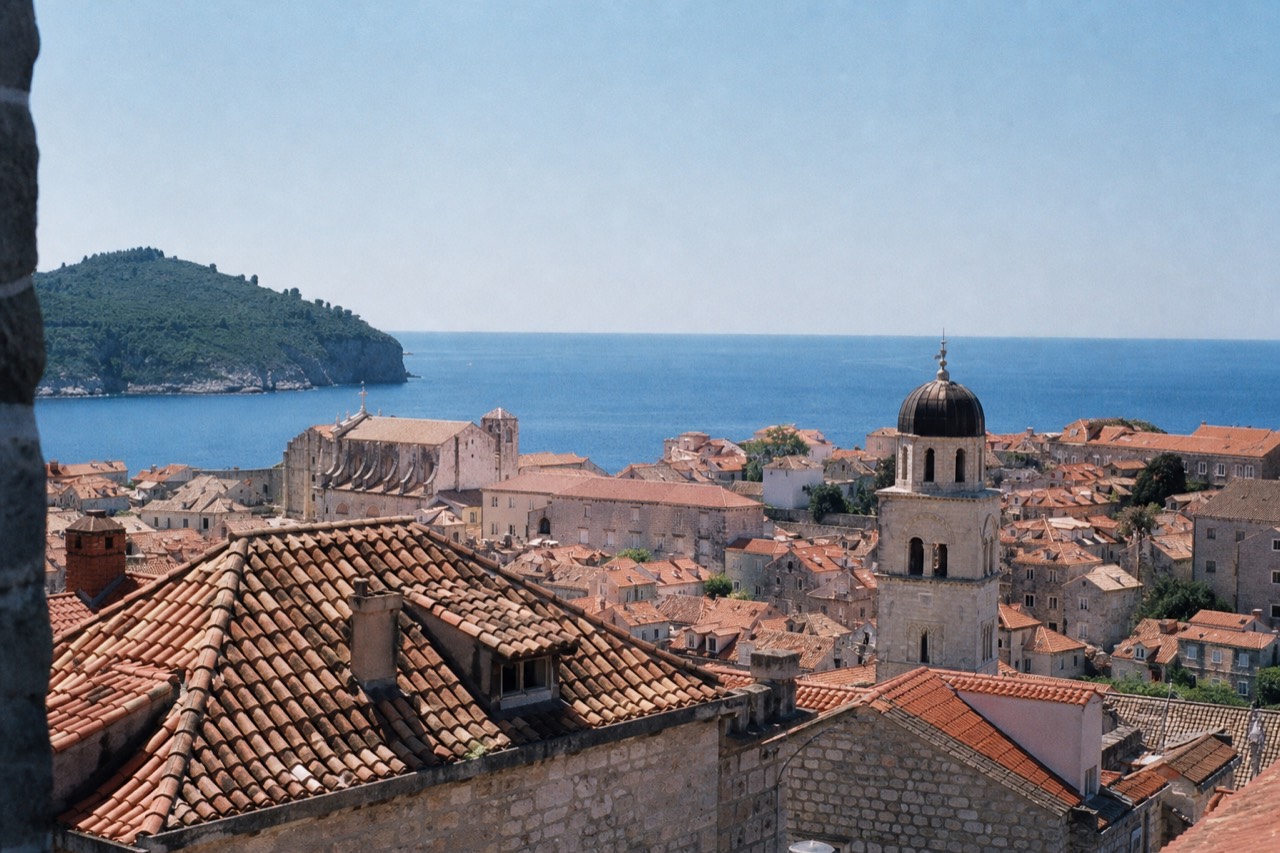
Is Dubrovnik Too Hot in August?
No, not too hot to visit, but hot enough that the middle of the day belongs to the shade and the water. The open-water August average is 25.8 degrees, sheltered bays read warmer, and the Old Town's stone holds the heat long after sunset. Plan your walls walk, your walking tour and your swimming around that, and August works.
I get this question from travellers every summer, and the honest answer has two parts. The first is that Dubrovnik in August is genuinely hot, the kind of heat where the limestone of the Stradun throws light back at you and the shaded side of the street becomes a competing lane of pedestrians. The second is that "too hot" is a planning question, not a weather verdict. People visit in August, a lot of them, and the ones who enjoy it are the ones who treat noon as a beach or boat time and save the stone streets for morning and evening.
The sea is the reason August still works. The long-run August average for this coast is 25.8 degrees, a figure from the NOAA OISST v2.1 climatology for 1991 to 2020, and it is corroborated within about 1 degree by the EMODnet and SeaDataNet series for the same waters. Those are open-water averages, not beach thermometer readings. Sheltered, shallow bays run warmer in high summer: the Croatian met service's own Dubrovnik buoy read 27.0 to 27.4 degrees on a single September day against a 23.6 September mean, which tells you exactly how much a calm bay can add on top of the offshore number.
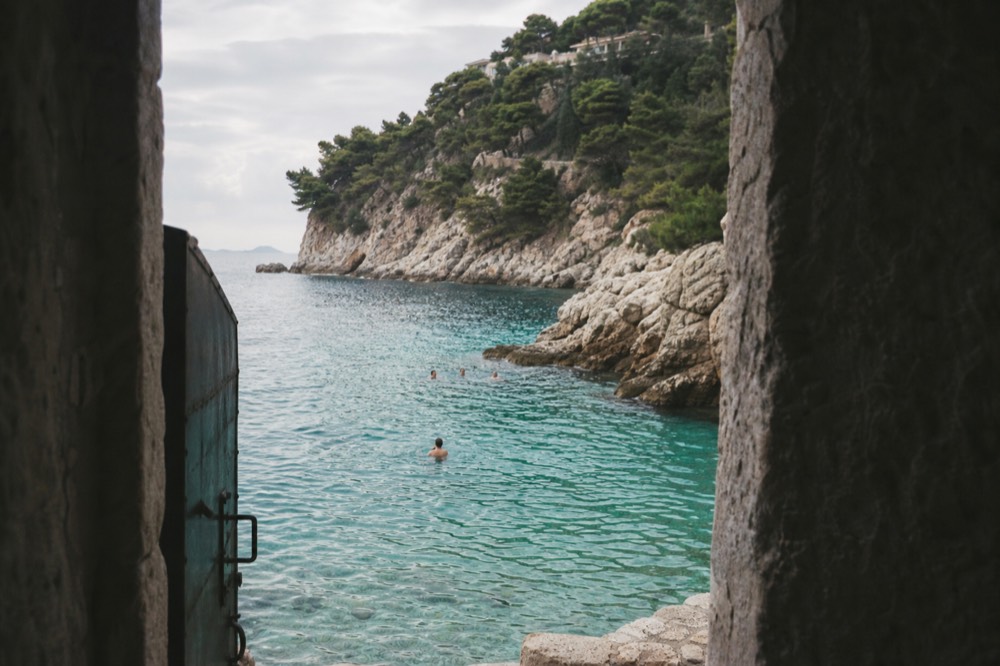
So the water is at its warmest of the year, and that is the whole argument for August. What the sea gives, the stone takes away. The Old Town is 24.7 hectares of limestone with very little shade on its main arteries, and the walls themselves are a two-kilometre walk with long exposed stretches. The walls operator's stated hours run 08:00 to 19:30, and the early end of that window is the only sensible one in August.
There is a physical reason the Old Town feels hotter than the thermometer says. Limestone stores heat through the day and releases it through the evening, so the narrow lanes stay warm well after the sun drops behind Mount Srđ, and the sea breeze that reaches the outer bays often fails to penetrate the deep street canyons inland. Add reflected light off pale stone and you get a felt temperature comfortably above the forecast one. None of this is a reason to stay away, but it is a reason to take the shade question seriously: a hat, a water bottle and a midday swim are not accessories in August, they are equipment.
| Month | Open-Water Average (°C) | What It Means for Swimming |
|---|---|---|
| June | 22.5 | Refreshingly cool, fully swimmable |
| July | 24.9 | Warm, comfortable for long swims |
| August | 25.8 | The warmest month of the year |
| September | 23.6 | Still warm, bays read higher |
| October | 21.0 | Warm enough for most swimmers |
These are 1991 to 2020 long-run averages for the open water off this coast, not this year's readings and not a beach gauge. Treat them as the baseline, then add a degree or two mentally for any sheltered cove in the afternoon. If you want the fuller picture on which months work for swimming, the swimming season guide breaks it down month by month.
The practical takeaway for August is simple. Be through the gates by 08:00, be in the water or on a boat by 11:00, and come back to the streets after 17:00. The city is at its most beautiful in the last two hours before the walls close anyway, when the light goes gold on the terracotta and the day-trip crowds have thinned. Dinner follows naturally, because the evening is when the city exhales: the counters drop, the stone starts giving back its heat, and the bars around the lanes fill with people who spent their afternoon at sea.
That rhythm leaves a hole in the middle of the day, and the best way I know to fill it is to get off the land entirely. These three options all solve the midday heat differently: your own boat, a crewed island cruise, or a shaded early-morning walk before the temperature climbs.
How Do You Keep Cool in Dubrovnik in August?
You get on the water. August's midday problem is a land problem: stone, stairs and sun. A boat solves all three at once, whether that is a skippered island cruise with lunch or a self-drive rental where you pick the coves. On land, the answers are early starts, shade and the cable car's evening hours.
The self-drive option deserves a proper look, because most visitors do not know it exists. The Dubrovnik Self-Drive Boat Rental for up to 6 People runs about 8 hours, is rated 4.9 across 266 reviews, and starts from $259.60, which splits very differently across a group of six than it reads at first glance. You are handed a boat, a briefing and a stretch of coastline with more quiet coves than the beaches in town can ever offer, and the August sea at 25.8 degrees average is the whole point of the exercise.
If you would rather have someone else handle the boat and the lunch, the crewed cruises do the same job with zero effort on your part. The full-day Elaphite Islands cruise with lunch runs about 8 hours from $59.16 per person and carries 10,312 reviews at 4.9, which makes it the most-reviewed product of any kind in the city. You spend the hottest hours moving between islands with a shaded deck under you.
On land, timing beats everything. The walls at 08:00 are a different experience from the walls at 13:00, and not only because of heat: the counter data shows the Old Town climbing from 5,419 people at 08:00 to a 7,739 peak at 10:00 on a busy September day, so the early start wins twice. The cable car runs until midnight in June, July and August per the operator's own timetable, and the upper station at 405 metres is reliably cooler than the street below it, so an evening ride up Mount Srđ is the civilised way to end an August day. If heat is shaping your whole itinerary, the best time to visit guide compares every month on crowds, water temperature and price.
Two smaller land tactics earn their keep in August. The first is to plan your Old Town walking around the shaded lanes east and west of the Stradun rather than the main street itself, which is fully exposed for its whole 298-metre run. The second is to treat the museums as your midday shelter rather than fighting the sun: the Rector's Palace and the other indoor sights are air-conditioned, quiet in the early afternoon, and exactly where a sensible August itinerary parks you between the morning walk and the evening stroll.
Is Dubrovnik Hot in September?
Yes, September is still warm, but it is the month where the heat stops being the story. The open-water average slips to 23.6 degrees, the air loses its August edge, and the sea in sheltered bays still reads in the mid-twenties. The catch is crowds: September is actually the busiest cruise month of the year.
September is the month I steer people toward when they want August conditions with the volume turned down a notch, but I am honest about the trade. The water is 23.6 degrees on the long-run average, only a little over two degrees below August, and the Croatian met service's Dubrovnik buoy has read 27.0 to 27.4 degrees on an early September day, which tells you the bays are still bathwater when the conditions line up. The air is gentler, the evenings are comfortable, and the sea is at its most swimmable for anyone who finds August's heat oppressive.
The counter-intuitive part is the cruise calendar. Port Authority data shows September 2025 brought 101,246 cruise passengers and October 100,132, both above July's 96,072 and well above August's 87,385. The peak season for ships is not the peak of summer, it is the shoulder. If your mental image of "quiet September" comes from other Mediterranean destinations, adjust it: Dubrovnik's cruise business runs hottest in early autumn, as the Port Authority's own statistics show month by month.
| Month (2025) | Cruise Passengers | Heat Level |
|---|---|---|
| June | 82,642 | Hot, building |
| July | 96,072 | Peak heat |
| August | 87,385 | Peak heat, fewer ships |
| September | 101,246 | Warm, busiest cruise month |
| October | 100,132 | Mild, second busiest |
Those passenger figures are ship capacity, not a count of people who actually walk ashore, so read them as an upper bound on ship traffic rather than a headcount in the Stradun. Still, the pattern holds: if you want warm water and you want to dodge the biggest cruise days, late August beats mid-September on the port calendar even though it is hotter.
The practical September play is the same as the August play with an hour's grace. Start at 08:00 or 08:30 instead of 07:30, swim in the afternoon, and use the evening for the streets. The cable car runs to 23:00 in the second half of September, per the operator's published timetable, so the sunset-and-dinner plan survives the season change.
How Hot Is Dubrovnik in June?
June is hot but not yet at its ceiling, and the sea tells the story better than the air. The open-water average is 22.5 degrees, three and a third degrees below August, and the crowds sit noticeably below the July and September peaks. For travellers who want warmth without the full August furnace, June is the compromise month.
June is the month I describe as hot-in-the-day, cool-in-the-evening. The stone has not yet stored a whole summer's worth of heat, the sea at 22.5 degrees on the long-run average is refreshingly cool on entry and comfortable after a minute, and the cruise calendar reads 82,642 passengers for June 2025, below every month from July through October. The water is the honest differentiator: 22.5 against August's 25.8 is the difference between a swim that wakes you up and a swim that you have to be talked out of.
The rhythm of the day is the same as August's but more forgiving. You can walk the walls at 09:00 in June without the punishing reflected light, and the counter data suggests the 10:00 peak is worth beating regardless of month. Boat days work too, and this is the month where a full-day island cruise is a pleasure rather than a rescue: you are out for the scenery and the lunch, not primarily for the shade.
A recent guest review of that cruise puts the August version of the experience well, and it applies to June too:
This was a wonderful day. Nice and shaded on the boat as we cruised on the cool adriatic. Loved seeing the neat Elphiti Islands and a wonderful way to get out the the heat and large crowds for a bit. They kept the drinks flowing and lunch was phenomenal and a generous portion. This is the way to cruise the Adriatic.
Shelby_S
The one June caution is that the season is shorter at the edges of the day. The cable car runs to 21:00 in April and stretches toward midnight only from mid-June onward, so check the operator's timetable for your exact dates rather than assuming August's hours. If June's balance appeals, the Dubrovnik in June guide goes deeper on events, water temperature and what opens when.
Is Dubrovnik Too Hot in July?
July is the hottest month, marginally ahead of August on the water and at least its equal on the stone, and it is also the second-busiest cruise month of the summer. It is not too hot to visit, but it is the month where skipping the midday Old Town is not optional advice, it is the difference between a good day and a miserable one.
July and August are close enough on temperature that the choice between them should be made on crowds and price, not on degrees. The open-water July average is 24.9 against August's 25.8, a difference you will feel in the water and barely at all on the Stradun at 14:00. What separates them is the port calendar: July 2025 brought 96,072 cruise passengers against August's 87,385, so July carries more ship traffic while August carries more of the stay-a-week holiday crowd. Both months sit below September's 101,246.
The July playbook is the August playbook with less slack. Walls at opening, water by late morning, streets again after 17:00. The Old Town's official carrying capacity is 11,275 people, and the counters update every 15 minutes at all six entrances, which is why the city can publish an arrival prediction at all. On a busy day the count climbs from 5,419 at 08:00 to 7,739 at 10:00, so the early hour buys you both cool stone and thinner crowds in the same purchase.
| Time of Day | Old Town Headcount | What to Do Instead |
|---|---|---|
| 08:00 | 5,419 | Walk the walls now |
| 10:00 | 7,739 (peak) | Be on a boat or at a beach |
| 11:00 | 7,205 | Still water time |
That headcount curve was read on 8 September 2026, so treat it as the shape of a busy day rather than a promise about your specific dates. The shape is the reliable part: the Old Town fills through the morning, peaks late morning, and empties in the afternoon when the heat pushes people out to the beaches and the boats. If your instinct is to visit the big sights after lunch, reverse it.
For the morning slot, a guided walk does the shade-routing for you. The Old Town Walking Tour with Local Guide starts from $20 per person and is rated 4.8 across 5,826 reviews, and reviewers consistently single out guides who aim for the shaded lanes on hot days rather than marching the group down the middle of the Stradun.
Should You Still Visit Dubrovnik in August?
Yes, if you accept the two rules of an August visit: the middle of the day belongs to the water, and the sights belong to the edges of the day. Travellers who fight that rhythm find August brutal. Travellers who build around it get the warmest sea of the year, midnight cable car rides and an Old Town that empties beautifully after 17:00.
The heat question is really a schedule question, and the schedule writes itself once you accept it. Morning for stone, midday for water, evening for everything else. August gives you the tools the other months lack: a 25.8-degree sea average, cable car hours that run to midnight, and a walls ticket valid from 08:00, which is the single best hour of the day to be up there. The city's own counting system, six counters updating every 15 minutes against an 11,275 capacity ceiling, exists precisely because so many people choose these months, and it is the reason the crowds stay measurable rather than mythical.
It is worth being honest about who August is wrong for. If you cannot tolerate heat at all, if you are travelling with very small children who need midday naps in a cool room, or if your holiday is measured in museum hours rather than swimming hours, the shoulder months will serve you better and the sea will still be warm. For everyone else, the August trade is a good one: you accept the hottest stone of the year and you are paid back with the warmest water, the longest evenings and a city that stays fully open, from the first walls entry at 08:00 to the last cable car cabin at midnight.
For the complete picture of what each month offers, from water temperature to cruise traffic, start with Things to Do in Dubrovnik and work outward from there. The August answer, in one line: hot, yes; too hot, no; but only if the sea gets the middle of your day.
Common Questions About August Heat in Dubrovnik
Is Dubrovnik too hot in August?
Dubrovnik is hot in August but not too hot to visit, provided you keep the middle of the day on or in the water. The open-water August average is 25.8 degrees, the warmest month of the year, and sheltered bays read warmer still. Walk the walls at opening, swim or boat from late morning, and return to the streets after 17:00.
Is Dubrovnik hot in September?
Yes, September stays warm with an open-water average of 23.6 degrees, and sheltered bays can read several degrees higher on a calm day. September is also the busiest cruise month of the year, with 101,246 cruise passengers in September 2025 against August's 87,385, so the heat eases before the ship traffic does.
How hot is Dubrovnik in June?
June is hot in the day and mild in the evenings, with an open-water sea average of 22.5 degrees against August's 25.8. Cruise traffic sits below the July through October peak. It is the compromise month for travellers who want warmth without the full summer furnace.
Is Dubrovnik too hot in July?
July is the hottest month on the water at a 24.9-degree open-water average, effectively level with August on land. It also carries more cruise passengers than August, 96,072 against 87,385 in 2025. It is manageable with early starts and midday swimming, the same playbook as August with less slack.
What time of day is best for the city walls in summer?
08:00, at opening. The walls operator's stated hours run 08:00 to 19:30, and the Old Town counters show the headcount climbing from 5,419 at 08:00 to a 7,739 peak at 10:00 on a busy day, so the first hour buys you both cooler stone and thinner crowds.