How Many Hours Do You Need on Lokrum Island?
The honest hour count for Lokrum, from a rushed two hours to a full slow day, with ticket prices, boat times, swimming and food covered in plain terms.
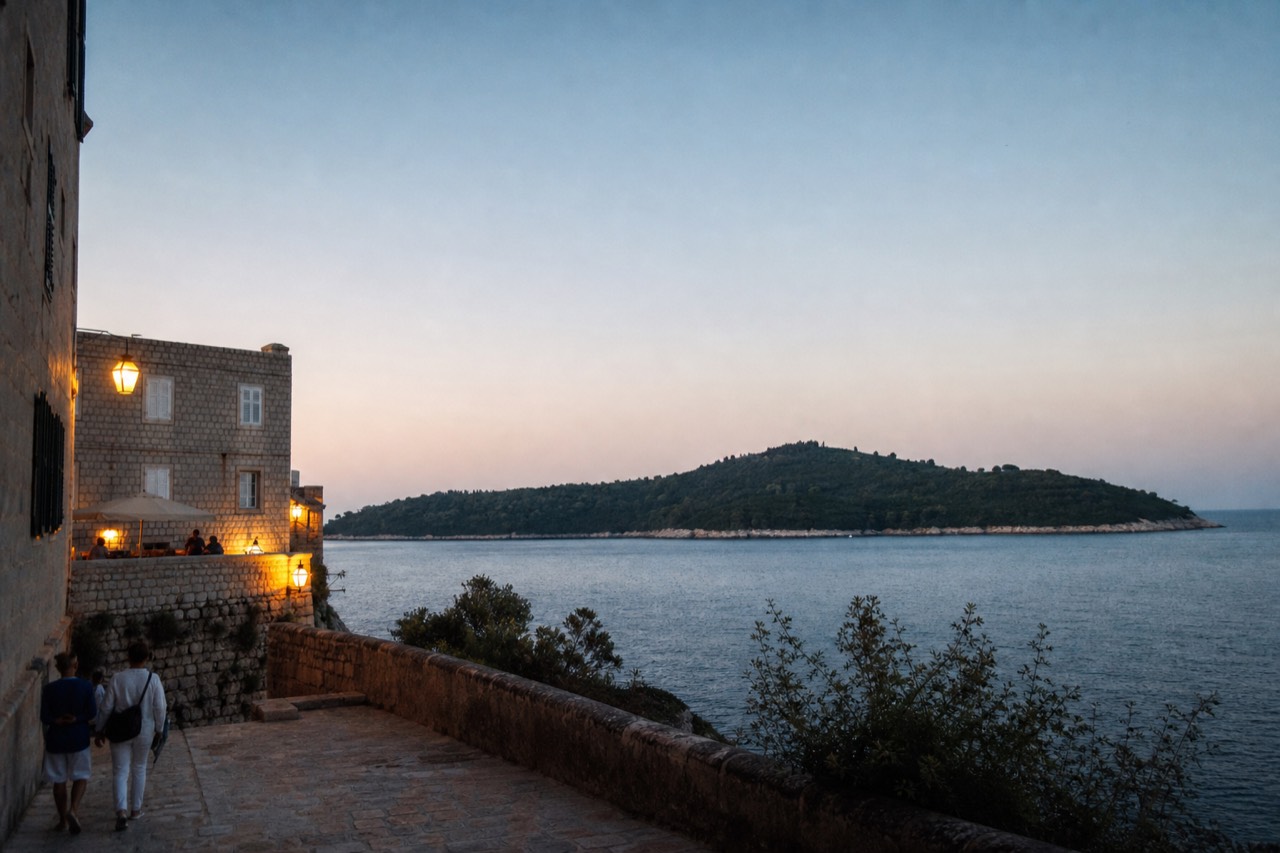
How Many Hours Do You Need on Lokrum Island?
Plan on four to five hours on the island itself, which means setting aside most of a half-day door to door. Two hours covers a rushed loop of the botanical garden and the Dead Sea. Six or more is only worth it if you are swimming, eating, and treating the island as a slow afternoon rather than a sight.
I get asked this question on the waterfront more than almost any other, usually by someone holding a coffee and staring at the boats. The honest answer starts with a number most guides skip: the Lokrum ticket is 30 euro per person and it covers both the reserve entry and the return boat transfer, whether you ride the official boat or arrange your own way over. So the clock is not really about money. It is about what you actually want to do once the trees close around you.
Lokrum is small, but it is not a viewpoint. It is a reserve, a botanical garden, a swimming spot, a peacock colony, a ruined Benedictine monastery, and a walkable coastline all packed onto one green rock. People who budget ninety minutes almost always come back to the harbour looking like they have been cheated, because they spent thirty of those minutes walking from the pier to anything worth seeing and back.
The boat schedule shapes your day more than anything else. Departures leave the City Harbour at 09:00, then every 15 minutes from 10:00 to 18:00, and the ticket office at Luža in the Old City Port works 08:00 to 18:00. A ticket stays usable for three days, which surprises people: you do not have to commit to a rigid return time the way you do with some island ferries. That flexibility is exactly why the four-to-five-hour answer works so well for most travellers.
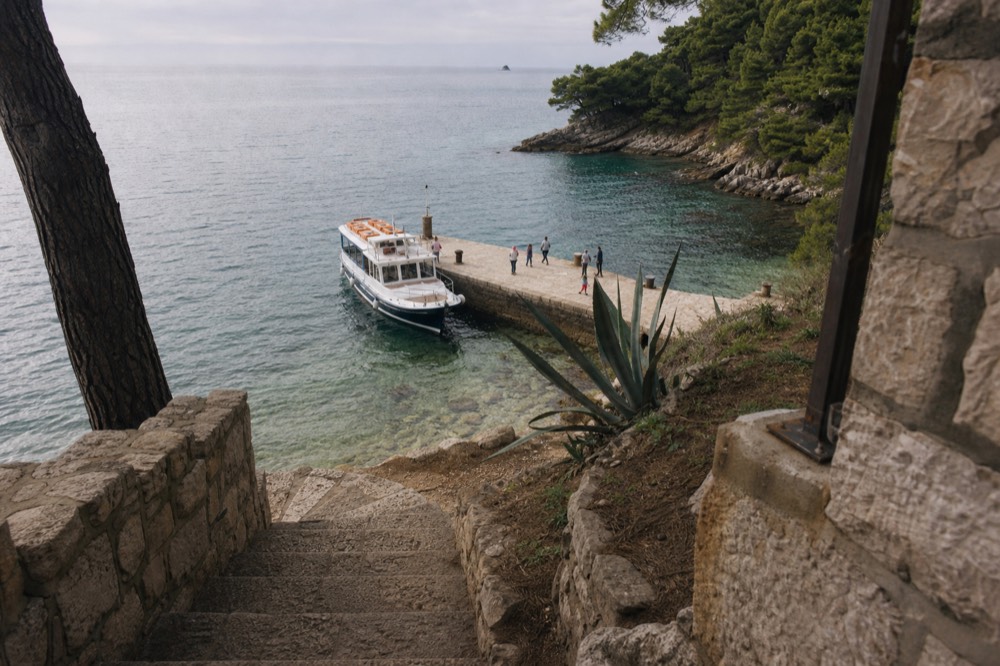
If you are pairing Lokrum with a boat tour rather than riding the official ferry, the arithmetic changes again. Some tours treat Lokrum as a stop inside a bigger itinerary, which compresses your island time to whatever the operator schedules. If you want the full island at your own pace, the standalone ferry ticket is the better tool. If you want Lokrum plus a cave swim plus a boat day in one booking, a combined tour earns its keep.
For the deeper background on the reserve itself, the cluster guide on Lokrum Island covers everything in full, and the question is Lokrum worth visiting gets its own honest treatment elsewhere on Things to Do in Dubrovnik. This page stays on the clock.
How Do the Boats and Tickets Shape Your Day?
The official boat runs from the City Harbour at 09:00, then every 15 minutes from 10:00 to 18:00, and the 30 euro ticket covers the reserve plus the return transfer, valid for three days. The practical effect is that you can arrive mid-morning, leave late afternoon, and never worry about missing a single departure.
The ticket structure is the part worth understanding before you queue. There is no separate ferry fare and no separate entrance fee: the Public Institution Lokrum Reserve sells one combined product, and it costs the same whether you ride their boat or kayak over on your own. That detail comes straight from the reserve's own site, lokrum.hr, which is also where the current schedule lives.
There is a second ticket worth knowing about. The combined Dubrovnik, Trsteno, Lokrum, Dubrovnik ticket is 42 euro and adds Trsteno Arboretum admission plus an air-conditioned boat. If the arboretum was already on your list, that bundle saves real money. If it was not, the plain 30 euro ticket is the one you want.
| Ticket | Price | What it covers |
|---|---|---|
| Lokrum only | 30 euro per person | Reserve entry and return boat transfer |
| Dubrovnik, Trsteno, Lokrum combined | 42 euro per person | Lokrum entry, Trsteno Arboretum, air-conditioned boat |
Timing matters more than ticket choice. The first boat at 09:00 is the quiet one, and the island genuinely feels like a different place before the late-morning arrivals. By early afternoon, the paths near the pier carry steady foot traffic, and the swimming spots fill. If your day allows it, take the 09:00 or a 10:00 departure, plan lunch on the island or back in the Old City, and return on a mid-afternoon boat. That is the four-to-five-hour shape in practice.
The last consideration is the season. The 15-minute frequency holds through the day from 10:00, but shoulder-month boats run on the same published schedule with fewer passengers, so a late-September visit feels emptier at every hour. In peak summer, the frequency is your friend precisely because the early boats are not.
Is It Worth Going to Lokrum Island?
Yes, for almost every traveller, Lokrum is worth the half-day. It is the only green, walkable, swimmable island you can reach from the Old City harbour without planning a full-day trip, and the 30 euro ticket buys a nature reserve rather than another stone street. The people it disappoints are those who give it under two hours.
Worth is a loaded word, so let me be specific about who should and should not cross. If your Dubrovnik visit is one or two days and entirely inside the walls, Lokrum competes directly with the walls themselves and loses. If you have three days or more, or you are staying a week, the island is the single best pressure valve the city has. The Old Town recorded about 4.2 million overnight stays across the destination in 2025, sharing first place in Croatia with Rovinj, and you feel every one of those visitors on the Stradun by late morning. Lokrum is where the crowd thins.
The island's character is unusual for the Adriatic. There are no cars, no hotels, and no village. What you get instead is a botanical garden planted around a former monastery, freely wandering peacocks, a small salt lake locals call the Dead Sea, and rocky swimming ledges on the south side. The Old Town of Dubrovnik itself is a UNESCO World Heritage site inscribed in 1979 under criteria (i), (iii) and (iv), covering 24.7 hectares, per the UNESCO listing. Lokrum is the counterweight to all that stone: green, shaded, and quiet by mid-afternoon.
The strongest argument for worth, in my view, is the swimming. You can read the full case in can you swim at Lokrum, but the short version is that the island's rocky ledges put you in deep, clear water within a few minutes' walk of the pier, which the city's own beaches cannot quite match on a crowded August day. Pair that with the shade of the garden and a slow loop of the coastline path, and four hours disappears without effort.
If you would rather fold Lokrum into a bigger water day, the boat tour that includes an optional island stop is the efficient route. The Dubrovnik Lokrum and Betina Cave boat tour runs from $39.42 per person, rated 4.6 across 1,154 reviews, and it stitches a cave swim onto the island visit so you are not choosing between them.
One more worth consideration: the sea kayaking alternative. A guided kayak tour of Lokrum Island and Betina Cave runs about two hours from $35.49 per person, rated 4.9 across 1,518 reviews, and it reaches the island and the cave under your own paddle. One recent review of that tour reads:
That is a two-hour taste rather than a full island day, and for some travellers it is the better trade.
Is There a Restaurant on Lokrum Island?
Yes, Lokrum has food outlets on the island, so you can eat without returning to the mainland, but the choice is limited and casual rather than a destination dining scene. Most visitors are better off eating a proper meal back in the Old City and treating the island's kiosks as a snack and drink stop.
I want to be careful here, because hours and menus on the island shift with the season, and I will not print specifics I cannot stand behind. What is stable is the shape of it: a café-style operation near the monastery area serving drinks, light dishes and snacks through the middle of the day, which is enough to anchor a four-hour visit without anyone going hungry. It is not konoba dining, and it is not where you would plan a long lunch.
That shapes your hour count in a quiet way. If you plan to eat a full lunch on the island, add an hour to whatever you budgeted. If you are happy with a snack and a swim, the four-to-five-hour figure holds. Families with small children should lean toward the longer end regardless, because the combination of swimming, drying off, and eating stretches every timeline.
The alternative is the Old City, ten minutes of water away in distance, where the restaurant scene is one of the best in Croatia. The trade is simple: eat well on land and give the island your full attention, or eat lightly on Lokrum and never break the spell of the place. Both work. What does not work is arriving at 13:00 expecting a leisurely restaurant lunch and discovering the day has been re-planned for you.
Practical note: carry water regardless of season. The island's shaded paths feel cooler than the stone streets, but the walk between the pier, the Dead Sea and the monastery is longer than it looks on a map, and the kiosks are not always where you are.
Can You Swim at Lokrum Island?
Yes, swimming is one of the main reasons to go, and the island's rocky ledges and the small salt lake called the Dead Sea are swimmable through the whole visitor season. The sea is warmest in August, when the long-run average for this coast is about 25.8 degrees, and it stays near 23.6 degrees through September.
That temperature framing needs honesty, because it is the most misquoted number in Dubrovnik content. The figures above are NOAA long-run averages for 1991 to 2020, open-water grid-cell values, not a beach thermometer and not this year's water. EMODnet's independent climatology corroborates them within about a degree, August 24.90 and September 23.15. Sheltered bays run warmer: the Croatian met service's own Dubrovnik buoy read 27.0 to 27.4 degrees on 8 September 2026 against that 23.6 September mean. So treat the averages as a planning floor, not a promise.
| Month | Open-water average, degrees C |
|---|---|
| June | 22.5 |
| July | 24.9 |
| August | 25.8 |
| September | 23.6 |
| October | 21.0 |
Where you swim on Lokrum matters. The Dead Sea, the sheltered salt lake on the south side, is flat, warm and popular with families, and it is the safest option for weaker swimmers. The rocky ledges along the outside coast put you in deep, clear water fast, and they are the better choice for confident swimmers who want the famous colour. Sea shoes earn their place on both, because the entry is stone rather than sand.
Swimming is also the single biggest variable in the hours question. A visit without swimming is a two-to-three-hour walk. A visit with swimming, drying off, and a snack is a five-hour day without anyone noticing the time pass. If you are visiting between June and September and the weather is kind, budget for the swim whether or not you think you will take it, because the water wins that argument more often than not.
What Does a Sensible Half-Day on Lokrum Look Like?
Take a boat between 09:00 and 10:30, walk the monastery and botanical garden first while the shade is cool, swim at the Dead Sea or the coast ledges before the afternoon peak, snack or eat lightly, and return on a boat between 14:00 and 16:00. That is four to five hours on the island and it touches everything worth touching.
The order matters more than people expect. The garden and monastery complex are shaded, so they are comfortable at any hour, but the paths near the pier are busiest right after each boat arrives. Walking first means you move against the flow. Swimming second means the water has warmed from the morning sun and the ledges have cleared of the day-trippers who came for a quick look.
| Visitor type | Hours on the island | What fits |
|---|---|---|
| Cruise passenger on a tight call | 2 to 3 | Garden, monastery, one viewpoint, no swim |
| Typical visitor | 4 to 5 | Full loop, swim, snack, slow pace |
| Swimmer or family | 5 to 6 | Two swim stops, lunch on the island, Dead Sea |
| Combined with a boat tour | Whatever the tour schedules | Cave swim plus a short island stop |
Cruise passengers deserve a special word, because Dubrovnik's cruise calendar is counter-intuitive. Cruise passengers at the Port of Dubrovnik peaked in September 2025 at 101,246 and October at 100,132, above July's 96,072 and August's 87,385, and the Port Authority limits most days to 8,000 cruise passengers. If your ship calls in September or October, assume the Old Town will be full and Lokrum will be your best escape, and check your all-aboard time against the last boats honestly.
For travellers who want Lokrum plus a bigger water day, the Blue Cave and Sunj Beach boat tour runs from $63.48 per person, rated 4.87 across 3,105 reviews, and pairs a cave stop with a sandy beach that suits families. It is the format contrast worth knowing: cave and beach by boat, or green island and swimming by ferry.
What If You Only Have Two Hours on Lokrum?
Two hours is enough for a fast loop of the botanical garden, the monastery courtyard, and one viewpoint, walked briskly with no swimming. It is not enough to do the island justice, but it beats skipping it entirely, and the 15-minute boat frequency makes a short visit logistically painless.
The compressed route is simple. Walk from the pier straight to the monastery complex, cut through the botanical garden's main axis, take the short climb to the Fort Royal viewpoint at the island's high point for the panorama back over Dubrovnik and the open sea, and descend directly to the pier. Skip the Dead Sea, skip the coastal ledges, skip any thought of food. You will pass peacocks on the way regardless, because they own the paths.
The two-hour visit is really a cruise-passenger format, and it works best on a morning call when the first 09:00 boat is nearly empty. What it cannot survive is indecision. Every minute spent at the pier reading the map is a minute the island takes back, so decide your route on the boat, not on land.
If your time is that tight, an honest alternative is to skip the standalone ferry and take a tour that includes Lokrum as a stop alongside something else. You trade freedom for efficiency, which is the right trade exactly once, on exactly this kind of day.
Common Questions About Time on Lokrum Island
How many hours do you need on Lokrum island?
Four to five hours on the island suits most visitors, which means setting aside a half-day door to door. Two hours covers a rushed loop without swimming, and six or more is only worth it if you plan to swim, eat, and move slowly.
Is It Worth Going to Lokrum Island?
Yes, for nearly everyone with three or more days in Dubrovnik. It is the closest green, swimmable escape from the Old Town, and the 30 euro ticket covers both the reserve and the return boat. It disappoints only visitors who give it under two hours.
Is There a Restaurant on Lokrum Island?
There are food and drink outlets on the island, but the offering is casual and limited rather than a dining destination. Plan on snacks and drinks, eat your main meal back in the Old City, and add an hour to your budget if you do want a proper lunch on Lokrum.
Can You Swim at Lokrum Island?
Yes. The Dead Sea salt lake and the rocky coastal ledges are swimmable through the season, and the sea averages about 25.8 degrees in August and 23.6 in September as long-run open-water figures. Sheltered spots often run warmer than those averages.
Do You Have to Book the Lokrum Boat in Advance?
The official boat runs at 09:00 and then every 15 minutes from 10:00 to 18:00, and the ticket office at Luža works 08:00 to 18:00. Advance booking is rarely necessary outside peak days, and the ticket stays valid for three days after purchase.
What Is the Best Time of Day to Visit Lokrum?
Take the 09:00 or an early 10:00 departure. The island is quietest before the late-morning arrivals, the shaded paths are coolest, and you can swim before the ledges fill, then return mid-afternoon with the day still open.