How Long Is the Ferry Ride to Lokrum Island?
The Lokrum boat crossing explained: departures from the Old City Harbour, ticket prices, what the crossing covers, and whether Lokrum is worth your half day.
How Long Is the Ferry Ride to Lokrum Island?
The honest answer is that the Lokrum Reserve publishes no official crossing time, so no verified number of minutes exists for this route. What is verified is the schedule: boats leave the City Harbour at 09:00, then every 15 minutes from 10:00 to 18:00. Lokrum sits directly offshore from the Old City Port, and the trip is the shortest scheduled crossing on this coast.
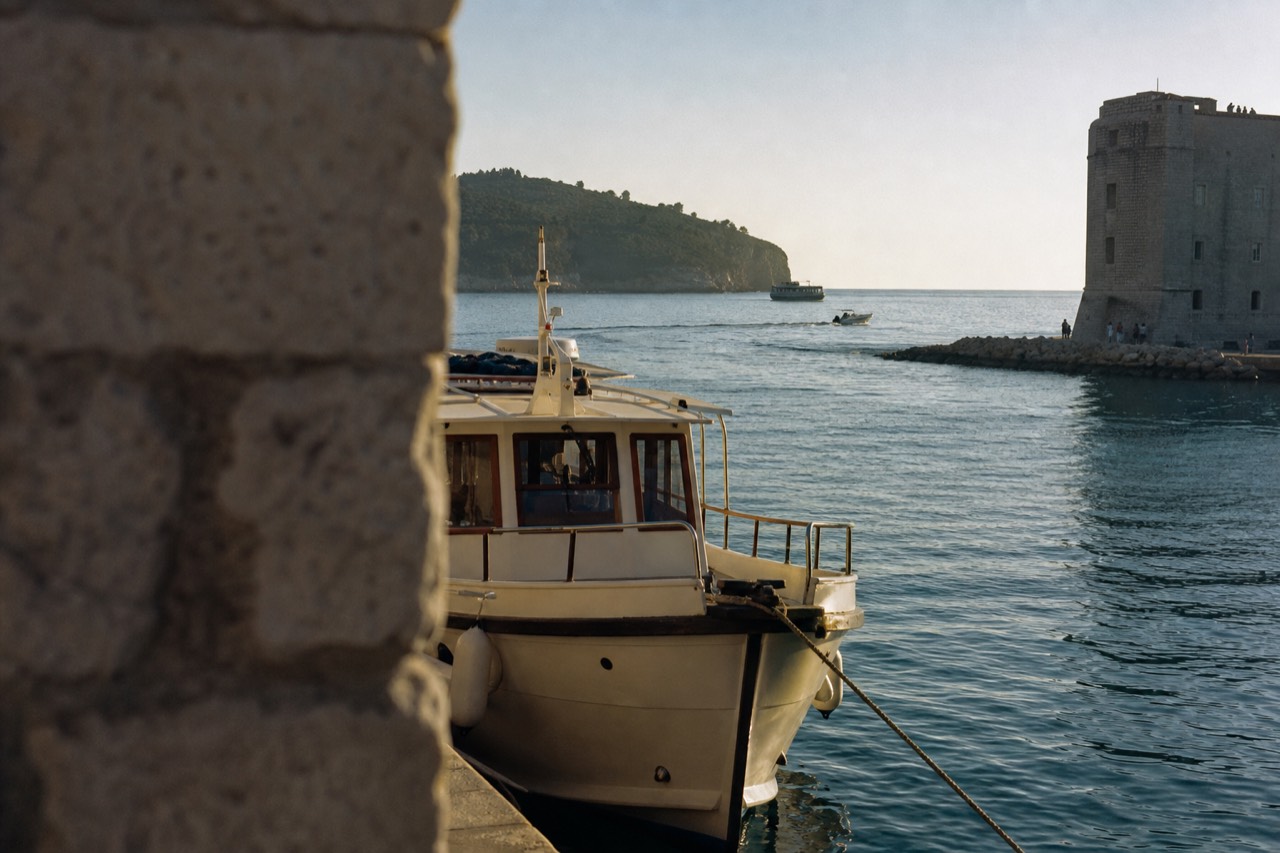
I get asked this more than almost any other practical question about Dubrovnik, and I always answer it the same way: stop planning around the crossing and start planning around the boat. Lokrum is the green island you can see from the city walls, sitting so close to the Old Town harbour that you can make out individual trees from the Pile side of the circuit. You are not booking a ferry crossing in the sense of a coastal journey, you are hopping across a stretch of water to a reserve that guards the entrance to the bay.
The reason I will not print a number of minutes, even though plenty of second-hand sources happily do, is that neither the Lokrum Reserve's own site nor its official boat schedule PDF states a crossing duration. Third-party figures range roughly across a ten-to-fifteen-minute band, which is exactly the kind of spread that tells you nobody is quoting a primary source. When the operator publishes a figure, it goes on this page. Until then, the departure pattern is the fact you can plan around, and it is a generous one: a boat every quarter hour through the whole day means you never wait long at either end.
What matters more than the crossing is the ticket. A Lokrum ticket is 30 euro per person, and it covers both the reserve entry and the return boat transfer, whether you ride the official boat or arrange your own transport to the island. The ticket office sits at Luža in the Old City Port and works 08:00 to 18:00, and a ticket stays usable for three days after the date printed on it, which gives you a cushion if the weather turns. There is also a combined Dubrovnik, Trsteno, Lokrum, Dubrovnik ticket at 42 euro that adds Trsteno Arboretum admission and an air-conditioned boat.
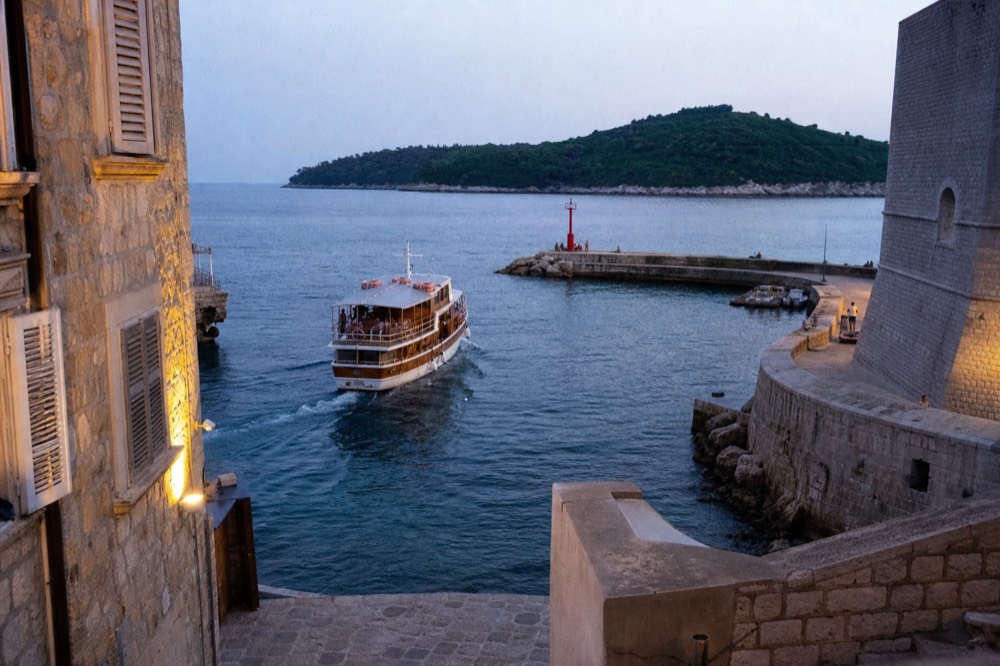
The practical rhythm of a Lokrum day is simple. You buy the ticket at Luža, you board at the City Harbour, you spend as long as you like on the island, and you take any returning boat you choose. The last departures of the day leave in the early evening, and the reserve closes to visitors overnight, so nobody camps out there. If you are pairing Lokrum with a morning on the walls, go to the walls first at opening, when the crowd counters are still low, and take a midday boat.
If you would rather see Lokrum as part of a longer outing on the water rather than as a standalone hop, there is a boat tour that combines the Betina Cave swim stop with optional Lokrum Island time, run by Dubrovnik activities, from $39.42 per person and rated 4.6 across 1,154 reviews. It is a different proposition from the reserve's own shuttle, more coastline, more swimming, and the island as one stop among several. You can compare it against the other options in our Lokrum Island guide, and if you are still sketching the wider trip, the homepage of Things to Do in Dubrovnik collects the sight, beach and tour guides in one place.
How Long Is the Ferry Ride From Dubrovnik to Split?
This is a different question entirely, and mixing the two up wrecks itineraries. There is no local ferry between Dubrovnik and Split in the Lokrum sense at all. The connection is a catamaran service and bus routes along the coast, and the sea leg is a scheduled coastal crossing, not a short hop. If your real question is Lokrum, the answer above is the one that applies.
People arrive at this page from two directions. Some typed "ferry ride to Lokrum" and mean the island. Others are planning a Croatia route and assume one ferry system covers everything, from the five-minute Lokrum shuttle to the long coastal runs. Dubrovnik does not work that way. The Lokrum boats are a reserve shuttle with a bundled entry ticket. The Split connection is a separate operation entirely, with its own season, its own booking logic and its own capacity problems in high summer.
The structural fact worth knowing is that Dubrovnik has no train station and no car ferry along this stretch connecting it to Split, so travellers choose between catamaran, bus, private transfer or a flight. Each suits a different kind of trip, and the trade-offs change with the season. The catamaran is the scenic choice but sells out in peak weeks. Buses run frequently along the coastal road and stop in Neum, the Bosnian corridor, which means a border crossing with your passport even though you never leave the region's logic. Private transfers cost more and skip the schedule entirely.
I keep the full comparison, with the routing detail and the booking advice, in a dedicated piece on getting from Dubrovnik to Split, because it deserves its own page rather than a paragraph bolted onto a Lokrum article. The short version for anyone building an itinerary: do not plan a Split connection on the same day as a Lokrum visit. The Lokrum day is a half-day island experience with swimming and walking; the Split day is a travel day. Crowding them together is the single most common planning mistake I see from first-time visitors.
One timing note that genuinely changes decisions: September and October are the two busiest cruise months in Dubrovnik, with 101,246 and 100,132 cruise passengers in 2025, ahead of July's 96,072 and August's 87,385. That is Port Authority data, and it runs against every instinct that says avoid the city in August. If you are connecting through Dubrovnik in early autumn, the transport hubs and the Old Town are busier than the summer brochures suggest, and building slack into travel days matters more than in July.
Is It Worth Going to Lokrum Island?
For most visitors, yes, and the reason is the combination: a protected nature reserve with botanical gardens, pebble swimming coves, ruined monastery buildings and free-roaming peacocks, all reached by a boat that leaves every quarter hour from the Old City Harbour. The 30 euro ticket bundles the return transfer, so the island costs about what a museum-heavy afternoon in town costs.
The case for Lokrum rests on what it is not. It is not another walled town, not a beach resort and not a day-long commitment. The Reserve covers the whole island, and its rules reflect that: no overnight stays, protected vegetation, and a botanical garden that dates to the island's Habsburg-era ownership. The monastery ruins sit at the centre, the peacocks are descendants of birds given to Dubrovnik long ago, and the swimming spots are rocky and clear rather than sandy and crowded. The Dead Sea, a salt-water lake on the island's south side, is the best-known swim.
The sea itself deserves an honest framing. The September long-run average for this coast is about 23.6 degrees, from a NOAA satellite climatology covering 1991 to 2020, and August averages about 25.8. Those are open-water grid-cell averages, not beach thermometer readings, and sheltered spots like Lokrum's coves often run warmer than the offshore figure. The Croatian met service's own Dubrovnik buoy read 27.0 to 27.4 degrees on 8 September 2026 against that 23.6 September mean, which tells you exactly how much a sheltered bay can diverge from the open-sea number.
Time budgeting is where people go wrong. You can see the core of Lokrum in about two hours if you walk briskly, but that misses the point. The island rewards the slow version: a swim, a wander through the gardens, a drink near the harbour, and a return boat in late afternoon. If you are asking how many hours to set aside, our page on how many hours you need on Lokrum breaks it down by travel style, from the cruise-passenger dash to the full lazy day.
For the visitor who wants the island plus the water in one booking, the Betina Cave and Lokrum boat tour is the natural pick: from $39.42 per person, rated 4.6 across 1,154 reviews, with the cave swim stop on the route. It sits in a different slot from the pure shuttle, because the shuttle takes you to Lokrum and back while the tour shows you the coastline most visitors only ever see from the walls. Both are legitimate answers; they just answer different questions.
The same operator logic applies to timing. The tour runs on a fixed schedule rather than the shuttle's every-quarter-hour rhythm, so it suits the traveller who wants the structure of a guided outing, while the shuttle suits the traveller who wants to decide on the jetty. Neither requires deep planning, but the tour does reward an early booking in the shoulder months, when the September and October cruise peaks put extra demand on every boat leaving the Old City Harbour.
Is It Worth It to Go to Lokrum Island?
Judged purely on value, Lokrum holds up well against the alternatives. The 30 euro ticket is less than the 40 euro main-season City Walls ticket and includes the boat both ways. Compared with the island cruises, which start from $59.16 per person for a full Elaphite day, Lokrum is the cheaper half-day, while the cruises are the better full-day. Your budget and your clock decide, not the island.
The comparison that actually helps is the one against the walls, because most visitors do both in one trip. The adult City Walls ticket is 40 euro in main season, 1 March to 30 November, and drops to 20 euro in December. The one-day Dubrovnik Pass also costs 40 euro in main season and adds ten more sights plus a 24-hour bus ticket, which makes it the better buy if museums are on your list. Lokrum's 30 euro sits below both, and unlike the walls it needs no stairs, no early start and no crowd-timing strategy.
The crowd picture on the island is gentler than in the Old Town, but not absent. The official carrying capacity for the Old Town core, from the UNESCO carrying-capacity assessment, is 11,275 people, and the counting system at the six entrance gates updates every 15 minutes. On a real September morning the counters read 5,419 people at 08:00, a 7,739 peak at 10:00, and 7,205 by 11:00. Lokrum absorbs overflow from exactly those hours, so a boat just after 09:00 or one in the mid-afternoon lull puts you on the island with more space than a midday crossing.
If your instinct is that the water itself is the attraction, consider approaching Lokrum by kayak instead of by shuttle. There is a two-hour guided sea kayaking tour of Lokrum Island and Betina Cave, from $35.49 per person and rated 4.9 across 1,518 reviews, which paddles the same stretch the boat crosses and stops for a swim at the cave. One guest review sums up the appeal: the family swim break at Betina Cave and the clarity of the water are what people remember, alongside a guide who explains the city from the sea side.
Loved this kayaking experience. Had an amazing time as a family and enjoyed the swimming break at Betina Cave very much. The views were amazing, water was crystal clear, the guide was excellent and we learnt a lot about Dubrovnik.
Imara_D
The verdict I give friends: if you have one full day in Dubrovnik, do the walls and the Old Town and skip Lokrum without guilt. If you have two days or more, Lokrum is the best half-day escape available, and the boat schedule makes it almost effortless to slot in. It is the rare sight where the transport is pleasant rather than a chore.
What the Verified Lokrum Numbers Actually Say
The verified facts are few and solid: a 30 euro per-person ticket covering reserve entry and return boat transfer, a 42 euro combined ticket with Trsteno Arboretum, boats at 09:00 then every 15 minutes from 10:00 to 18:00, a ticket office at Luža open 08:00 to 18:00, and three-day ticket validity. Everything else you may have read about crossing minutes is second-hand.
Because this article exists to answer a question that attracts invented numbers, here is the full set of Lokrum facts that survive verification, in one place. The primary sources are the Lokrum Reserve's own site and its official boat schedule PDF, and every figure below comes from them.
| Item | Verified detail |
|---|---|
| Lokrum ticket | 30 euro per person, reserve entry plus return boat transfer |
| Combined ticket | 42 euro, Dubrovnik, Trsteno, Lokrum, Dubrovnik, includes Trsteno Arboretum and air-conditioned boat |
| Departures from City Harbour | 09:00, then every 15 minutes from 10:00 to 18:00 |
| Ticket office | Luža, Old City Port, 08:00 to 18:00 |
| Ticket validity | Usable no later than three days after the date on it |
| Crossing time in minutes | Not published by the operator |
A note on the schedule's authority: the boat pattern above comes from the reserve's own schedule document, published at the official Lokrum boat schedule PDF, and the ticket rules from the Lokrum Reserve's official site. When a blog tells you the crossing takes a specific number of minutes, ask which of those two documents it came from. Neither contains it.
Which Boat Trip Should You Actually Book?
If you want Lokrum alone, buy the 30 euro reserve ticket at the harbour and take the shuttle. If you want a full day on the water with lunch, the Elaphite cruises are the category leaders: the Zrinka boat trip from $59.16 per person, rated 4.9 across 10,312 reviews, and the Regina Maris cruise from $74.58, rated 4.8 across 6,751 reviews. The Betina Cave tour with optional Lokrum splits the difference.
The three products serve three travellers. The shuttle is for the visitor whose day is anchored in the Old Town and who wants a protected island for a few hours. The Elaphite cruises are for the visitor who wants the sea to be the day itself, eight hours among Kolocep, Lopud and Šipan with a fish picnic lunch on board. The Betina Cave tour is the compromise: shorter than a full cruise, more varied than the shuttle, with a swim stop built in.
Prices and ratings here are the operator-listed figures from the live listings, and they move with the season, so treat them as the floor rather than a promise. What does not move is the shape of the choice. Lokrum is close, cheap and quick. The Elaphiti are the full-day commitment with the biggest payoff. And the cave tour is the one to pick when your group cannot agree between swimming and sightseeing, because it quietly delivers both.
Common Questions About the Lokrum Ferry Ride
How long is the ferry ride to Lokrum island?
The Lokrum Reserve publishes no official crossing time, so no verified number of minutes exists. What is verified is the schedule: boats leave the City Harbour at 09:00, then every 15 minutes from 10:00 to 18:00, and the island sits directly offshore from the Old City Port.
Do I Need to Book the Lokrum Ferry in Advance?
Not usually. The ticket is bought at the Luža office in the Old City Port, open 08:00 to 18:00, and boats run every quarter hour through the day. A ticket stays usable for three days after its date, which adds flexibility if weather or crowds change your plans.
How Much Does It Cost to Enter Lokrum Island?
The Lokrum ticket is 30 euro per person and covers both the reserve entry and the return boat transfer, whether you ride the official boat or arrange your own transport. A combined Dubrovnik, Trsteno, Lokrum ticket at 42 euro adds Trsteno Arboretum admission and an air-conditioned boat.
Is It Worth Going to Lokrum Island?
For most visitors with two days or more in Dubrovnik, yes. The island combines botanical gardens, monastery ruins, peacocks and clear swimming coves in a protected reserve, reached by a frequent shuttle, at a price below the main-season City Walls ticket.
Can You Swim at Lokrum Island?
Yes. Lokrum has rocky coves and the Dead Sea, a salt-water lake on the south side, and the water is clear and sheltered. The September open-water average for this coast is about 23.6 degrees from the long-run satellite climatology, and sheltered bays often run warmer than that figure.
How Long Is the Ferry Ride From Dubrovnik to Split?
That is a different route entirely. There is no local shuttle between Dubrovnik and Split; the connection is a catamaran service, coastal buses, private transfers or a flight, each with its own season and booking logic. Plan it as a travel day, separate from any Lokrum visit.