Which Airport Is Better to Fly Into in Croatia?
Split or Dubrovnik, Zagreb or Zadar: which Croatian airport should you fly into? An honest comparison by itinerary, plus what to book the moment you land.
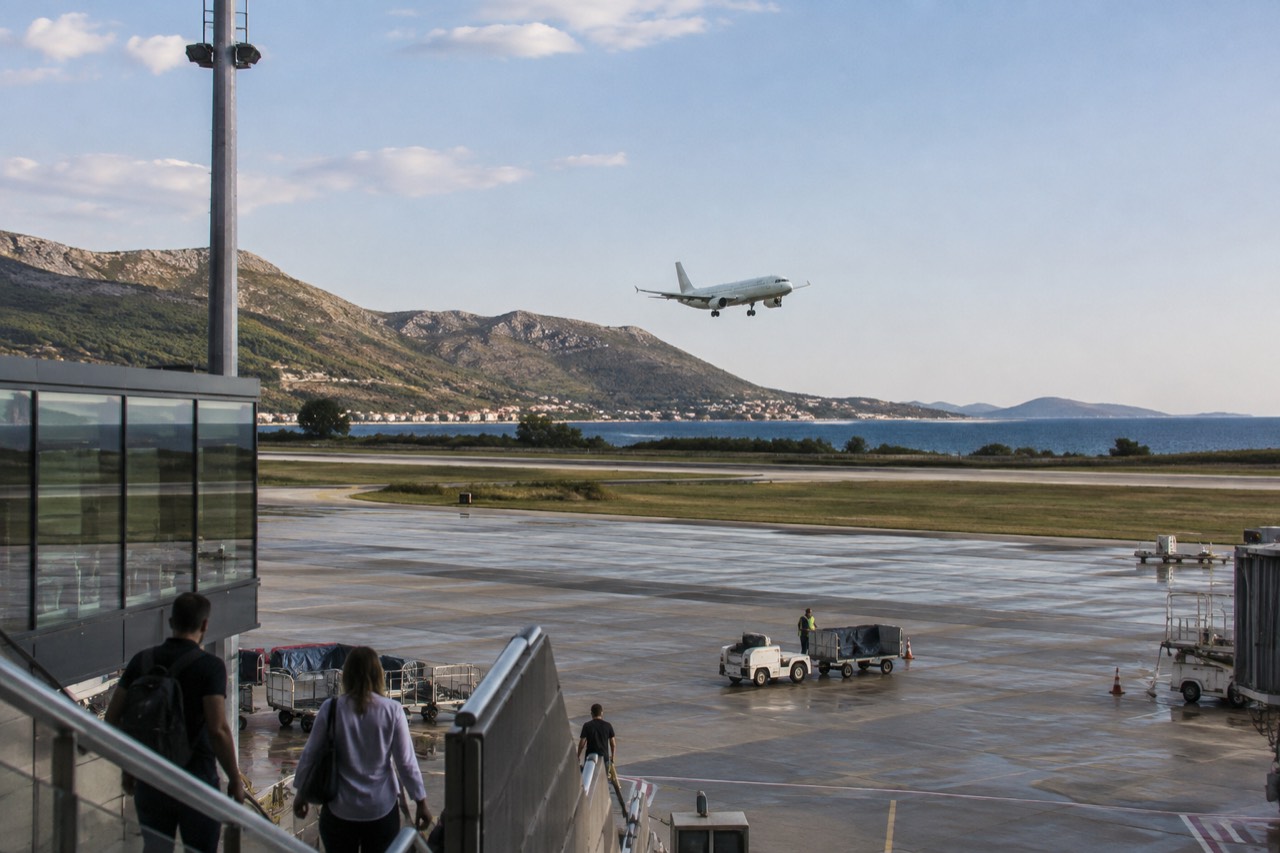
Which Airport Is Better to Fly Into in Croatia?
The honest answer is that no single Croatian airport is "best": the right choice follows your itinerary. Fly into Dubrovnik for the far south, the Elaphiti islands and Montenegro or Mostar side trips; fly into Split for central Dalmatia, Hvar and island hopping; Zagreb serves the north and Plitvice. If your trip is Dubrovnik-centric, Dubrovnik Airport wins on convenience every time.
Croatia rewards travellers who match the airport to the map rather than to the airfare. The country is long and narrow, and the coastline runs from Istria in the northwest down to the walled city at the far south. A cheap flight into the wrong end of the country quietly adds a day of buses, ferries or a second flight to your trip, which is a poor trade against saving a little on the fare.
I plan routes around Dubrovnik for a living, and the question I hear most from first-time visitors is whether they should fly into Split or Dubrovnik when the trip includes both. The answer depends on the direction of your loop and the season. In high summer, when coastal roads and ferries are at their fullest, the order you visit places in matters more than at any other time of year.
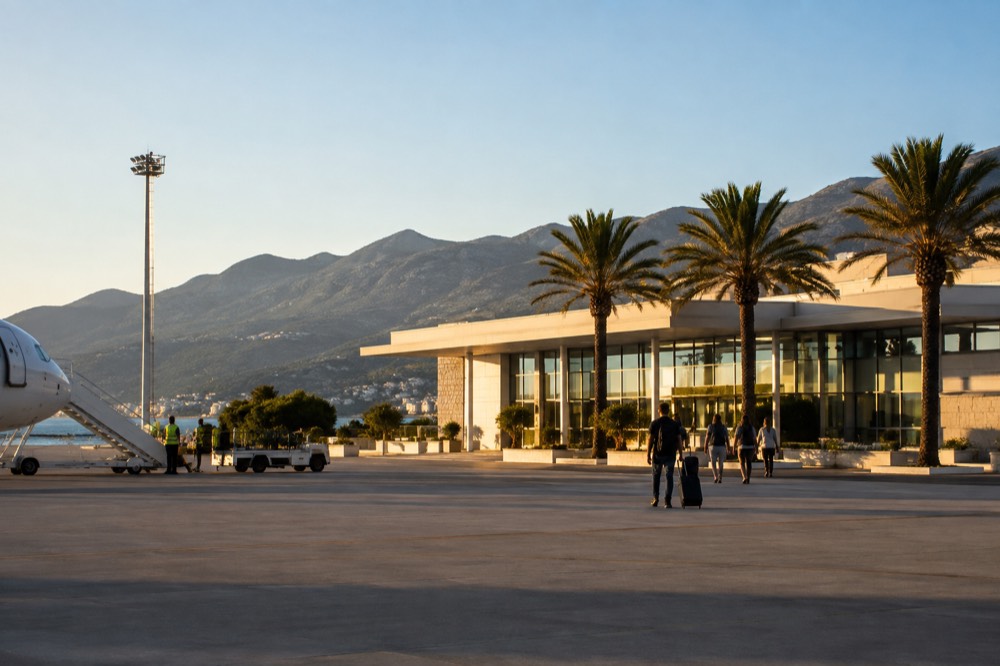
Start with the shape of your trip. One base in the far south means Dubrovnik Airport, full stop. A split week between Split and Dubrovnik can go either way, and the deciding factors are usually the ferry schedules and how you feel about a four-plus-hour bus or private transfer along the coast. A loop that takes in Hvar, Korcula or Vis belongs to Split, because the fast boats to those islands leave from Split and the islands nearby.
Budget matters too, but less than people expect. Fares swing by season and by departure city, and a fare you see today may not be there next week. What stays constant is the geography. Before you book anything, it is worth reading the honest comparison in Split or Dubrovnik for your trip, which goes deeper on the two-airport question than I can here, and can you fly direct to Dubrovnik from the USA if you are crossing the Atlantic.
There is a third and fourth airport worth a sentence each. Zagreb, the capital, is the natural gateway for the north of the country: Plitvice Lakes, Istria, Zagreb itself and the continental interior. Zadar sits between Split and Zagreb geographically and serves the northern Dalmatian coast, including Kornati and the towns around it. Neither is a sensible choice for a Dubrovnik-focused trip, but both are the right answer for itineraries that never come south at all. The mistake I see most often is a traveller who books a cheap fare into Zagreb for a week in Dubrovnik and then discovers the domestic connection or the long bus ride south eats a full day in each direction.
The other thing worth knowing before you choose: Dubrovnik is busy, and not only in July and August. The Port Authority's own figures show cruise passengers peaked in September 2025 at 101,246 and October at 100,132, both above July's 96,072 and August's 87,385, with 461 cruise calls scheduled for 2026. Anyone planning a late-season arrival in the far south should read the Dubrovnik cruise schedule before locking dates.
If you have already decided on Dubrovnik, the practical question stops being which airport and becomes how to handle the arrival itself. These three options cover the ground well:
The shared departure transfer is the one I point most people at. It runs from Dubrovnik and Cavtat to the airport, takes about an hour, and starts at $20 per person, rated 4.5 across 57 reviews. For a family or anyone landing after a long-haul flight, a pre-booked seat beats negotiating a taxi with luggage in the heat.
Is It Better to Fly Into Split or Dubrovnik?
For a Dubrovnik-first itinerary, fly into Dubrovnik. For central Dalmatia and the big islands, fly into Split. Doing both cities in one trip? Fly into one and out of the other, which avoids backtracking entirely. Split handles more routes and often cheaper fares; Dubrovnik is smaller, faster to clear, and sits minutes from the Old Town you probably came for.
This is the version of the airport question that actually matters to most travellers, because Split and Dubrovnik are the two airports that serve the Dalmatian coast, and most first trips to Croatia include at least one of the two cities. The two airports sit at opposite ends of the region people picture when they imagine Croatia: white stone, blue water, islands on the horizon.
Split's advantage is scale and position. It is the transport hub of the coast, with fast ferries radiating out to Hvar, Brac, Vis and Korcula, and it sits closer to the middle of everything. If your list reads "islands, islands, a bit of Split, maybe Dubrovnik at the end," Split is the natural entry point. It also tends to carry more route options, which can mean better fares and better times, though that varies so much by season and departure city that you should treat any fare claim you read online, including a confident one, as a snapshot rather than a rule.
Dubrovnik's advantage is that it is exactly where the far-south highlights are. The Old Town, the city walls, Lokrum, the Elaphiti islands, Cavtat, and the border day trips to Montenegro, Mostar and the Peljesac wine country all cluster within a couple of hours of the airport. If those are your priorities, flying into Split first means a long transfer south before your holiday properly starts, and the same again if you loop back to fly out.
The open-jaw solution deserves more attention than it gets. Flying into Split and out of Dubrovnik, or the reverse, costs a little more on the fare and saves a full day of backtracking. The coast between the two cities is not empty driving either: Ston's walls and oysters, the Neretva delta and the Makarska riviera all sit along that corridor. Our Ston and Peljesac guide covers the best of the stops if you decide to make the transfer part of the trip rather than a chore.
Season changes the calculus. In peak months the coastal road and the ferries both run full, and the bus between the two cities can feel like a lost afternoon. Outside summer the calculus barely changes, but the crowds do: Dubrovnik's cruise peak lands in September and October rather than July and August, so an autumn arrival in the far south is busier than most people expect, while Split in the shoulder season is calm and warm.
There is also a temperament difference between the two arrivals that nobody puts in a comparison table. Dubrovnik Airport is small. You land, you clear, you are on the road, and the whole operation rarely takes long. Split's airport is bigger and busier, and in July the arrivals hall can feel like a ferry terminal in August. Neither is a reason to choose one over the other on its own, but if you are travelling with small children or landing at the end of a fourteen-hour travel day, the smaller airport is a quiet mercy. On the other side of the ledger, Split's size is what gives it the route network, and the route network is what gives you the schedule flexibility.
What Is the Best Airport to Fly Into Croatia From the US?
There is no single best US gateway to Croatia: it depends on where in Croatia you are going. Fly into Dubrovnik if the south is the point of the trip, and into Split if the islands and central coast are. From North America almost every routing connects through a major European hub, so the decision is really about which end of the coast your final leg lands on.
Travellers coming from the United States ask this more than any other version of the question, and the mechanics are simpler than they look. Almost every itinerary from North America to the Dalmatian coast routes through a hub somewhere in western or central Europe, and the connecting flight decides your arrival airport. That means the choice of Dubrovnik versus Split is not really about which airline you prefer; it is about which end of the coast you want to wake up in on day one. The full index of guides sits on Things to Do in Dubrovnik.
The practical advice is to book the open-jaw if your trip covers both ends. Arrive in Split, work your way south through the islands, and fly home from Dubrovnik. Or reverse it. Either direction turns the transfer between the two cities into the scenic spine of the trip instead of a round-trip tax on your holiday. The Dubrovnik to Split transport guide lays out every option for that leg, buses, ferries and private transfers included.
One caution worth repeating: do not build a US itinerary around a fare you found for a Croatian airport at the wrong end of the country. The savings evaporate the moment you price the internal transfer. A fare that looks cheaper into Split is not cheaper if your hotel is in Dubrovnik and you then pay for a half-day of getting there. Price the whole door-to-door journey, not just the long-haul leg.
A second caution, specific to long-haul arrivals: mind the connection time. The last leg into Dubrovnik or Split is a short European hop, and tight hub connections are where luggage and passengers get separated. When the choice is between a ninety-minute connection and a three-hour one for the same money, take the three-hour one and have a coffee. A missed connection in a mid-size European hub can mean an overnight in a city you never planned to see, and that costs more than any fare difference.
For context on how popular the far south has become, the statistics are striking. Croatia overall recorded 20.7 million arrivals and 94.8 million overnight stays in commercial accommodation in 2025, and Dubrovnik alone accounted for about 4.2 million of those nights, level with Rovinj as the country's most-visited destination. You will not be exploring this coast alone, whichever airport you pick.
Once you have landed in Dubrovnik, the arrival itself is short. The airport sits well outside the city, and the shared transfer covers the run in about an hour from the city side. Book the seat before you fly, especially in the cruise-heavy weeks of September and October, when the whole arrival infrastructure runs warm.
What Should You Do First After Landing in Dubrovnik?
Do not rush the Old Town on arrival day. Clear the airport, drop bags, and spend the first afternoon on something low-effort and panoramic: a convertible bus panorama tour from $34.77, a cable car ride, or a slow walk along the Stradun once the day-trippers thin. Save the city walls and the tours for a fresh morning.
Arrival day is where good trips go to die a little. You are tired, the sun is higher than you expected, and the Old Town's limestone streets are at their most crowded between late morning and late afternoon. The six counters at the Old Town entrances update a headcount every 15 minutes, and the official carrying capacity for the historic core is 11,275 people; on a busy September day the curve builds from 5,419 people at 08:00 to a 7,739 peak at 10:00 before easing. That mid-morning window is the worst possible time to see the Stradun for the first time.
A better first move is altitude or water. The cable car is the classic: the track climbs 367.0 metres from the lower terminal to the Mount Srd station at 405.0 metres above sea level, a 3 minute 30 second ride at 6.5 metres per second, with the operator advertising a view range of up to 60 km on a clear day. An adult round trip is 30 euro in 2026, and the operator's own timetable page carries the full seasonal hours. Sunset from the top, with the Old Town lit below, is one of the great free-feeling moments of any Croatian trip even though the ticket is not.
If you would rather not organise anything on day one, the convertible bus panorama tour does the orientation for you. It runs about an hour and a half with an audio guide, from $34.77 per person, rated 4.6 across 796 reviews. You sit, the city unrolls, and by the end you know where the walls, the gates and the beaches sit relative to each other, which makes every later decision easier.
For a fuller first or second day, the combined cable car and Old Town walking tour is the strongest single product in this corner of the roster: about 4 hours 30 minutes, from $163.50 per person, rated 4.6 across 716 reviews, with the cable car ticket and a guided walk of the Old Town rolled into one booking.
Great tour with a great guide. Terrific views from the cable car. The old town is fascinating. We walked part of the wall because it was very hot. Sara was a fabulous guide and gave us recommendations for lunch and what else we should see.
Fred_W
That review captures the honest shape of an arrival week: altitude first, walls second, and a guide who tells you where to eat. The walls themselves are 1,940 metres long, up to 25 metres high, and the walls operator's own site describes the full circuit of towers, bastions and fortresses. The adult ticket is 40 euro in main season, 1 March to 30 November, and 20 euro in December, and it includes Fort Lovrijenac. Walk them early, before the stone heats up and the cruise-arrival curve peaks.
Here is how the main first-day options compare:
| Option | Duration | From (per person) | Rating | Best for |
|---|---|---|---|---|
| Shared airport transfer | about 1 hour | $20 | 4.5 across 57 reviews | Getting from the airport with bags |
| Convertible bus panorama tour | about 1 hour 30 minutes | $34.77 | 4.6 across 796 reviews | Low-effort orientation on day one |
| Cable car and Old Town walking tour | about 4 hours 30 minutes | $163.50 | 4.6 across 716 reviews | A full guided first day |
| City Walls ticket (walk on your own) | 1 to 3 hours | 40 euro main season, 20 euro December | not a tour | A fresh early morning |
Whatever you choose, keep the first evening simple. Dinner in the Old Town after the day crowd drains away, a walk down the Stradun, which runs 298 metres from gate to gate, and an early night. The walls, Lokrum and the islands all deserve mornings, and mornings in Dubrovnik in season are worth protecting.
One last planning note that ties the whole airport question together. The busiest remaining cruise days in the 2026 season include 6 October with 2 ships and up to 5,798 passengers by capacity, and 29 September with 2 ships and 5,675, and those figures are ship capacity, not a promise of how many people walk ashore. Even so, if your arrival window overlaps a heavy cruise day, book the transfer, the cable car and any walking tour ahead rather than on the spot. The airport decision is the first domino in a trip that runs smoothly; the second is not standing in a queue at 14:00 with everything still unbooked.
If the airport decision is still open, these are the three bookings that work for almost any Dubrovnik-centric arrival:
Common Questions About Flying Into Croatia
Which airport is better to fly into in Croatia?
There is no single best airport. Dubrovnik Airport serves the far south, the Elaphiti islands and the Montenegro and Mostar day trips; Split serves central Dalmatia and the big islands; Zagreb serves the north and Plitvice. Match the airport to your itinerary, not to the fare, and consider flying into one city and out of another to avoid backtracking.
What Is the Best Airport to Fly Into Croatia From the USA?
Almost every routing from the United States connects through a European hub, so the real choice is which end of the coast your final leg lands on. Choose Dubrovnik for a south-focused trip and Split for islands and central Dalmatia. An open-jaw ticket, into one and out of the other, usually beats a round trip for a two-city itinerary.
Is It Better to Fly Into Split or Dubrovnik?
Fly into Split if your priorities are Hvar, Brac, Vis and central Dalmatia, or if you want the widest choice of ferries. Fly into Dubrovnik if the walled city, Lokrum, the Elaphiti islands or the border day trips are the point of the trip. If you are doing both cities, fly into one and out of the other and make the transfer between them part of the holiday.
Is Split or Dubrovnik Cheaper to Fly Into?
Fares between the two swing by season, departure city and how far ahead you book, so no fixed answer holds. Price the whole journey before deciding: a cheaper fare into the wrong airport is erased by the cost and the lost day of the internal transfer. Compare door-to-door costs, not just the long-haul leg.
How Do I Get From Dubrovnik Airport to the Old Town?
The shared transfer from Dubrovnik and Cavtat to the airport runs about an hour and starts at $20 per person, rated 4.5 across 57 reviews. Taxis and local buses also serve the route. In the busy September and October cruise weeks, booking a seat before you fly saves standing in a queue with luggage.
What Should I Do on My First Day in Dubrovnik?
Keep it low-effort and panoramic. A convertible bus panorama tour or the cable car up Mount Srd, which climbs 367.0 metres in 3 minutes 30 seconds, gives you the layout of the city without exhausting you. Save the city walls, 1,940 metres of them, for an early fresh morning, and walk the Stradun in the evening once the day crowd drains away.