Where Are the Best Bars in Dubrovnik?
A local's map of where to drink in Dubrovnik: the two Buza cliff bars, the Old Town's late-night streets, the cave clubs at Pile, and when the crowds make a bar crawl painful.
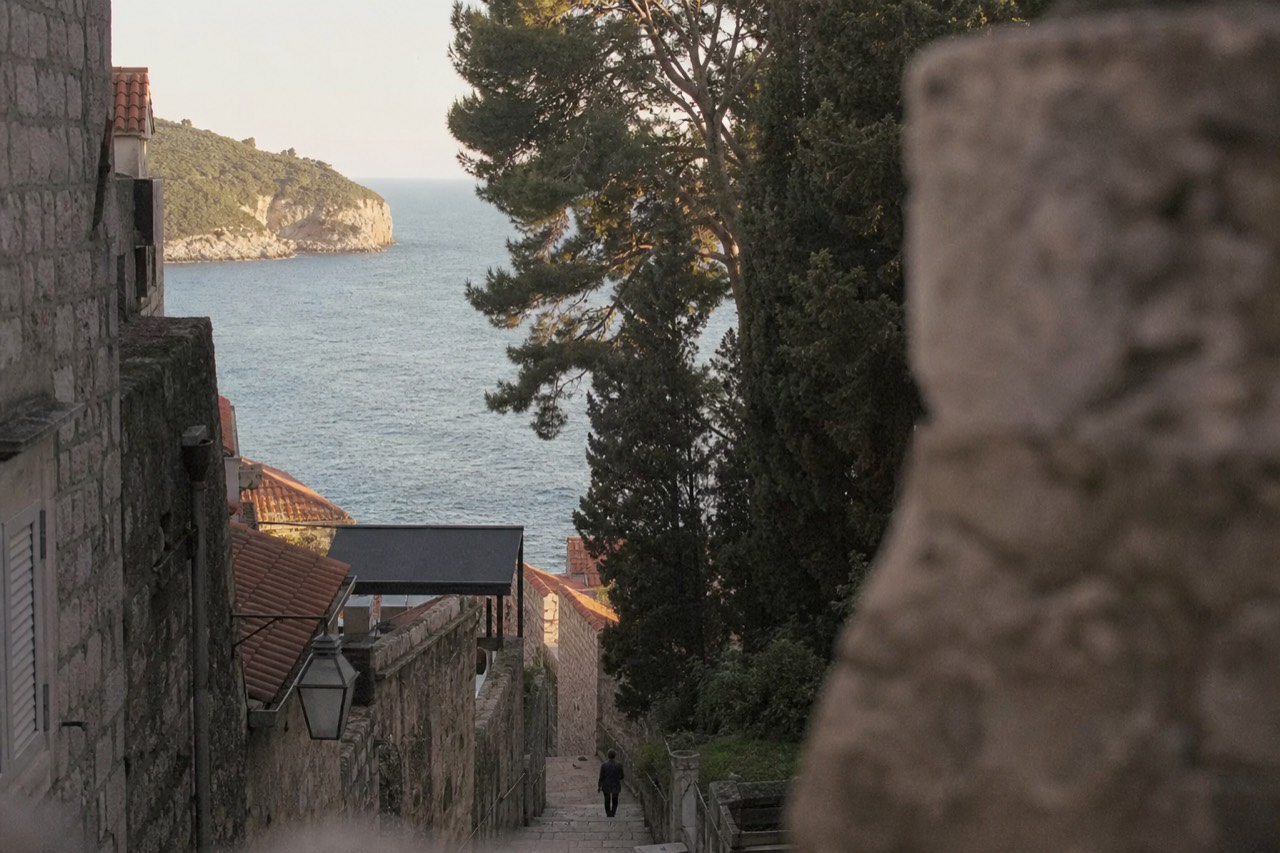
Where Are the Best Bars in Dubrovnik?
The best bars in Dubrovnik cluster in four zones: the two Buza cliff bars cut into the seaward city walls, the cocktail lanes running off the Stradun, the nightlife pocket around Pile Gate and the old town moat, and the laid-back seafront bars of Lapad Bay. Each zone suits a different hour of the night, and locals who plan well move between them rather than staying put.
I have walked these streets with travellers since 2015, and the question I get most often after the walls and the cable car is simply: where should we drink tonight? The honest answer is that Dubrovnik rewards a plan. The Old Town is small, 24.7 hectares inside the walls, and the Stradun itself is only 298 metres long, so everything feels walkable until you realise the good bars hide up staircases and behind unmarked doors rather than lining the main street.
Start with the geography. The Stradun is the spine, and the lanes running off it hold most of the cocktail bars and wine bars worth your evening. Pile Gate at the western end is where the moat and the cliffside club scene sits, including the club inside the fortress-like space that draws the late crowd, which we cover in detail in our Culture Club Revelin guide. Lapad, a bus ride or a longer walk west, is where the pace drops and the drinks cost less, strung along the bay. And then there is Buza, the cliff bar, which deserves its own section below because there are actually two of them and people argue about which one is better.
For a fuller rundown of the drinking scene, bar by bar, our best bars in Dubrovnik guide goes deeper than this page. What this answer does instead is give you the shape of the night: where each zone is, when it fills up, and what kind of evening each one suits.
One thing worth saying early: the single best drink in Dubrovnik is often the one you have on or near the water at sunset, not in a bar at all. That is why the evening boat products sell so well here, and why I have included the short sunset cruises below. An hour on the water with a drink in hand, watching the walls turn orange from the sea, beats a crowded terrace most nights.
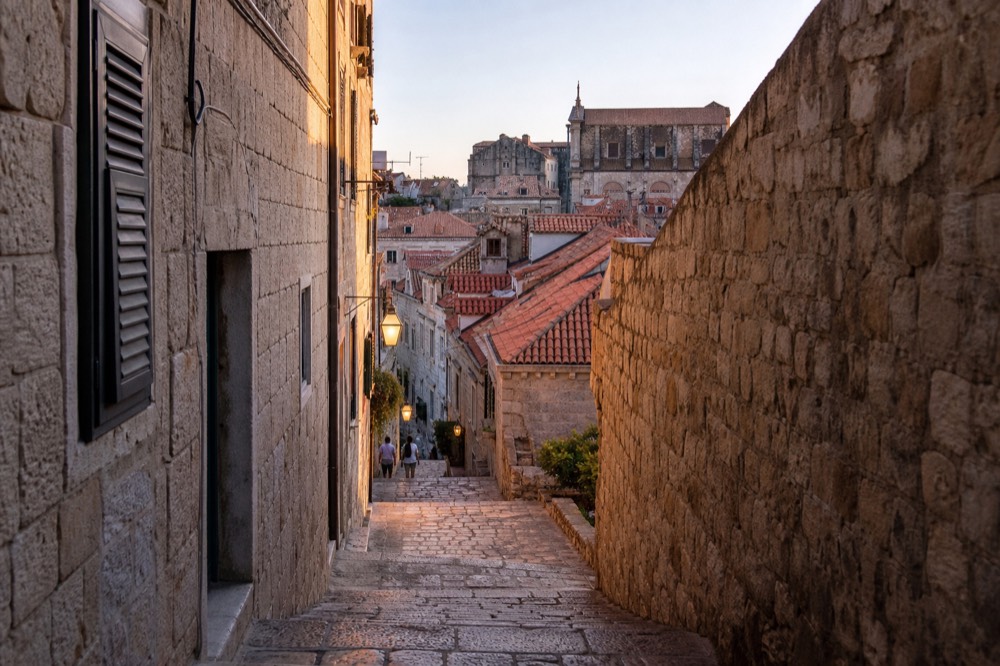
The Old Town lanes are where most visitors spend their first night, and rightly so. The bars here are small, stone-walled and often candlelit, and the good ones are found by walking, not by searching for a sign. A useful pattern: the closer a bar sits to the Stradun, the more it caters to one-time visitors; the ones a staircase or two off it, in the directions of the cathedral or the Jesuit steps, keep a steadier local and repeat-visitor crowd. Wine bars pouring regional Plavac Mali and Pošip have multiplied in these lanes, and they are the best value way to drink well inside the walls.
Are There Two Buza Bars in Dubrovnik?
Yes, there are two Buza bars, both cut into the seaward side of the city walls on the cliff above the Adriatic, with entrances through unmarked holes in the wall on the south side of the Old Town. Locals call them Buza and Buza II, or simply the "hole in the wall" bars. They serve the same essential experience, drinks on bare rock above the sea, and the honest differences are size, seating and how early each one fills up.
This is the most common bar question I field, and the confusion is fair: nearly every article online says "go to Buza" without mentioning there are two. The first, the original Buza, is the one most people find, reached through a doorway in the walls south of the Jesuit steps. Buza II sits a little further along the same cliff line. Both are simple operations: plastic and wooden furniture on limestone, a small drinks counter, and the Adriatic about a cliff-drop below. Neither takes reservations, and neither is somewhere you linger for table service. You buy a drink, find a rock, and watch the sea.
Which one you prefer comes down to timing and temperament. The original fills first because it is the one in every guidebook, and by late afternoon on a busy day you may wait for a spot with a view. Buza II tends to run a touch quieter and draws a slightly more local crowd, though on a peak evening neither is a secret. Our dedicated Buza bar guide covers the practical details, including how to find the entrances, which are genuinely easy to walk past.
The best time at either Buza is the last two hours before sunset. The light comes across the water and hits the walls above you, the day-trip crowds have thinned, and the sea below is calm. In summer the sun sets late, and the cable car up Mount Srd, whose upper terminal sits at 405 metres, runs until midnight in June, July and August, so plenty of people do Buza first and ride up after. The operator's own timetable page carries the full monthly hours if you are planning that combination: the cable car's timetable and prices.
Two practical warnings. First, the cliff edge is real and unfenced in places, so go easy on the drinks before you start posing for photographs on the rocks. Second, both bars are cash-simple but card-friendly in the way small seasonal operations are, meaning the machine sometimes does not work; carry some cash. Neither issue stops the place being the most memorable drink of most people's trip.
A final thought on Buza: because it is the one bar everyone has heard of, it is also the bar where the crowd experience varies most with the season. On a June evening with three ships in port, you will share the rocks with hundreds. On an October evening after the last ferry crowd has gone, you might have a bench to yourself. The same drink, two completely different nights.
What Not to Do in Dubrovnik?
The main mistakes are drinking and dining only on the Stradun, assuming every bar takes cards, underestimating how late the evening starts here, swimming after drinks at the cliff bars, and treating the quiet residential lanes above the Old Town as a party zone. Locals eat and drink late, so kitchens and bars often do not warm up until 21:00 or later.
Let me take these one at a time, because each one costs visitors real money or real goodwill. The Stradun premium is real: the terraces directly on the main street charge for the location, not the pour, and the same drink is often meaningfully cheaper two lanes over. I am not going to print a price range for cocktails, because prices move and I only state figures I can verify, but the pattern is consistent: every street you walk away from the Stradun, value improves. The lanes behind the Sponza Palace and up toward the Jesuit steps are the sweet spot. Everything else covered here is indexed on Things to Do in Dubrovnik.
The second mistake is timing. Croatian evenings start late. If you sit down for dinner at 18:00, you will eat with the jet-lagged and finish before the city has even begun its night. Restaurants fill from around 20:00, and the bars fill after that, with the club scene not really moving until well past midnight in high season. Plan your evening the way locals do: a sunset drink, a late dinner, then bars. Our what time do people eat dinner guide covers the dinner side of this in detail.
Third, do not mix the cliff bars and swimming. It gets said too rarely: the water below Buza looks inviting, people do jump in, and the rocks are sharp, the drop is uneven and the sea state changes. If you want a sunset drink and a swim, do them in the right order, and if you want them together, a kayak or boat tour is the safe way to combine them. The sea itself is warm well into autumn: the September long-run average for this coast is about 23.6 degrees, an open-water figure rather than a beach reading, and sheltered bays run warmer than that.
Fourth, respect the residential city. Dubrovnik has 41,562 inhabitants at the last census, and a good number of them live inside or just outside the walls. The lanes above the Stradun are homes. Noise carries off stone in a way that surprises people, and the police do respond. The loud part of the night belongs in the moat area around Pile and in the clubs, not in a residential staircase at two in the morning.
Fifth, and this is the one that quietly ruins nights: do not plan a bar night on a day the Old Town is at maximum crush without checking what is coming in. The Port Authority publishes cruise scheduling, and the daily limit of 8,000 cruise passengers holds in most cases, with only 18 days a year exceeding it and 4 days slightly above 10,000. On those days, every terrace is a queue. The authority's own page explains the system: the Port Authority's cruise destination measures.
| Cruise passengers by month, 2025 | Passengers | What it means for a night out |
|---|---|---|
| September | 101,246 | Busiest month of the year; bars fullest, book dinners |
| October | 100,132 | Nearly as busy, warmer evenings, later sunsets |
| July | 96,072 | Peak heat; nightlife runs latest |
| August | 87,385 | Family season; earlier, louder evenings |
| May | 84,107 | Comfortable evenings, moderate crowds |
| November | 28,480 | Quiet lanes, some seasonal bars closed |
The counter-intuitive headline in that table is worth repeating, because almost every visitor gets it backwards: September and October, not July and August, are the two busiest cruise months in Dubrovnik. If you want the warm sea, the late sunsets and slightly thinner crowds, aim late June or the first half of September before the month's big ship days.
When to Avoid Dubrovnik?
Avoid Dubrovnik's bars on the peak cruise days of September and early October, on the busiest festival nights of July and August when the Old Town stays packed past midnight, and on any day when several large ships are scheduled at once. The quietest good evenings come in May, June, late October and the pre-Christmas weeks.
The crowd question has a data answer now, which is a genuinely recent thing. Dubrovnik runs six counters at every Old Town entrance, updating a headcount every 15 minutes, against an official carrying capacity of 11,275 people from the UNESCO carrying-capacity assessment. On one busy September day the count read 1,725 at 06:00, 5,419 at 08:00, peaked at 7,739 at 10:00, and was still 7,205 at 11:00. Those are morning figures, but they tell you what the day's baseline is: when the count peaks at 7,739 before lunch, the evening terraces start full too.
So when exactly should you steer clear? The remaining 2026 season schedule holds 149 ship calls across 80 cruise days, and the busiest days in that window are 6 October with 2 ships and up to 5,798 passengers by capacity, 29 September with 2 ships and 5,675, 30 September with 3 ships and 5,536, and 15 September with 4 ships and 5,273. Those are ship-capacity figures, not a promise of how many people walk ashore, but they flag the evenings when the Stradun will feel like a stadium concourse. If your dates are fixed on one of those days, do what locals do: drink in Lapad or on the water, and save the Old Town lanes for a quieter night.
The other avoid-window is less obvious: the biggest festival nights of the summer, when the Old Town hosts open-air stages and the lanes stay rammed well past midnight. Those nights are spectacular if you came for the festival and exhausting if you came for a quiet drink. Check what is on before you plan the evening, since a stage on the Stradun reroutes the whole night's foot traffic.
And the times to come? May and June give you warm evenings, the sea warming toward its July average of 24.9 degrees, and thinner crowds than the cruise peak. Late October is a favourite of mine: the ships thin out after the month's busy first week, the sea is still around 21 degrees on the long-run average, and the bars have space again. Winter is a different city entirely, quieter and cheaper, though some seasonal terraces and the Buza bars close or shorten hours.
For the evening that works in any crowd, the water is the escape valve. The sunset products run all season, and they take you off the streets entirely during the exact hours the Old Town is most packed.
The replica tall-ship cruise above is the adults-only option, from $59 per person and rated 4.8 across 833 reviews, an hour and a half of skyline and drinks without a single queue. There is also a free way to understand the town you will drink in: the night history and legends walk on GuruWalk, free on a pay-what-you-want basis and rated 4.9 across 288 reviews, which ends at a convenient hour to carry on to a bar afterwards.
Is Dubrovnik Worth Visiting?
Yes, Dubrovnik is worth visiting, and its nightlife is a real part of the reason: a walled medieval city with cliff bars, candlelit lanes, a club inside a historic fortress space and warm sea swimming into October. It is expensive and crowded at peak, but the crowd problem is now measured, capped and predictable, and the evening city rewards anyone who plans even slightly. Four-day and longer stays let you pair bar nights with islands and day trips.
I will be honest about the case against, because you should hear it. Dubrovnik is not cheap. Drink prices inside the walls are among the highest in Croatia, and the summer crush is real: about 4.2 million overnight stays in 2025 put the destination level with Rovinj at the top of the national table. Anyone who tells you it is a hidden gem is selling something. The Old Town is a UNESCO World Heritage Site, inscribed in 1979 under criteria (i), (iii) and (iv), and it is treated accordingly, which means tourism at a scale the 24.7-hectare core was never built for.
But the case for is stronger. Few cities anywhere let you drink on a cliff above the open sea, walk five minutes to a candlelit wine bar pouring local Plavac Mali, then finish in a club carved into a fortification, all on foot. The evening light on the walls is genuinely exceptional. And the crowd problem, while real, is now the best-managed in the Mediterranean: a live counting system, a published carrying capacity of 11,275, a daily cruise limit of 8,000 passengers in most cases, and a Port Authority that refused about forty cruise call requests in a single season to hold the line. That is why the answer to "when to avoid" is now a data question rather than a guess.
The nightlife also travels well beyond drinking. The evening walks, the sunset boats, the cable car running until midnight in high summer with a view range the operator puts at up to 60 km on a clear day: Dubrovnik's evening economy is built for people who want their night out to also be the day's best view. If you are weighing the city against its rivals, our Dubrovnik vs Split comparison covers which suits a nightlife-first trip.
For the practical planning, our three days in Dubrovnik itinerary slots an evening cruise and a bar night into a full visit without wasting daylight, and it is the pattern I recommend to first-timers. Come outside the peak cruise days, drink one street off the Stradun, start late, and Dubrovnik at night is close to unbeatable.
The Cavtat cruise above is the gentlest version of the evening-on-the-water idea: about an hour, from $23.66 per person, rated 4.9 across 203 reviews, with a cold platter and unlimited drinks as the sun goes down. It is also, quietly, the best-value drink with a view in the whole destination.
Common Questions About the Best Bars in Dubrovnik
Where are the best bars in Dubrovnik?
In four zones: the two Buza cliff bars cut into the seaward walls, the cocktail and wine lanes running off the Stradun, the club pocket around Pile Gate and the moat, and the relaxed seafront bars of Lapad Bay. Each suits a different hour of the night, so the best plan moves between them.
Are there two Buza bars in Dubrovnik?
Yes. The original Buza and Buza II both sit on the cliff below the south city walls, entered through unmarked holes in the wall. They offer the same bare-rock drinks-above-the-sea experience and differ mainly in size, seating and how early they fill up.
What not to do in Dubrovnik?
Do not drink only on the Stradun, where you pay for the location; do not expect the night to start early, since bars fill well after 21:00; do not swim below the cliff bars after drinking; and do not treat the residential lanes above the Old Town as a party zone. Carry some cash, since card machines at small bars sometimes fail.
When to avoid Dubrovnik?
Avoid the peak cruise days of September and early October, the biggest festival nights of July and August, and any day with several large ships scheduled at once. The quietest good evenings fall in May, June, late October and the pre-Christmas weeks.
Is Dubrovnik worth visiting for nightlife?
Yes. Cliff bars, candlelit lanes, wine bars pouring local Plavac Mali, a club inside a historic fortification and sunset boats together make one of the most distinctive nights out on the Adriatic, provided you plan around the crowd peaks.