What Language Do They Speak in Dubrovnik?
Croatian is the official language of Dubrovnik, but English is spoken widely in the Old Town, in restaurants and on tours. Here is what to expect, plus a few phrases that go a long way.
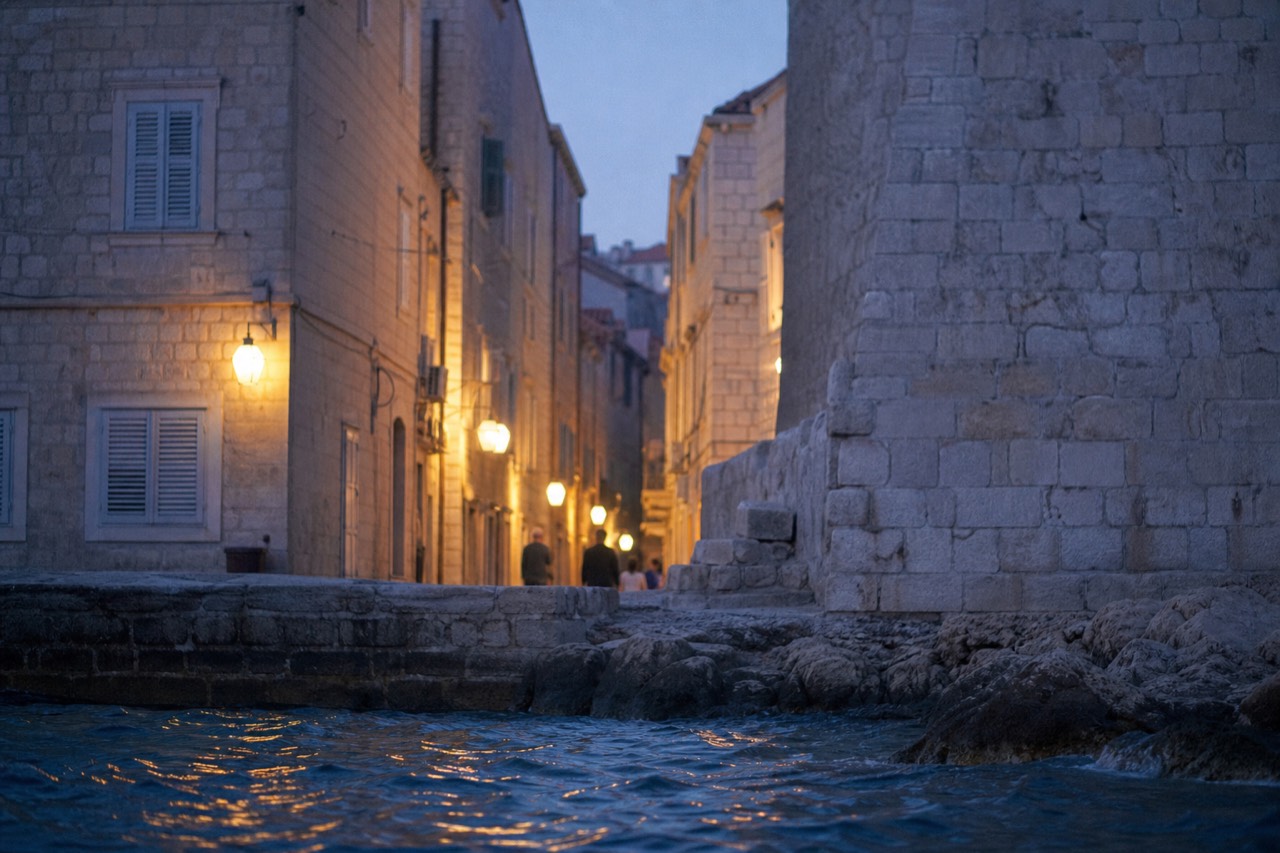
What Language Do They Speak in Dubrovnik?
The language spoken in Dubrovnik is Croatian, the sole official language of Croatia, and it is what you will hear in shops, on buses and among locals on the Stradun. English is very widely spoken in the tourist heart of the city, so much so that most visitors never need another word of Croatian beyond a greeting and a thank you. Italian and German crop up regularly too, a legacy of the city's position on the Adriatic.
I get this question constantly from travellers planning a first visit, and the short answer never surprises anyone: Croatian. What does surprise people is how thoroughly English has saturated the parts of Dubrovnik a visitor actually touches. Walk through Pile Gate on any summer morning and you will hear a dozen languages within a hundred metres, but almost every menu, ticket counter, museum desk and tour meeting point will meet you in English without hesitation.
Croatian itself is a South Slavic language, written in the Latin alphabet, and it is closely related to Serbian, Bosnian and Montenegrin. A speaker of any of those four can understand the others with little effort. For everyone else, Croatian looks friendlier on the page than it sounds in the mouth: the spelling is almost perfectly phonetic, so once you learn how each letter is pronounced, you can read street signs and bus destinations aloud with surprising accuracy. That single fact makes a week here much easier than most visitors expect.
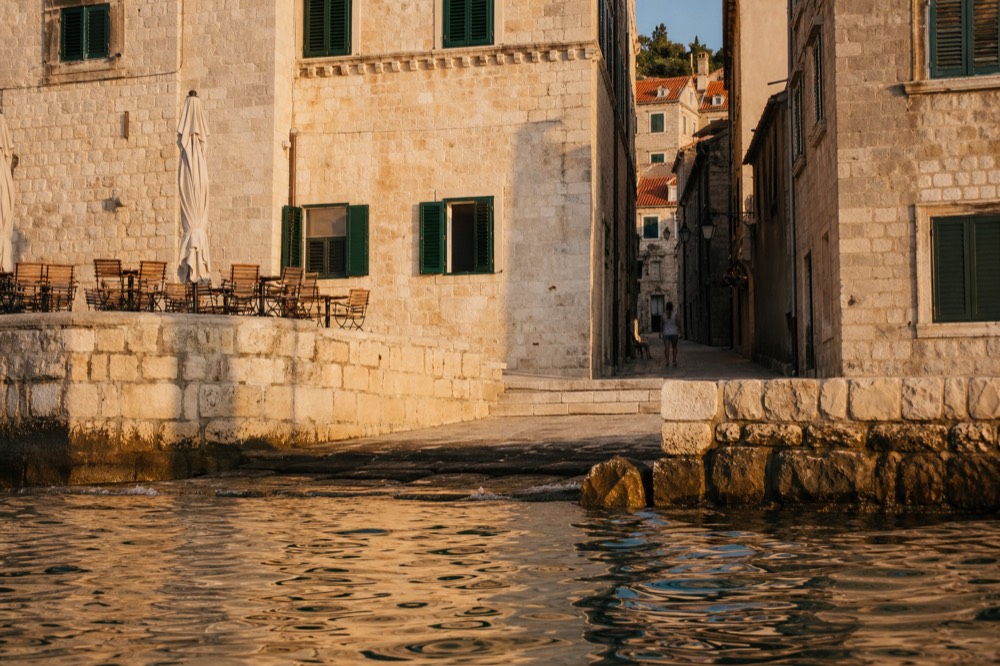
Dubrovnik's own linguistic history is richer than most Croatian towns, because this was a maritime trading republic for centuries, and a port that traded with Venice, the Ottomans and half of Europe picked up languages the way a hull picks up barnacles. You do not need any of that history to order a coffee. But it explains why the older generation here often carries some Italian, and why the tourism industry today switches between English, Italian, German and French with an ease that startles first-time visitors from monolingual countries.
The practical reality for you as a traveller is simple. Croatian is the language of the city, and using even a few words of it marks you as a guest rather than a passer-through. English is the working language of the visitor economy. Everything bookable, from the city walls ticket desk to the boat to Lokrum, operates comfortably in English. If you are the kind of traveller who likes a guided introduction to a place, the tours below all run with English-speaking local guides, and they are a good way to hear the city's story rather than just walk past it.
What Language Do They Speak in Croatia?
Croatian is the official language of the entire Republic of Croatia, spoken by the overwhelming majority of the population, and it is the language of government, schooling, signage and media nationwide. Regional minority languages hold official status in specific areas, but nowhere in the country will you need anything but Croatian or, as a visitor, English. Dubrovnik has no local language of its own distinct from standard Croatian.
Croatia is a country of just under four million people, and while the Croatian Bureau of Statistics tracks the population in detail, the linguistic picture is straightforward: Croatian is the state language, and it is what unites the country from Istria in the north to Dubrovnik in the far south. The city of Dubrovnik itself counted 41,562 inhabitants at the 2021 census, a figure the city publishes on its own site, and virtually all of them go about their daily lives in Croatian.
There are recognised minority languages in Croatia, Italian foremost among them, with official use in parts of Istria and the Kvarner region where Italian-speaking communities have lived for generations. That status does not extend to Dubrovnik. What Dubrovnik does have is a dialect landscape: locals here speak a regional variant of Croatian, as they do everywhere in the country, and you may notice the rhythm differs from what you heard in Zagreb or Split. Do not let anyone convince you this matters for your trip. Everyone understands standard Croatian, and more to the point, everyone in the visitor economy understands you.
The dialect question is a fun one for linguists, because the Dubrovnik area sits in a part of the country with its own speech traditions, shaped by the city's long history as an independent republic facing the sea rather than the interior. But a tourist asking "do they speak Croatian here or something else?" can be answered plainly: Croatian, with a local accent, exactly as a person in Boston and a person in Savannah both speak English. If you want to read more about the city's layered past while you are here, the Things to Do in Dubrovnik guides cover the history, the walls and the islands in depth.
One thing worth knowing before you arrive: the Croatian alphabet has a few letters English lacks, including č, ć, š, ž and đ, and each has a consistent sound. That is why "Srđ", the mountain the cable car climbs, is pronounced roughly "Serdj", and why the famous street, the Stradun, is easier to say than to spell. The Stradun runs 298 metres through the heart of the Old Town, and the Dubrovnik Tourist Board's own page on it notes that the city's 1272 Statute fixed the plan of the street and the city around it, a detail worth reading before you walk it.
Do They Speak English in Croatia?
Yes, English is spoken very widely in Croatia, especially among younger people and everyone working in tourism, and in Dubrovnik you can realistically expect English at every restaurant, hotel, museum, ticket desk and tour in the visitor economy. Outside the tourist zones, in small towns and among older residents, English becomes less guaranteed, so a few Croatian words help. Croatia recorded about 4.2 million overnight stays in 2025, and the industry that serves them runs on English.
The level of English in Dubrovnik consistently ranks among the surprises of a first visit. Waiters switch languages mid-sentence depending on the table. Museum audio guides come in a spread of languages, English always first among them. Bus drivers, taxi drivers, shop clerks and the person selling you a Lokrum boat ticket will all manage in English, some of them flawlessly. This is a small country whose economy leans heavily on visitors, and the Croatian Bureau of Statistics release that ranks Dubrovnik joint first in the country for overnight stays tells you how much practice the city gets.
Where English thins out is exactly where you would expect: away from the coast, away from the season, and among people who grew up learning a different second language at school. Older Croatians often learned German or Italian instead, a generational artefact of the country's tourism and political history. In Dubrovnik in the shoulder months, you may meet a shopkeeper whose English is basic but whose Italian is excellent. Nobody will be offended if you open in English, but opening with "dobar dan", good day, and then switching earns a warmer response every single time.
The one place language genuinely matters for a visitor is on a guided tour. A guide who knows the history deeply and can deliver it in fluent English turns two hours of walking into the highlight of a trip, and a guide who cannot turns it into a shuffle. If your visit is short and you want the city decoded on day one, it is a sensible first booking, and you can Check availability alongside the fuller Old Town walking tour guide on this site.
Which Tours Run in English?
Nearly every commercial tour in Dubrovnik runs in English as its standard language, with the meeting point, safety briefing and full commentary delivered in English unless a private group requests otherwise. The city walls walks, the Old Town walks, the cable car combinations and the island cruises all operate this way. Reviews consistently praise the guides' English, and the most-reviewed products in the city carry ratings above 4.8 from thousands of English-speaking guests.
This matters more than people realise, because Dubrovnik's best experiences are narrative ones. The walls are spectacular on their own, but a guide who explains what you are looking at, which tower did what, why the sea wall is thinner than the land wall, transforms the circuit. The Ancient City Walls and Wars Walking Tour is the specialist option here: it runs about two hours, starts from $29.58 per person, and is rated 4.8 across 1,387 reviews, with the operator Dubrovnik Walks guiding in English throughout.
A recent guest on that walls tour left a review that captures exactly what a fluent guide adds:
This well organized tour helped put Dubrovnik's past (and present) into perspective. It's incredible that the city walls have withstood the test of time. Antun was a wonderful guide.
linda_a
For visitors who want the panorama without the full circuit, the cable car combinations bundle the ride up Mount Srđ with a guided walk below. The Cable Car, Walking Tour and City Walls Combo runs roughly half a day, starts from $90.66 per person, and is rated 4.6 across 360 reviews. The cable car itself climbs 367 metres to the upper terminal at 405 metres above sea level, and the operator states a view range of up to 60 km on a clear day, so even the silent minutes between commentary are spectacular. Guides on these combined products work in English by default, and the meeting instructions on the live listing are given in English too.
What Do They Eat for Breakfast in Dubrovnik?
Breakfast in Dubrovnik is a Mediterranean affair: bakeries selling burek and pastries, coffee with milk taken standing at a bar, ham, cheese and eggs on hotel terraces, and fresh bread with olive oil in apartments and konobas. There is no single traditional Dubrovnik breakfast dish, and most locals take just coffee and something small, while hotels and restaurants serve fuller spreads for visitors. Expect bakery prices well below restaurant prices.
The honest local answer to the breakfast question is that many people here barely eat breakfast at all. A coffee, often a macchiato-style coffee with milk, taken quickly at a bar counter, is the true morning ritual of the city, and standing prices at the bar are lower than sitting prices at the table, a custom that catches visitors out daily. Bakeries are the other pillar of the morning. They open early, they line the approach roads and the edges of the Old Town, and they sell burek, the flaky filled pastry that is the Balkans' gift to hurried mornings, alongside simpler rolls, croissants and the sweet cheese-filled pastries that go perfectly with that coffee.
For a sit-down morning, the options split between hotel breakfasts, which in Dubrovnik range from adequate to genuinely excellent depending on the property, and café breakfasts built around eggs, local ham, cheese and bread. The Dalmatian instinct runs toward savoury: cured ham, cheese, olives and tomatoes rather than pancakes and syrup, though tourist cafés serve those too. If your accommodation is in Lapad rather than the Old Town, you will find the bakery-and-café scene more local and noticeably cheaper than inside the walls, which is one of the quiet advantages of staying outside the core, a trade-off this site covers in its guide to where first-timers should stay.
| Breakfast type | Where to find it | What you get | Best for |
|---|---|---|---|
| Bakery burek | Bakeries near Pile Gate, Gruž and Lapad | Flaky pastry filled with cheese, meat or spinach | Fast, cheap mornings before the walls |
| Coffee at the bar | Any café, standing at the counter | Espresso or coffee with milk, drunk quickly | Doing as the locals do |
| Café breakfast | Old Town and Lapad terraces | Eggs, local ham, cheese, bread, tomatoes | A slow start with a view |
| Hotel breakfast | Hotels in Lapad, Ploče and Babin Kuk | Buffet spreads, eggs to order, pastries | Families and early tour departures |
| Market fruit and bread | Gruž Market | Fresh produce, bread, cheese from the stalls | Self-catering apartments |
If breakfast is your gateway into the city's food culture generally, the deeper answer lives in the guide to what to eat in Dubrovnik, which covers the konoba tradition, the seafood, the local wine and the dishes worth planning a day around. The short version for the morning: eat where the coffee smells right, order less than you think you want, and save your appetite for lunch, which is the meal this coast takes seriously.
Is Croatian Hard for Visitors to Pick Up?
Croatian is genuinely hard to master but remarkably easy to use at visitor level, because spelling is phonetic, the alphabet is Latin, and the twenty or so words a tourist needs are short and memorable. Nobody expects fluency from a guest. A greeting, a please and a thank you, delivered with an attempt at pronunciation, will earn you warmer service across the entire city, and mispronunciation is treated as charming rather than embarrassing.
The grammar is the hard part: seven cases, verb aspects, and gendered nouns that change their endings depending on their role in a sentence. You will not crack that in a week and you do not need to. What you can crack in a single airport transfer is the sound system, because Croatian is spelled the way it is spoken. Every letter has one sound. Learn that j is pronounced like y, that č and ć are both soft ch sounds, and that đ is the j in "jam", and you can pronounce every street sign, island name and menu item in the country well enough to be understood.
| Croatian | Pronounced | English |
|---|---|---|
| Dobar dan | DOH-bar dahn | Good day |
| Hvala | HVAH-lah | Thank you |
| Molim | MOH-leem | Please / you're welcome |
| Izvolite | eez-voh-LEE-teh | Here you go / can I help you |
| Račun, molim | RAH-choon MOH-leem | The bill, please |
| Doviđenja | doh-vee-JEH-nya | Goodbye |
| Oprostite | oh-PROHS-tee-teh | Excuse me / sorry |
Use those seven phrases and you have covered ninety percent of your daily interactions as a visitor. The single most valuable one is "dobar dan", because greeting a shopkeeper, a waiter or a ticket seller before you launch into English is the local courtesy, and it changes the temperature of every exchange. Croatians in tourism speak English all day, every day; what they rarely hear is a visitor trying. The handful who try get the better tables, the better recommendations and the warmer goodbyes.
If you enjoy this kind of preparation, the guide to Dubrovnik for first-timers pulls together the arrival logistics, the timing advice and the crowd patterns in one place, and it pairs well with a morning orientation walk on your first day. Between a phonetic alphabet, a city that meets you in English wherever it matters, and a handful of words that open doors, language will be the least of your worries in Dubrovnik. Save your planning energy for the walls, the islands and the cable car timetable.
Common Questions About Language in Dubrovnik
What language do they speak in Dubrovnik?
Croatian is the official and everyday language of Dubrovnik, spoken by essentially the entire local population. English is very widely spoken across the visitor economy, including restaurants, hotels, museums, ticket desks and guided tours, so most visitors need no Croatian beyond a greeting and a thank you.
What Language Do They Speak in Croatia?
Croatian is the sole official language of Croatia, used in government, education, media and signage nationwide. Recognised minority languages, chiefly Italian, hold official status in specific regions such as parts of Istria, but standard Croatian is understood everywhere in the country.
Do They Speak English in Croatia?
Yes, English is spoken very widely, especially among younger people and everyone working in tourism. In Dubrovnik you can expect English at virtually every restaurant, hotel, tour and ticket desk. Outside the main tourist areas and among some older residents, German or Italian may be stronger second languages.
What Do They Eat for Breakfast in Dubrovnik?
Locals mostly take coffee and something small from a bakery, such as burek or a pastry, often standing at a bar counter. Sit-down café breakfasts centre on eggs, local ham, cheese and bread, while hotels serve buffet spreads. There is no single traditional Dubrovnik breakfast dish.
Is Croatian Difficult to Learn?
Croatian grammar is complex, with seven cases and changing noun endings, so fluency takes years. Visitor-level Croatian is much easier: the Latin alphabet is phonetic, every letter has one sound, and the twenty words a tourist needs are short and memorable. Effort is warmly rewarded.
Do Dubrovnik Tours Run in English?
Yes. Virtually every commercial tour in the city, including the Old Town walks, the city walls walks, the cable car combinations and the island cruises, delivers its full commentary in English as standard. Reviews of the most popular tours consistently praise the guides' English and storytelling.