Is 2 Days in Dubrovnik Enough?
Two days covers the Old Town, the city walls and one big excursion. Here is exactly what fits, what you would miss, and when a longer stay pays off.
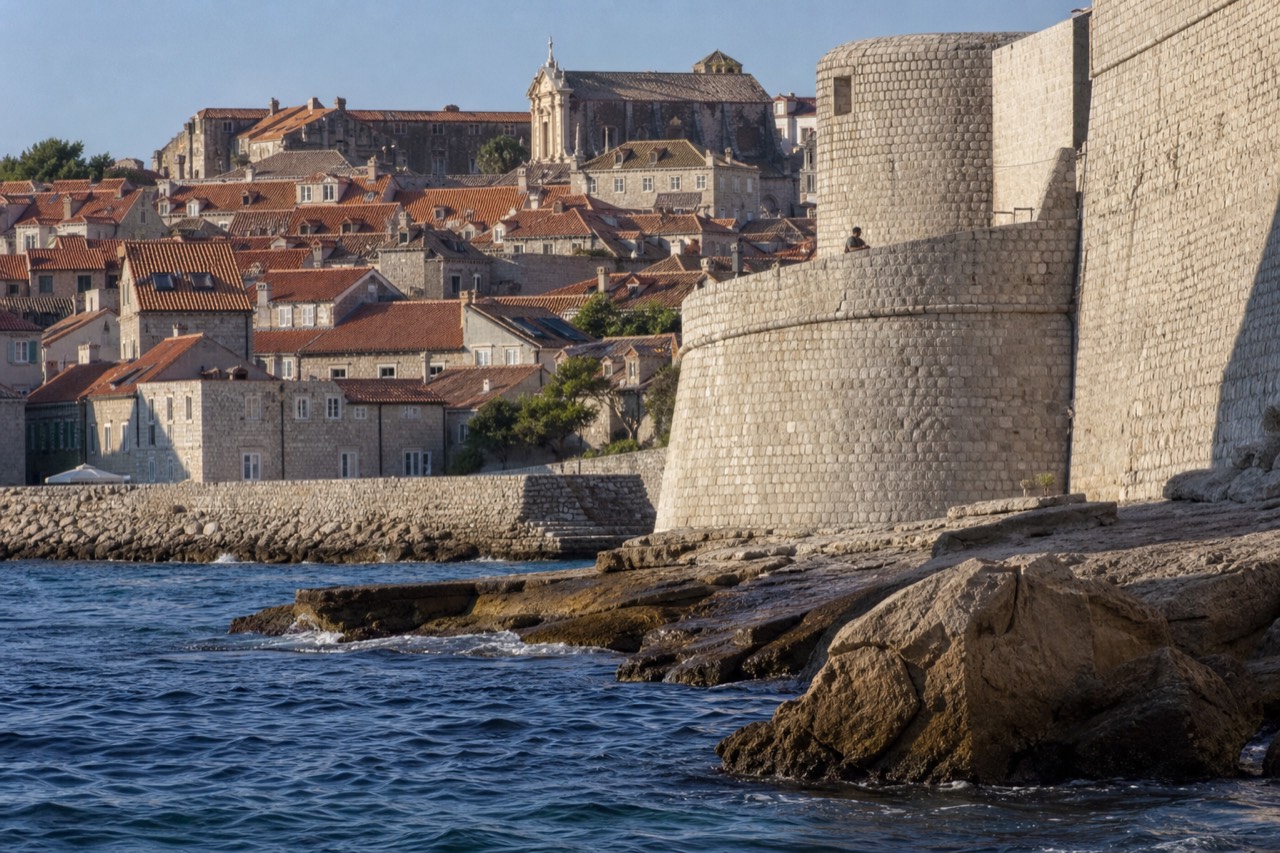
Is 2 Days in Dubrovnik Enough?
Yes, two days is enough for Dubrovnik's essential experiences: the city walls circuit, the Old Town's streets and squares, a cable car or fortress viewpoint, and one half-day on or beside the water. The walled core is compact, 24.7 hectares inside the UNESCO property boundary, so distances are short. What two days cannot absorb is a second excursion day, Lokrum at a slow pace, or the Elaphiti islands without rushing.
I get asked this more than almost any other planning question, and the honest answer has a shape to it. Dubrovnik rewards short visits better than most famous cities because its headline sights sit inside a single walkable enclosure. The Stradun, the main street, is 298 metres long, and the entire Old Town hangs off it. You are never more than a few minutes from anything inside the walls.
What catches visitors out is not distance, it is time cost per sight. The walls circuit alone, 1,940 metres of walking with stairs and photo stops, takes most people two hours or more, and in summer heat longer. Queueing for the walls, queueing for the cable car, and the midday crush between cruise arrivals eat hours that look free on a spreadsheet. Two days works when you protect the mornings.
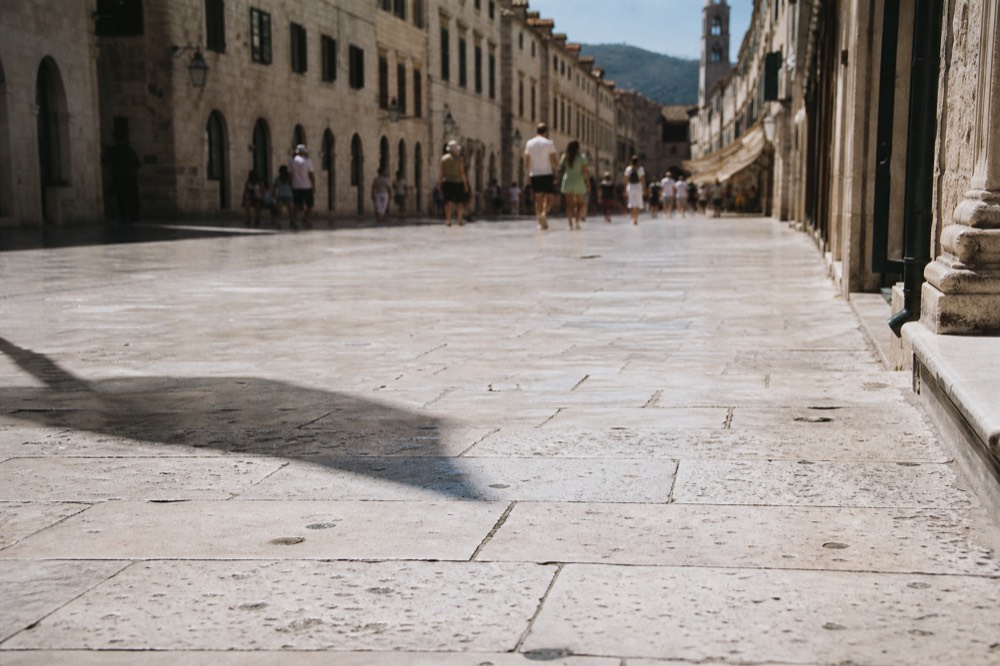
The crowd math matters here. The Old Town's official carrying capacity, from the UNESCO carrying-capacity assessment, is 11,275 people, and six counters at every entrance update a headcount every 15 minutes. On a busy September morning that counter read 7,297 at 09:00 and peaked at 7,739 an hour later. A two-day visitor who starts at 08:00 sees a different city from one who starts at 11:00.
There is also a physical reality worth naming plainly: Dubrovnik is a city of stairs. The walls circuit climbs and descends repeatedly, the lanes off the Stradun step uphill on the north side and down toward the harbour on the south, and even a short walking day registers in the legs. Visitors who pace themselves across two days enjoy it far more than visitors who sprint the whole list on day one and hobble through day two. Comfortable shoes are not a suggestion here, they are equipment.
If you want the walls explained rather than just walked, a guided combo is the most time-efficient route, since it bundles the Old Town orientation and the walls circuit into one block. The Old Town and walls combo walk runs about 3 hours 30 minutes, is rated 4.8 across 1,183 reviews, and starts from $50.94 per person. You can also Check availability for your dates.
What Can You Realistically See in Two Days?
Day one: the walls circuit, the Old Town's key squares and lanes, and a sunset viewpoint, either the cable car or Fort Lovrijenac. Day two: one bigger excursion, an Elaphiti islands cruise or Lokrum, plus a swim and a relaxed evening meal. That is a full and satisfying two days. Anything beyond that, museums, Cavtat, kayaking, needs a third day or a hard choice.
The sequencing is where two-day trips succeed or fail. Walls first, on the morning of day one, before the heat and before the tour groups thicken. The operator's stated hours are 08:00 to 19:30, and the first two hours after opening are the calmest of the day. After the walls you are already oriented, so the Old Town below becomes a place you recognise rather than a maze.
The cable car is the classic evening bookend. It climbs 367 metres to the Mount Srd station in 3 minutes 30 seconds, and the operator states a view range of up to 60 km on a clear day. An adult round trip is 30 euro in 2026, with children 4 to 12 at 8 euro. Sunset from the top, with the Old Town lit below, is the single most reliable "worth it" moment in the city.
Day two is your excursion day, and this is where the shape of your trip gets decided. The most reviewed island cruise from Dubrovnik, the full-day Elaphite islands trip with lunch, runs about 8 hours, is rated 4.9 across 10,312 reviews, and starts from $59.16 per person. Lokrum is the shorter alternative: the 30 euro ticket covers reserve entry and the return boat, with departures at 09:00 and then every 15 minutes from 10:00 to 18:00. The ticket office at Luza in the Old City Port works 08:00 to 18:00, and a ticket stays usable for three days, which gives a small amount of scheduling flexibility if the weather turns.
For a first visit I would not skip the walls under any circumstances, and I would not try to squeeze the walls and a full-day boat trip into the same day. That combination is the classic two-day mistake: you end up running the walls at noon, in the worst heat and the worst crowds, and arrive at the boat already spent.
How Many Days Is Enough to See Dubrovnik?
Three days is the sweet spot for most travellers: day one for the walls and Old Town, day two for an island excursion, day three for Lokrum or a slower mix of museums, beaches and food. Two days covers the essentials. Four to five days suits visitors adding Mostar, Montenegro or Korcula day trips, or who want genuine rest between the sightseeing.
The reason three days keeps coming up is the excursion economy. Dubrovnik's best experiences are mostly day-shaped: an 8-hour Elaphiti cruise, a 10-hour Mljet national park trip, an 11-hour Mostar and Kravica run. With two days you get exactly one of these. With three you get one plus a recovery day that doubles as the Lokrum or beach day. The Things to Do in Dubrovnik shortlist on the homepage is roughly grouped by this logic.
Consider what a guided day actually delivers. The Old Town and walls combo, from $50.94 per person, rated 4.8 across 1,183 reviews, compresses two of the city's three headline experiences into one efficient block. That efficiency is precisely what makes a two-day trip viable: you are not losing half a day to orientation.
If you prefer to walk the walls independently, the admission-only ticket starts from $36.37 per person, though its rating sits at 3.6 across 249 reviews, largely because it is a ticket rather than a tour and buyers sometimes expect more. The standalone adult walls ticket bought directly is 40 euro in main season, 1 March to 30 November, and 20 euro in December. That 40 euro is the walls plus Fort Lovrijenac combination, and it also covers the Western Outer Wall, closed December through February, and the coin collection at Gundulic Square.
Here is the budget detail that changes the arithmetic for many visitors. The one-day Dubrovnik Pass costs the same 40 euro as the standalone walls ticket in main season, and adds ten more sights plus a 24-hour bus ticket. That equivalence is a main-season fact only: in December the walls ticket drops to 20 euro and no pass tier is on sale at all. The full pass breakdown covers what each tier includes.
| Ticket or pass | Main season (1 Mar to 30 Nov) | December | What it adds |
|---|---|---|---|
| City Walls + Lovrijenac | 40 euro | 20 euro | Western Outer Wall and coin collection |
| Child 7 to 18 | 15 euro | 5 euro | Same inclusions, child rate |
| One-day Dubrovnik Pass | 40 euro | not on sale | Ten sights plus 24h bus ticket |
| Three-day Dubrovnik Pass | 50 euro | not on sale | Ten sights, suburban bus coupons |
How Would You Split Two Days in Dubrovnik?
Start day one at the walls at 08:00, spend the late morning and afternoon in the Old Town, and end with the cable car at sunset. Give day two entirely to one excursion: an Elaphiti cruise, Lokrum, or a Mljet boat trip, followed by a swim and a long dinner. Keep the last morning free for a quiet Stradun walk before departure.
I have walked people through this split many times, and the order matters more than the content. The walls at opening are a different experience from the walls at noon: cooler air, empty photo spots, and the counter data backs it up, 5,419 people were counted in the Old Town at 08:00 on one September morning against a 7,739 peak at 10:00. Two hours is the difference between calm and crush.
The Old Town afternoon needs no itinerary beyond a few anchors: the Stradun, the Rector's Palace, the Franciscan Monastery, whose cloister is one of the quietest corners in the city, and the harbour. If you want the history unpacked rather than just seen, the Old Town walking tour with a local guide starts from $20 per person and is rated 4.8 across 5,826 reviews. It is the cheapest paid walk on the roster and a strong fit for day one afternoon.
Day two is the excursion, and the choice is genuinely a choice, not a ranking. The Elaphiti cruise suits swimmers and lunch-lovers. Lokrum suits slow wanderers, peacocks, botanical paths and a swim off the rocks. Mljet suits travellers who want national park scenery and do not mind a 10-hour day. Here is how the realistic options compare for a two-day visitor.
| Day two option | Duration | From (per person) | Rating | Best for |
|---|---|---|---|---|
| Elaphiti islands cruise with lunch | about 8 hours | $59.16 | 4.9 across 10,312 reviews | Swimming, lunch, easy pace |
| Lokrum reserve (independent) | half day | 30 euro | entry and boat included | Slow wandering, close to town |
| Mljet national park boat tour | about 10 hours | $153.99 | 4.9 across 397 reviews | Lakes, forest, longest day |
| Sea kayaking to Lokrum and Betina Cave | about 2 hours | $35.49 | 4.9 across 1,518 reviews | Active morning, short commitment |
The two-day split has one hard rule: do not book a full-day excursion on your departure day. Boats return late, and the 10-hour Mljet trip in particular leaves no margin for a delayed checkout or an evening flight. Put the excursion on day two only if you have a third morning, otherwise compress to a half-day option like kayaking or Lokrum.
One more practical note on the evening. Dinner in Dubrovnik runs late by northern European habits, and the best konoba tables fill from 20:00 onward in season. A two-day visitor who eats at 18:00 to chase a sunset gets the view but misses the atmosphere. Book one dinner ahead for your single full evening, and let the other float.
A note on how the pieces fit together financially. The walking tour, the Elaphiti cruise, and the cable car sunset on day one's plan add up to a modest outlay per person, and the pricier Mljet tour at $153.99 roughly matches what the walls, the walking tour, and the Elaphiti cruise cost combined. If budget is the deciding factor between the excursions, the Elaphiti cruise at $59.16 with lunch included is the strongest value among the boat options, and the independent Lokrum visit at 30 euro with entry and boat included undercuts every guided alternative.
Timing also shapes the excursion choice more than most visitors expect. The Elaphiti cruise runs about 8 hours and the Mljet tour about 10, so both consume the whole of day two, while the 2-hour kayaking trip to Lokrum and Betina Cave leaves room for a swim and still gets you back for that late konoba dinner. That flexibility is why kayaking earns its place in the table even though it is the shortest option on the roster: it is the only one that preserves the full evening.
What Would You Miss With Only Two Days?
The honest gaps: the museums beyond the walls-and-palace core, Cavtat and the Konavle valley, a second island, and any day trip beyond Croatia, Mostar, Montenegro or Korcula. None of these are required for a first visit, but each is a real loss if the interest is there. Border-crossing day trips in particular do not fit a two-day stay.
Mostar and Kravica is the clearest example. The most reviewed version of that trip starts from $35 per person, rated 4.6 across 10,019 reviews, but it runs about 11 hours with a border crossing each way. Squeezing it into a two-day visit means sacrificing either the walls morning or the island day, and most travellers regret one of those trades. The Mostar day trip guide explains the border and timing realities in detail.
Montenegro has the same shape: the standard trip starts from $58 per person, rated 4.4 across 5,611 reviews, and runs most of a day with a border queue that varies wildly by season. A recent review of the semi-private version noted the September border crossing took only 15 minutes, but that is luck, not a schedule. These are third-day activities wearing a two-day disguise.
The softer losses are the ones people underestimate. Dubrovnik's beaches, Banje on the east side and the Lapad bay beaches further out, each want a half-day to be enjoyed rather than visited. The food scene rewards a second evening: konoba dining here is unhurried, and a two-day visitor who eats both dinners at 18:00 to catch a sunset misses how the city actually dines. The what to eat guide is worth a read before you book anything.
There is also a crowd-timing argument for a third day that the raw numbers make well. Cruise passengers in 2025 peaked in September at 101,246 and October at 100,132, above July's 96,072 and August's 87,385, according to Port Authority data. Autumn is not the quiet season here; it is the busiest cruise season. A third day gives you a spare morning to redo the walls or the Stradun if your first attempt collided with a four-ship day.
When Two Days Is the Right Call
Two days is the right call when Dubrovnik is one stop on a longer Croatia route, when you arrive from a cruise or a Split stay, or when your interests are the walls, the Old Town and one boat day. It is the wrong call if you want Mostar or Montenegro, two islands, or a holiday with genuine rest days built in.
For a Split-plus-Dubrovnik pairing, two days here is not a compromise, it is the design. The two days itinerary walks the same split day by day. Cruise passengers on a full-day call effectively get a one-day version of this question, and the answer for them is walls plus Old Town, full stop.
The final practical note is seasonal. The sea stays swimmable well into autumn, with the September long-run average at about 23.6 degrees, and that figure is an open-water climatological average for 1991 to 2020, not a beach thermometer; sheltered bays run warmer. An October two-day trip trades a few degrees of water temperature for thinner queues at the walls and the cable car, which is often the better trade.
Common Questions About Two Days in Dubrovnik
Is 2 days in Dubrovnik enough?
Yes, for the core experience. Two days covers the city walls, the Old Town, a viewpoint and one excursion such as an Elaphiti cruise or Lokrum. It is not enough if you want a border-crossing day trip to Mostar or Montenegro as well.
How Many Days Is Enough in Dubrovnik?
Three days suits most travellers: walls and Old Town on day one, an island excursion on day two, and Lokrum, beaches or museums on day three. Two days works for the essentials, and four to five for visitors adding regional day trips.
Can You Walk the City Walls and Do a Boat Trip on the Same Day?
You can, but it is a mistake on a two-day trip. The walls circuit takes two hours or more in morning conditions, and full-day boats run about 8 hours. Doing both in one day means the walls at midday, in the worst heat and crowds.
Is the Dubrovnik Pass Worth It for Two Days?
The one-day pass costs 40 euro in main season, the same as the standalone walls ticket, and adds ten sights plus a 24-hour bus ticket. For a two-day visit it is worth it if you will enter even two of the extra sights. In December no pass tier is on sale and the walls ticket drops to 20 euro.
What Is the Best Month for a Two-Day Visit?
May, June, late September and October balance warmth, sea temperature and thinner crowds. Note that September and October are actually the peak cruise months, with 101,246 and 100,132 passengers in 2025, so early mornings matter even in autumn.