How Long Is the Ferry From Kotor to Dubrovnik?
There is no scheduled ferry between Kotor and Dubrovnik. Here is what actually connects the two, plus the real ferry picture from Dubrovnik to Montenegro, Korcula, Hvar and Mljet.
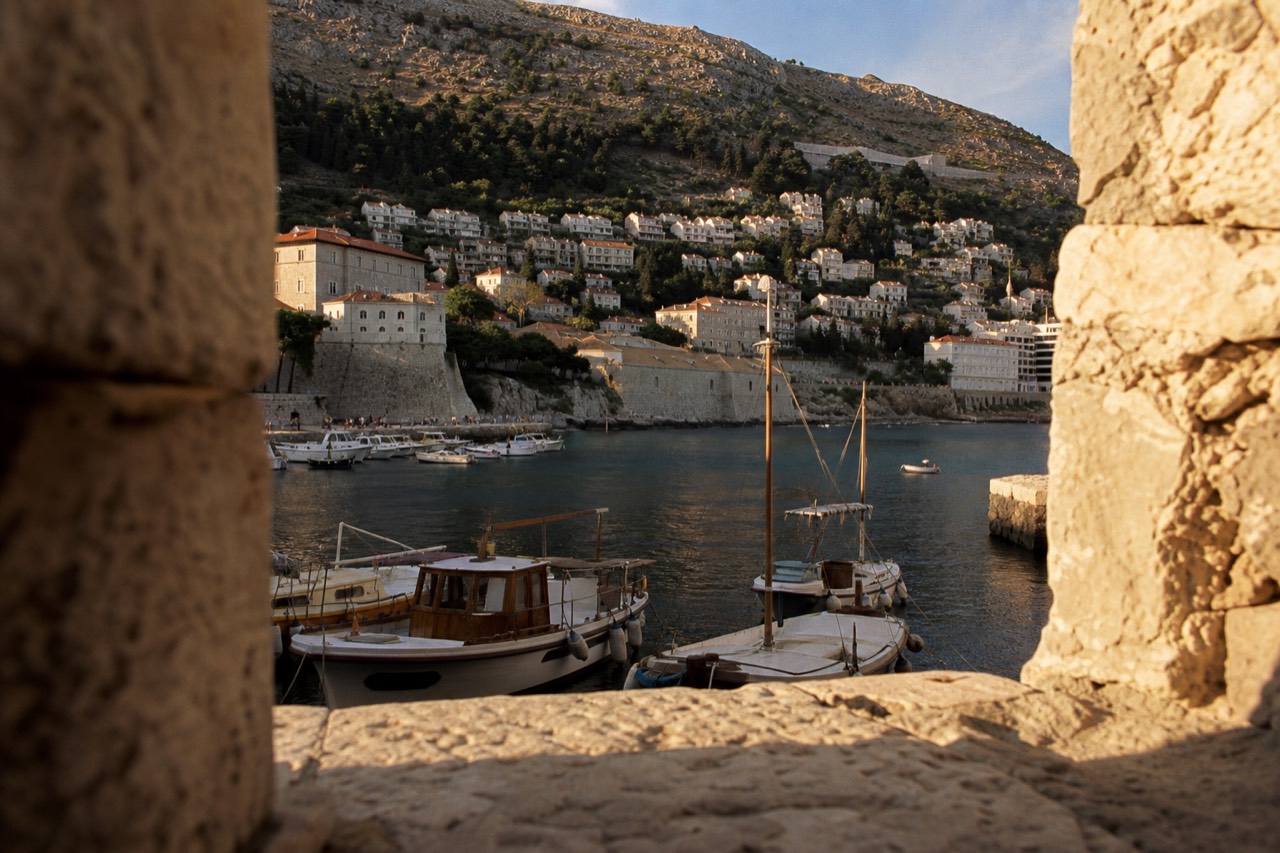
How Long Is the Ferry From Kotor to Dubrovnik?
There is no scheduled ferry from Kotor to Dubrovnik, so the question of duration has no answer in minutes or hours. No regular passenger line connects the two, and the bay of Kotor has no year-round service to Croatia at all. The journey is made by road, and most travellers do it as a bus ride, a private transfer or an organised day trip rather than a crossing.
I get this question constantly from people planning a two-base trip that pairs Dubrovnik with Montenegro. On the map it looks like a short hop across the mouth of the bay, and the instinct to look for a boat is a reasonable one. The Adriatic ferry network simply does not work that way at this end. The catamarans and car ferries that do run from Dubrovnik head north and west along the Croatian coast and islands, not south along the Montenegrin shoreline.
So the practical answer is a road itinerary. You leave Dubrovnik, follow the coast briefly, cross the border at Debeli Brijeg, and then descend into the bay of Kotor, where the road wraps around the water. Montenegro sits outside the Schengen area, so carry your passport rather than assuming a national ID card will do, and build a little slack into the day for the border itself. The crossing is routine, but queues build when several tour buses arrive together.
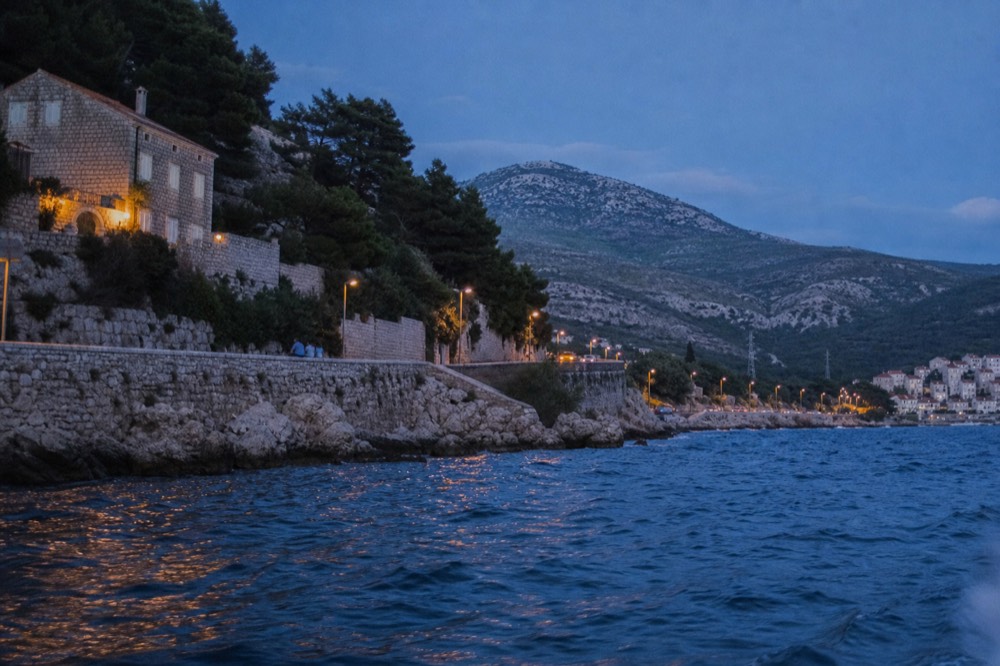
If you would rather not think about buses, borders or parking in Kotor's tight old streets, an organised day trip solves all three at once. The three options below are the ones worth comparing: the Montenegro day trip that includes an optional boat ride on the bay, the Ston and Korcula trip for a taste of the islands instead, and the Mostar and Kravica tour if you would rather head inland into Bosnia and Herzegovina.
There is a broader planning point here that surprises first-time visitors. The Montenegrin and Bosnian borders sit within an hour or two of Dubrovnik in three directions, which is why this small city works as a base for three different countries. Our Kotor day trip guide walks through the full route, the stops worth making along the bay and what to do with your time in the old town itself.
How Long Is the Ferry From Dubrovnik to Montenegro?
There is no ferry from Dubrovnik to Montenegro either, in either direction. The connection is entirely by road, whether you drive, take a bus or join a tour. The most popular bookable version, the Montenegro Day Trip with Optional Boat Trip, runs 11 to 12 hours in total, from $70.99 per person, and is rated 4.4 across 3,829 reviews.
The reason people keep searching for this ferry is understandable. Kotor's bay is a body of water, Dubrovnik is a port town, and ferries exist elsewhere on this coast. But the scheduled passenger boats from Dubrovnik serve Croatian destinations, and the Montenegrin ports that do receive seasonal vessels are geared to local lines and private charters, not a Dubrovnik to Kotor commuter run. Nothing in the timetable landscape supports a day return by sea.
The leaves the road, and the road is genuinely good. The drive out of Dubrovnik tracks the coastline before turning inland to the border, and once you are through, the road descends toward the bay with the water appearing below you in stages. It is one of the better scenic drives on this side of the Adriatic, and a tour bus lets you look at it instead of watching the wheel.
The boat element of the Montenegro day trip is worth a word, because it is the closest thing to the ferry experience people imagine. The optional boat trip takes you out onto the bay of Kotor itself, giving you the old town and the sheer mountains from the water, which is the view that makes the place famous. It is a short excursion rather than transport, but it delivers the maritime angle the missing ferry would have provided.
| Way to reach Kotor | What it involves | Best for |
|---|---|---|
| Organised day trip | Door-to-door transport, border handled, guided stops, optional bay boat ride | Travellers without a car who want the day simplified |
| Rental car | Self-drive across the border, park outside Kotor's old town | Independent travellers who want to set their own pace |
| Intercity bus | Scheduled service from Dubrovnik bus station toward Kotor | Budget travellers comfortable with fixed departure times |
| Private transfer | Booked car and driver, direct routing | Small groups valuing flexibility over price |
One planning note from the numbers side. If your worry is crowds rather than transport, the cruise calendar is worth a glance: the Port Authority limits cruise passengers to 8,000 a day in most cases, out of 243 cruise days a year, and refused about forty call requests in a single season to hold that line, according to its own crowd-management page. Kotor has its own cruise traffic too, so a day trip timed outside peak ship days pays off in both towns.
A few practical points make the land crossing smoother. You do not need to change money at the border. Croatia is in the European Union and Montenegro is not, which means there is a genuine passport check, so have documents ready rather than buried in a suitcase. Border waits stretch in July and August, and tour operators build buffer time into their schedules for exactly this reason, another quiet argument for letting someone else handle the day.
Timing matters more than you might expect. The day trip runs 11 to 12 hours, so expect an early start and a late return, and plan nothing demanding for the evening. If you would rather see Kotor with fewer people in the frame, aim for shoulder season or check the cruise schedules for both ports before you pick your date, since a quiet day in the old town is the difference between a quick visit and a memorable one.
If the land route has won you over and you are ready to lock the day in, this is the tour that replaces the ferry you were searching for.
How Long Is the Ferry From Dubrovnik to Korcula?
A seasonal ferry and catamaran link does exist between the Dubrovnik area and Korcula, but crossing times and timetables shift with the season and I will not quote a duration that is not verified. The practical benchmark most travellers actually use is the bookable day trip: the Ston and Korcula Island Day Trip runs 11 hours, from $81.69 per person, rated 3.8 across 131 reviews.
Korcula is the island people usually mean when they ask about ferries east of Dubrovnik. It is a long, green island with a beautifully preserved walled town, often described as a smaller, quieter relative of Dubrovnik's Old Town, and it sits far enough out that a boat is genuinely the sensible way in. The services that run there are seasonal, which is the key caveat: what operates in July may not operate in November, and schedules are published by the operators close to each season.
The day trip route has a structure the ferry cannot match, because it pairs the island with Ston on the Peljesac peninsula. Ston is famous for its own defensive walls, among the longest in Europe, and for the oyster beds in the channel below, so the drive out becomes part of the day rather than dead time on a deck. The tour version adds a wine tasting, which suits the peninsula, since this is Croatian wine country rather than a detour from it.
For deeper planning on the island itself, our Korcula day trip guide covers the crossing options, what to see in Korcula town and how the day flows. If you are weighing the ferry against the tour, the honest framing is this: the ferry is transport, and it suits travellers staying overnight on the island. The tour is a complete day, and it suits travellers based in Dubrovnik who want Korcula without booking accommodation.
| Option | Duration | Price | Rating |
|---|---|---|---|
| Ston and Korcula Island Day Trip with Wine Tasting | 11 hours approx | From $81.69 per person | 3.8 across 131 reviews |
| Seasonal ferry or catamaran, independently booked | On the operator's timetable | On the live listing | Not comparable |
How Long Is the Ferry From Dubrovnik to Hvar?
There is no direct year-round ferry from Dubrovnik to Hvar, and any connection is seasonal and usually indirect, via Split or a changing catamaran schedule, so no single crossing time can be stated honestly. Hvar is the one island in this set that is usually reached by travelling north first. For most Dubrovnik-based travellers it is an overnight destination, not a day trip.
Hvar sits a long way up the coast, beyond Korcula and the Peljesac channel, and the geography shapes the logistics. Where Korcula leans toward Dubrovnik, Hvar leans toward Split, which is why the island's ferry connections are anchored at the northern end of the route. Travellers determined to reach Hvar from Dubrovnik typically ride north along the coast and islands, or take a transfer to Split and sail from there. It is a journey measured in a good part of a day, not an afternoon hop.
That does not make Hvar a bad idea. It makes it a different kind of idea. Hvar town is a polished, lively place with a large open square, a hilltop fortress and a nightlife scene that draws a younger crowd than Korcula or Mljet ever will. If your trip has room for two or three nights outside Dubrovnik, Hvar rewards them. If it does not, the closer islands give you the same blue water without the transit.
The comparison worth making is with the Elaphiti islands, which sit directly off Dubrovnik and are served by full-day boat cruises rather than scheduled ferries. The best-reviewed of them, the full-day Elaphite Islands Cruise with lunch, runs 8 hours, from $59.16 per person, and carries 10,312 reviews at 4.9, the deepest review pool of any product on this coast. For a taste of island Croatia on a Dubrovnik day budget, that is the standard the far islands have to beat.
How Long Is the Ferry From Dubrovnik to Mljet?
Mljet is reachable by boat from Dubrovnik, but scheduled services are limited and seasonal, so the reliable benchmark is the bookable tour: the Mljet National Park and 3 Island Boat Tour runs 10 hours, from $153.99 per person, rated 4.9 across 397 reviews, and a second Mljet and Elaphiti trip starts from $139.47, rated 4.8 across 333 reviews.
Mljet is the wild one in this group. Its western end is a national park, built around two linked saltwater lakes where the water is calm and green-blue, and the island is heavily wooded in a way the drier islands further north are not. There is a small Benedictine monastery on an islet in the big lake, reachable by a little shuttle boat once you are inside the park, and swimming in the lakes is part of the point of going.
The tour format suits Mljet well because the island's attractions are spread out and the logistics stack up: a boat from Dubrovnik, park entry, the lakes, the islet. The 10-hour day reflects the distance, since Mljet lies south of the Peljesac peninsula and the crossing each way takes a real slice of the morning and afternoon. The 3-island version spreads the same day across Mljet plus smaller stops, which gives you variety at the cost of depth on any one island.
For the fuller picture of the island, our Mljet day trip guide covers the park, the lakes and how the day is structured. One thing worth knowing before you book anything on the water: the sea itself. The September average for this coast is about 23.6 degrees, a long-run open-water figure, and sheltered bays like Mljet's lakes run warmer than that, which is exactly why the lakes swim so well late in the season.
| Island boat product | Duration | Price | Rating |
|---|---|---|---|
| Mljet National Park and 3 Island Boat Tour | 10 hours approx | From $153.99 per person | 4.9 across 397 reviews |
| Mljet National Park and Elaphiti Islands Trip | On the live listing | From $139.47 per person | 4.8 across 333 reviews |
| Full-Day Elaphite Islands Cruise with Lunch | 8 hours approx | From $59.16 per person | 4.9 across 10,312 reviews |
Which Boat Day Should You Actually Book?
If you want the Kotor experience, book the Montenegro day trip, because no ferry will ever deliver it. If you want islands, book by distance: the Elaphite cruise for an easy day, Korcula for wine and walls, Mljet for lakes and forest. The pattern across every option is that the boat is an excursion, not a commute, and the duration that matters is the whole day, not a crossing.
This is the frame I would use with a friend planning the week. Dubrovnik sits at a corner of the Adriatic where the ferry map thins out and the excursion map fills in, and fighting that geography wastes holiday time. The town recorded about 4.2 million overnight stays in 2025, sharing first place among Croatian destinations with Rovinj, according to the Croatian Bureau of Statistics, and a city that busy has built a whole industry around getting you onto the water efficiently.
Timing matters as much as choice. Cruise passengers through the Port of Dubrovnik peaked in September at 101,246 and October at 100,132 in 2025, both above July's 96,072 and August's 87,385, so the shoulder months are the busier ones on the quay, not the quieter ones everyone assumes. If you are choosing between a September and an October date for a boat day, the sea is the tiebreaker: the October average is about 21.0 degrees against September's 23.6, a difference you feel the moment you get in.
The border point deserves a repeat, because it is the one that catches people out. Montenegro and Bosnia and Herzegovina are both outside the Schengen area, so a passport belongs in your day bag on any Kotor or Mostar trip, and a tour that handles the crossing while you sit back is worth real money on a tight itinerary. On the Montenegro trip, one recent guest review noted that the border in September took their group only 15 minutes, which is the pleasant end of the range rather than the rule.
Whatever you choose, book the boat days before you leave home. The best-reviewed products on this coast sell out on peak weeks, and the difference between a booked seat and a hopeful walk-up is often the difference between the day you planned and the day you settle for. For everything else worth doing in and around the city, Things to Do in Dubrovnik is where the full picture lives.
Common Questions About Ferries From Kotor and Dubrovnik
How long is the ferry from Kotor to Dubrovnik?
There is no scheduled ferry between Kotor and Dubrovnik, so there is no crossing time to quote. The journey is made by road, as a bus ride, a private transfer, a self-drive trip or an organised day trip. The most popular bookable version, the Montenegro Day Trip with Optional Boat Trip, runs 11 to 12 hours in total.
Is There Any Boat at All Between Dubrovnik and Montenegro?
No scheduled passenger service connects them. The boat element that does exist is the optional excursion onto the bay of Kotor itself, offered as part of the Montenegro day trip, which gives you the old town and the mountains from the water.
Which Islands Can You Actually Reach by Boat From Dubrovnik?
The Elaphiti islands sit directly offshore and are served by full-day cruises, the best-reviewed running 8 hours from $59.16 per person. Korcula and Mljet are reachable through seasonal services and bookable day trips, the Mljet tours running 10 hours from $153.99. Hvar is usually reached via Split rather than directly.
Do You Need a Passport for the Kotor Day Trip?
Yes. Montenegro is outside the Schengen area, so you cross a hard international border each way. Carry your passport, and expect a short stop at the border each direction, longer when several tour buses arrive together.
Is Hvar a Realistic Day Trip From Dubrovnik?
Not really. Hvar leans toward Split in ferry geography, and reaching it from Dubrovnik means travelling north first, which turns the day into transit. It is an overnight destination for most Dubrovnik-based travellers; the Elaphiti islands, Korcula and Mljet fill the day-trip role better.