How Long Does It Take to Walk the City Walls of Dubrovnik?
The Dubrovnik city walls circuit is 1,940 metres with stairs and photo stops. Here is how much time to budget, what the ticket covers and whether it is worth it.
How Long Does It Take to Walk the City Walls of Dubrovnik?
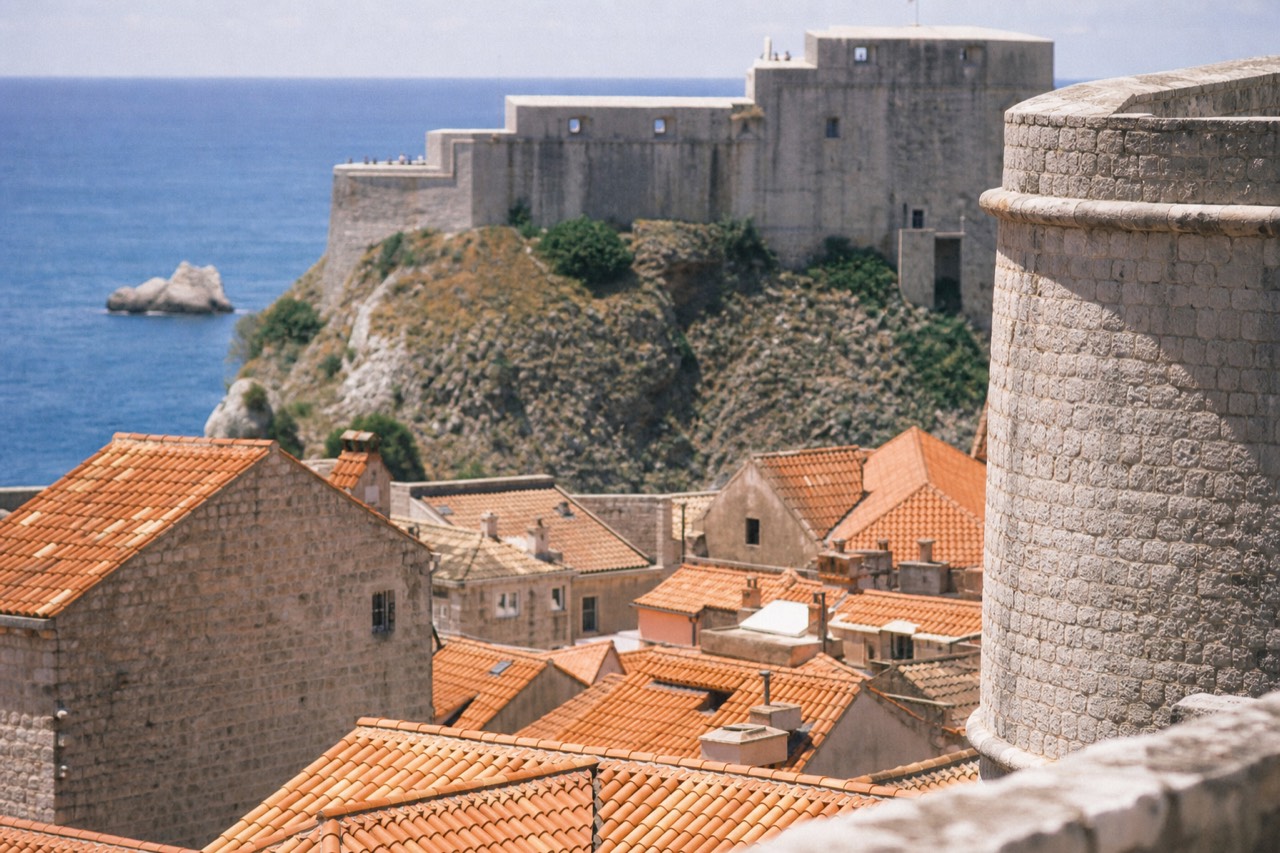
Plan on the 1 to 3 hour window that the admission product itself lists, and lean toward the upper end if you like photographs. The circuit is 1,940 metres long, but it is a staircase walk, not a promenade: the operator's own figures count 16 towers, 3 fortresses, 6 bastions and 2 corner fortifications along the way, and nearly every one of them begs a stop. Budget a full morning or a full late afternoon, arrive at opening, and let the wall set the pace.
I have walked this circuit in every month of the year, and the variable that changes the time more than anything else is not fitness. It is crowding. The wall is one-directional in practice at busy times, the staircases between the towers are narrow, and a queue forms behind anyone pausing at a viewpoint. In July and August you can spend a chunk of your visit simply waiting for a gap on the stairs. In October or April the same loop flows freely and feels like a different walk entirely.
The walls operator, the Society of Friends of Dubrovnik Antiquities, gives the physical facts plainly: the main wall runs 1,940 metres, reaches up to 25 metres high, and is 4 to 6 metres thick on the land side and 1.5 to 3 metres on the sea side, as stated on the operator's own page. The circuit reached its basic shape in the 13th century and was only finished in 1660, with the last Bastion of St Stephen. So you are walking a structure that took centuries to close, and the final stretch past the harbour is the part most visitors remember.
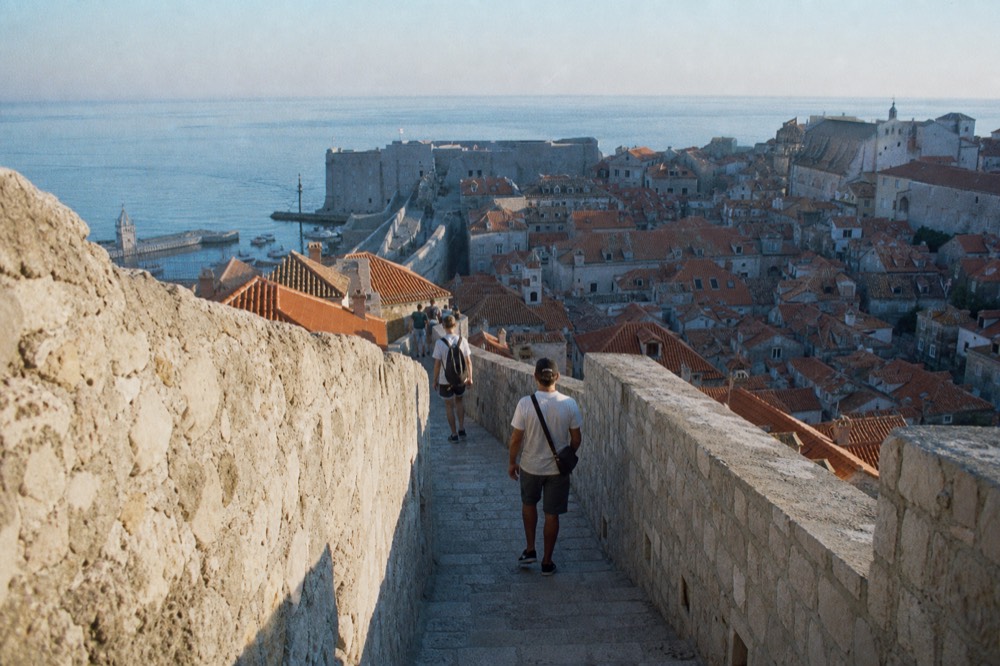
Here is the practical breakdown of where the time goes. The stretch from Pile Gate up to the first tower is the steepest climb of the whole circuit, and it comes in the first ten minutes, which catches people off guard. After that the path rolls along the ridge of the wall with staircases down and up at each fortress. The sea-side sections above the cliffs are the slowest, not because they are hard, but because the view over Lokrum and the open Adriatic stops almost everyone. The final descent back toward the Stradun level is a long staircase that is hard on the knees, and it is worth knowing that before you start rather than after.
The table below is how I would budget the hours, based on the way the circuit actually flows. Treat it as planning ranges rather than promises, because your pace on the day depends on the crowd behind you and the number of photographs you allow yourself.
| Walker type | Realistic circuit time | What slows you down |
|---|---|---|
| Fast, no stops | 1 hour to 1 hour 15 | Nothing except the staircases |
| Steady with photo stops | 1 hour 30 to 2 hours | Sea-side viewpoints, tower queues |
| Slow and thorough | 2 hours to 3 hours | Every viewpoint, crowds on stairs |
| Guided group | About 2 hours | The group's pace, commentary stops |
If you want the walk explained rather than just walked, a guided option changes the arithmetic. The Ancient City Walls & Wars Walking Tour runs the circuit in about 2 hours with a guide, from $29.58 per person, rated 4.8 across 1,387 reviews. A guide keeps you moving, because the group moves, and you leave knowing what the towers were actually for. One recent guest put it better than a description can:
This well organized tour helped put Dubrovnik's past (and present) into perspective. It's incredible that the city walls have withstood the test of time. Antun was a wonderful guide.
linda_a
If you would rather walk alone but still want context, the audio-guide and admission-only options exist too. The admission product itself lists 1 to 3 hours, which is the most honest self-planning range anyone can give you. Add time for the Fort Lovrijenac visit, because your ticket includes it, and Lovrijenac sits across a small bay on its own 37-metre sea rock, reached by a walk out of the Old Town and back. A reasonable full plan is the wall at opening, a late-morning coffee on the Stradun, the 298-metre length of which the 1272 Statute fixed in its final plan, and Lovrijenac in the early afternoon before the tour groups reclaim it.
Is It Worth It to Walk the City Walls in Dubrovnik?
Yes, and it is not a close call: the wall walk is the single best view of the Old Town's UNESCO-listed core, a 24.7-hectare site inscribed in 1979, and there is no other place where you look down on the red rooftops, the Stradun and the sea cliffs in one circuit. The real question is not whether it is worth it, but whether it is worth it at the time of day you are planning, and at the price of the ticket on the day you go.
The ticket is 40 euro for an adult in main season, 1 March to 30 November, and 20 euro in December. That price is not a walls-only ticket: it is the walls plus Fort Lovrijenac combination, and it also covers the Western Outer Wall, which closes December through February, and the Collection of Coins of the Republic of Ragusa on Gundulić Square. A child from 7 to 18 pays 15 euro in main season and 5 euro in December, under 6 is free, and there is no family ticket, because the operator sells exactly two paid ticket types. All of that comes from the operator's own webshop, and the details are laid out in full in our city walls ticket guide.
| Ticket | Main season (1 Mar to 30 Nov) | December |
|---|---|---|
| Adult walls + Lovrijenac | 40 euro | 20 euro |
| Child 7 to 18 | 15 euro | 5 euro |
| Child under 6 | free | free |
| Lovrijenac alone | 15 euro | 15 euro |
Is it worth 40 euro? Compare it with the Dubrovnik Pass, which costs the same 40 euro for one day in main season and adds ten more sights plus a 24-hour bus ticket, with the walls and Lovrijenac listed as its first inclusion, per the official pass site. If you are visiting anything else that day, the pass is the better buy. But note the season boundary: in December the walls ticket drops to 20 euro while no winter pass tier is on sale at all, so the equivalence only holds from March to November. Every pass tier allows a one-time visit to each institution, the walls included, so you cannot use it to walk the circuit twice.
The other half of the worth question is the crowd experience, and this is where a little-known fact changes how people plan. Cruise passengers in Dubrovnik peaked in September 2025 at 101,246 and October at 100,132, both above July's 96,072 and August's 87,385, according to Port Authority data. The "avoid summer crowds, come in autumn" advice is therefore half wrong: early autumn is the busiest cruise season of the year. The Old Town's official carrying capacity is 11,275 people, measured by six counters at every entrance updating every 15 minutes, and on a September morning the count passed 5,419 at 08:00 and peaked at 7,739 at 10:00. Walk at opening, in other words, whatever month you visit.
Can I Walk the Dubrovnik City Walls?
Almost everyone can, with two honest caveats: the circuit is a continuous staircase walk with no shortcuts off the wall once you are on it, and there is no lift, no shade to speak of, and no bypass around the steep first climb. There is no age limit and no fitness test, children and older walkers do it every day, but anyone with knee trouble, a heart condition or serious heat sensitivity should think hard about the timing and the season rather than the distance.
The physical demands are real but ordinary. The wall is 1,940 metres of mostly stone path with staircases at every tower and fortress, up to 25 metres above the streets below. The operator's stated hours at the time of check are 08:00 to 19:30, and the earlier slot is the cooler and quieter one. Wear real shoes, not flip-flops, because the polished stone steps get slick. Bring water, because the wall has essentially no shade in the middle hours of a summer day, and the sea breeze that feels lovely at the top does nothing for the staircases in the middle of the circuit.
Accessibility is the one place I have to be blunt. The walls are not wheelchair accessible, and there is no accessible version of the circuit. If someone in your group cannot do the stairs, the alternatives that still deliver the panorama are real ones: the cable car to Mount Srd, whose upper terminal sits at 405 metres and whose operator claims a view range of up to 60 km on a clear day, or the walk up to the Srđ plateau itself. Our Mount Srd viewpoints guide covers those options in detail, and the cable car tickets guide explains the pricing, which runs 30 euro for an adult round trip in 2026.
For families, the walk is very doable with school-age children and hard work with toddlers. The wall edges are protected, but the staircases are steep and unforgiving, and there is nowhere to rest a stroller. Most parents who manage it well either take turns or time the walk for the first hour of opening, when the wall is quiet enough that a slow, chatty pace does not create a queue behind you. The under-6 ticket is free, so at least the cost side is simple.
If the full circuit sounds like more than your group can manage on a hot day, there is a middle path that many visitors take: pair a shorter Old Town walk with the walls seen from below and from Srđ. The Old Town Walk with a Local Guide, from $20 per person and rated 4.8 across 5,826 reviews, covers the streets and the history in a flat, shaded format, and it makes a good first-evening orientation before you attempt the wall the next morning. Our Old Town walking tours overview compares all the formats side by side, and the wider Things to Do in Dubrovnik collection has options for every energy level.
Can You Walk the City Walls of Dubrovnik for Free?
No, and there is no loophole worth hunting: every entrance to the circuit is ticketed and staffed, the adult ticket is 40 euro in main season and 20 euro in December, and there is no free window, no free day and no side gate onto the wall. The only ways to be on the circuit without buying a standalone ticket are to hold a Dubrovnik Pass, which includes the walls in every tier, or to be under 6 years old, who enter free with a paying adult.
This question gets asked constantly, and I understand why: 40 euro for a walk feels steep, and people go looking for the loophole. There isn't one. The wall has a handful of entrances, all controlled, and the ticket is checked as you step onto the circuit. What people sometimes confuse with a free wall walk is the free view: the paths around the outside of the walls, the rock ledge below Buža, and the climb to Srđ all cost nothing and give you the same red-roof panorama from a different angle. Those are genuinely free and genuinely good, but they are not the wall.
What you can do legitimately is make the 40 euro buy more. The ticket already includes Fort Lovrijenac, which costs 15 euro on its own, so skipping it means leaving value on the table. And if you are visiting other sights, the one-day Dubrovnik Pass costs the same 40 euro in main season and layers on ten more institutions plus a 24-hour bus ticket, as itemised on the pass's official site. The full breakdown of what each tier includes is in our Dubrovnik Pass guide, including the three-day and seven-day tiers at 50 and 60 euro.
For visitors whose budget simply cannot stretch to the ticket, the honest advice is to spend the morning on the free panoramas instead. The climb to Srđ on foot costs nothing and delivers the view the cable car charges for, the outer paths around the walls at Pile and Ploče give you the fortifications up close, and the free walking tours on GuruWalk, including the Ancient Old City Finest Tour of Dubrovnik, rated 4.87 across 2,242 reviews, cover the Old Town's history on a pay-what-you-want basis. None of it replaces the wall itself, but it is a real day out rather than a consolation prize.
What Time of Day Should You Walk the Walls?
Walk the walls either right at opening, 08:00 per the operator's stated hours, or during the final two hours before the 19:30 close. Arriving early means fewer people and cooler air, while the late slot catches softer light and thinning crowds as the day winds down. Either window beats midday, when heat and foot traffic are at their worst. The middle of the day is the worst combination the wall offers: the highest headcounts, the sharpest sun on unshaded stone, and the longest queues on the staircases between towers. The counter data makes the morning case by itself, with the Old Town count more than doubling between 08:00 and 10:00 on a September day, from 5,419 people to a 7,739 peak. Arriving at 08:00 means you walk the first stretch with a fraction of the company you would have two hours later.
The evening slot is the quieter and often the more beautiful one, but it carries a planning risk. The wall closes at 19:30 in the operator's stated hours, and you cannot start the full circuit in the last hour and expect to finish comfortably. Start no later than about 17:30 if you want the full loop with stops, earlier in shoulder months when the light goes soft and the day-trippers have already gone. The sea-side stretch at golden hour, with Lokrum dark against the setting sun, is the single best photographic stretch of the circuit.
Season matters as much as hour. July and August bring heat that turns the stone into an oven by noon, while the September and October cruise peaks bring the biggest daily headcounts of the year. If your dates are flexible and you want both emptiness and warmth, late May, June and the second half of October are the sweet spots: the sea is still swimmable, with the October long-run average at 21.0 degrees, and the wall traffic is thinner than the early-autumn cruise rush.
| Start time | Crowd level | Heat and light | Verdict |
|---|---|---|---|
| 08:00 opening | Lowest of the day | Cool, flat morning light | Best overall choice |
| 10:00 to 13:00 | Peak headcount hours | Harshest sun, no shade | Avoid in summer |
| 14:00 to 16:00 | Easing as day-trippers leave | Hot stone, strong light | Acceptable in spring |
| 17:30 to 19:30 | Quietest evening window | Golden hour, cooling stone | Best for photographers |
Common Questions About Walking the Dubrovnik City Walls
How long does it take to walk the city walls of Dubrovnik?
The admission product itself lists 1 to 3 hours for the 1,940-metre circuit, and the guided walls tour runs about 2 hours. Budget the upper end if you photograph everything, and add time for Fort Lovrijenac, which the same ticket includes.
Is It Worth It to Walk the City Walls in Dubrovnik?
Yes. It is the best view of the UNESCO-listed Old Town that exists, and the 40-euro main-season ticket includes Fort Lovrijenac and the coin collection. If you are visiting other sights the same day, the one-day Dubrovnik Pass costs the same 40 euro and adds ten more sights plus a 24-hour bus ticket.
Can I Walk the Dubrovnik City Walls?
Almost anyone can. It is a staircase walk with no shortcuts, no shade and no lift, and it is not wheelchair accessible. Children, older walkers and anyone with knee or heat issues should go at opening, wear real shoes and carry water.
Can You Walk the City Walls of Dubrovnik for Free?
No. Every entrance is ticketed and staffed, at 40 euro for an adult in main season and 20 euro in December, with no free window or free day. Under 6 is free, and the Dubrovnik Pass includes the walls in every tier, but there is no way onto the circuit without a ticket.
What Time of Day Is Best to Walk the Walls?
The first hour after the 08:00 opening, or the late afternoon well before the 19:30 close. The Old Town headcount more than doubles between 08:00 and 10:00 on a September day, and the unshaded stone is at its harshest at midday.
Does the Walls Ticket Include Fort Lovrijenac?
Yes. The 40-euro main-season ticket is the walls plus Lovrijenac combination, and Lovrijenac bought on its own costs 15 euro. The ticket also covers the Western Outer Wall, closed December through February, and the Collection of Coins of the Republic of Ragusa.