Does Dubrovnik Have a Train Station?
No, Dubrovnik has no train station and no rail line at all. Here is how you actually reach the city by bus, ferry and plane, plus what to do with your evenings once you arrive.
Does Dubrovnik Have a Train Station?
No, Dubrovnik has no train station, no railway line and no rail connection of any kind, and it never has had one in the modern era. Croatia's rail network simply stops well short of the far south of Dalmatia, so there is no track into the city and no plan on the table to build one. You reach Dubrovnik by bus, by ferry, by plane or by car, and that is the whole list of options.
I get asked this more often than you would think, usually by someone halfway through planning a European rail trip who has just noticed the gap at the bottom of the map. The gap is real. The Croatian rail network hugs the interior and the north, and the narrow coastal strip south of Split, with its mountains crowding down to the sea, was never rail country. Dubrovnik grew around sea trade and later around roads, and the city of 41,562 people recorded at the 2021 census still moves the way it always has: by boat, by bus and on foot.
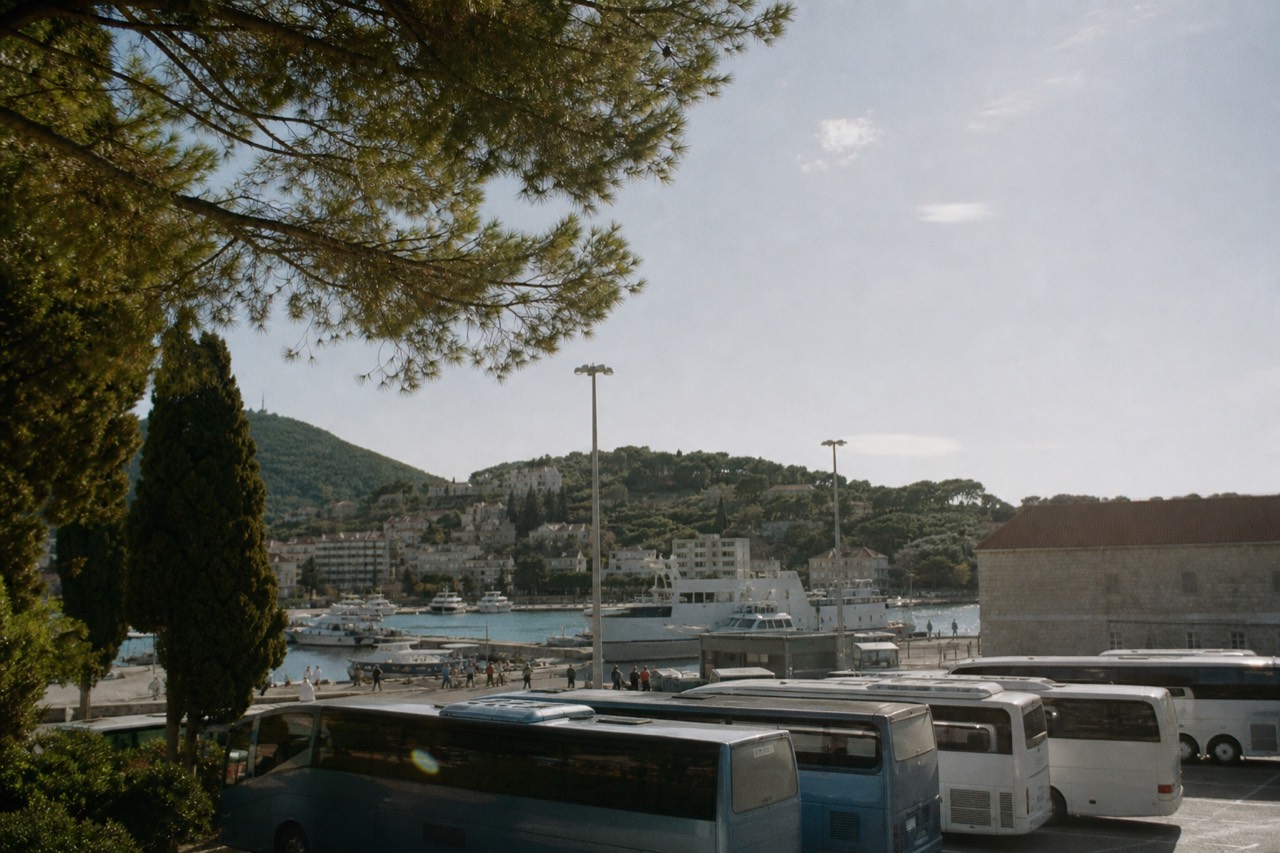
That does not make Dubrovnik hard to reach. It makes it a destination you plan differently. The city recorded about 4.2 million overnight stays in 2025, sharing first place among Croatian destinations with Rovinj, and every single one of those visitors arrived without a train ticket. The practical difference is that instead of hopping off a rail carriage in the centre, you arrive at the bus station in Gruž, the ferry terminal next door, or the airport up the hill at Čilipi, and each of those has its own rhythm.
The question also matters for how you structure a wider Croatia trip. Plenty of travellers combine Split and Dubrovnik, and the Split to Dubrovnik leg is where the missing railway bites hardest, because what would be a simple train ride elsewhere becomes a choice between a long bus ride, a catamaran or a private transfer. We cover that decision in detail in Split to Dubrovnik transport compared, and the short version is that the bus is the workhorse, the ferry is the pleasure, and the transfer is the splurge.
Once you are inside the city, the absence of trains stops mattering almost immediately. The Old Town is pedestrian, compact and walled, and the local buses do the connecting. What the city lacks in rail it repays in walks, boat decks and cable car cabins, and the rest of this article covers the three questions that almost always follow the train question: how you actually get here, what the nightlife is like, and whether the local wine is worth the trip.
Is There a Train From Dubrovnik?
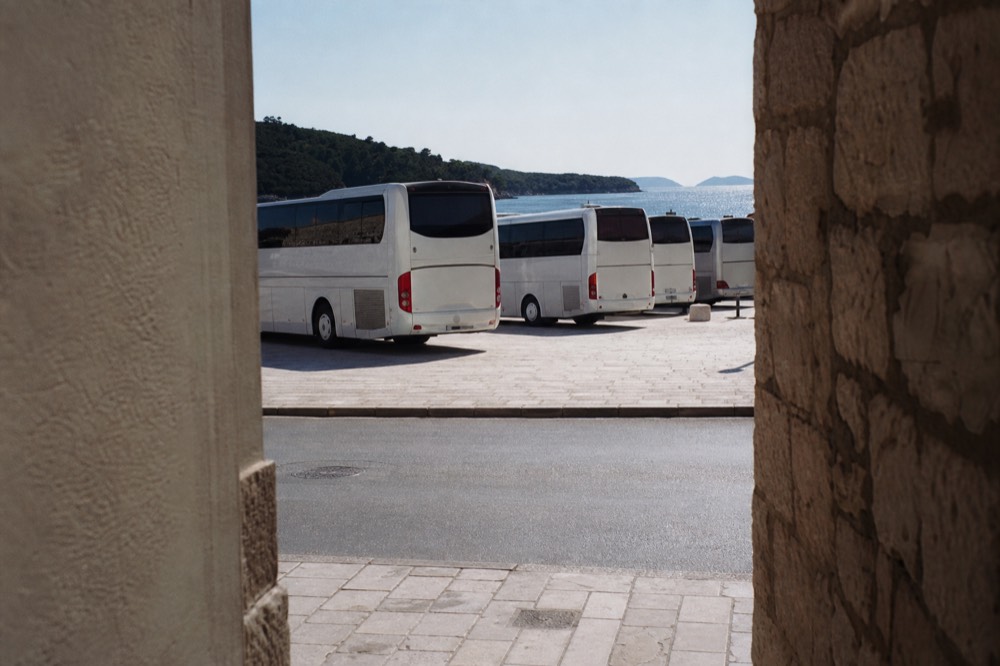
No, there is no train from Dubrovnik to anywhere, because there is no station and no track to depart from. The nearest useful rail thinking you can do is to treat Split as your railhead if you are arriving from Zagreb or northern Europe, then cover the final leg to Dubrovnik by bus, catamaran or private transfer. Within the far south, buses and boats are the entire system.
The pattern that catches people out is this: you can ride a train comfortably down the Croatian interior and arrive in Split feeling like the whole country is on rails, and then the map simply ends. From Split southward the coastal road does the work. Buses run the corridor frequently through the day, and in high summer the schedule thickens to match demand, so the practical answer to "how do I replace the train" is almost always "buy a bus ticket". Our guide to buses in and around Dubrovnik covers the routes, the local network and the ticketing quirks in one place.
The ferry is the alternative that feels least like a consolation prize. Catamarans and car ferries work the Adriatic coast and the islands, and arriving by sea gives you the first view of the walls from the water, which no train window could ever match. If islands are part of your plan, the ferry network becomes less a substitute for rail and more the point of the trip; the Elaphiti Islands sit close offshore and are an easy day out from the Gruž side of town.
Here is the honest arrival picture in one table, with the caveats that matter:
| Way in | Where it lands you | What to expect |
|---|---|---|
| Long-distance bus | Gruž bus station | The workhorse from Split, Zagreb and beyond; frequent in season, book ahead in July and August |
| Catamaran or ferry | Gruž ferry terminal, next to the bus station | Coastal and island routes; the scenic option, with sea views of the walls on approach |
| Plane | Dubrovnik Airport at Čilipi | Season-heavy schedule; airport buses and transfers cover the run into town |
| Car | Wherever you park | Flexible for Pelješac, Ston and the bay of Kotor, but Old Town parking is scarce and priced accordingly |
| Cruise ship | Gruž cruise port | 625,257 passengers in 2025; day visitors, with shuttle and taxi links to the gates |
One planning note worth its own paragraph: the bus station and the ferry terminal sit side by side in Gruž, roughly a 29-minute walk from the budget end of Lapad and a short local bus hop from Pile Gate. That pairing makes multi-leg journeys painless in a way a single distant station would not. You can step off a catamaran from an island, walk sixty seconds, and board an intercity bus north, all in the same complex. For a city without a railway, Dubrovnik has stitched its transport together surprisingly well.
The Port of Dubrovnik publishes its own traffic statistics, and they are worth a look if you are timing an arrival around cruise days: the Port Authority's statistics page carries the monthly passenger counts, including that counter-intuitive September and October cruise peak.
Since you will be exploring on foot rather than riding rails, a guided orientation pays for itself on day one, and the cable car combination does that job with the best view in the city attached.
Does Dubrovnik Have a Good Nightlife?
Yes, Dubrovnik has genuinely good nightlife for a city of its size, built around old-town bars, a famous nightclub inside a fortress, rooftop terraces and sunset cruises rather than a strip of mega-clubs. The season shapes everything: in July and August the nights are loud and late, while from October to April the scene contracts to a loyal local core around the Stradun and side streets.
Start with the setting, because in Dubrovnik the setting is half the product. The Old Town's limestone lanes, lit at night and closed to cars, turn into a natural bar district, and the 298-metre length of the Stradun acts as the spine of it all. The nightlife here is not about volume of venues; it is about drinking a glass of something cold while the walls glow above you. That trade-off suits most visitors perfectly. Other pages covering the same trip are gathered on Things to Do in Dubrovnik.
The headline act is Culture Club Revelin, a nightclub built inside the Revelin Fortress above the Pile gate, where the dance floor sits under a stone vault that has watched over the city for centuries. International DJs play through the summer season, and the venue alone answers the "is there real nightlife" question with a yes. Our piece on Revelin and the fortress club scene goes into door policy, timing and what a night there actually costs.
Beyond the fortress, the evening menu splits into a few clear categories, and this is where a table earns its keep:
| Evening option | Typical shape | Bookable version |
|---|---|---|
| Old Town bar crawl | Bars and konobas in the lanes off the Stradun, from aperitivo hour to late | Food and drink walking tour, from $165.64 per person, rated 5 across 704 reviews |
| Sunset from the water | A short cruise out of the Old City Port at golden hour | Karaka ship sunset cruise, adults only, from $59 per person, rated 4.8 across 833 reviews |
| Short evening sail with drinks | Down the coast toward Cavtat with a cold platter | Cavtat sunset cruise, from $23.66 per person, rated 4.9 across 203 reviews |
| Fortress nightclub | Late-night dancing inside Revelin Fortress, peak season | Tickets on the door; see the club's own listing for the night's lineup |
The sunset cruise deserves a special word, because it is the one nightlife format that could not exist in a rail city. You board in the Old City Port, drift out past the walls as the light goes amber, and watch Mount Srd and the rooftops do their evening show from the deck. The Karaka, a replica of a historic Dubrovnik argosy, runs a panoramic adults-only version from $59 per person, rated 4.8 across 833 reviews, and the shorter Cavtat run with a cold platter and drinks starts from $23.66. Our sunset spots roundup covers the land-based alternatives if boats are not your thing.
Seasonality is the honest caveat. Dubrovnik's year is a steep curve: about 4.2 million overnight stays in 2025, heavily weighted to the summer half of the year, and the nightlife follows the visitors. In August the terraces are full past midnight and the fortress club runs at full tilt. Come February and you will find a handful of hardy bars, empty stone lanes that feel like a private museum, and a silence that many travellers prefer. Neither version is wrong; they are simply different cities, and knowing which one you are booking is the difference between a great trip and a disappointed one.
Does Dubrovnik Have Good Wine?
Yes, Dubrovnik has excellent wine, anchored by Plavac Mali, the powerful red grown on the steep Pelješac peninsula just up the coast, and by fresh local whites poured in konobas throughout the region. The city itself is a drinking town more than a growing one, but within an hour you are in some of the most dramatic vineyard terrain on the Adriatic.
The grape to know is Plavac Mali, a close relative of Zinfandel, grown on slopes so steep that every row is worked by hand. The best sites, including the famous Dingać belt on Pelješac's southern shore, produce dense, sun-soaked reds with a mineral spine that surprises people expecting simple beach wine. Our Plavac Mali primer explains the grape, and the Dingać deep dive covers the benchmark appellation, if you want the full story before you order.
Closer to town, the Konavle valley, the green farmland behind the airport, supplies the local tasting rooms, and the Pelješac town of Ston adds oysters to the equation. The oyster and mussel farms of Ston sit beside some of the oldest salt pans on the Adriatic, and an oyster opened in front of you at the source tastes nothing like one that has travelled. Between the wine and the shellfish, the day trip up the coast is one of the best food-and-drink outings in Croatia, and our Ston oyster guide maps it out.
If you would rather someone else drive, the guided options are strong:
| Wine experience | Shape | Starting price | Rating |
|---|---|---|---|
| Ston oyster, mussel and wine tour | Oysters and mussels at the source, with lunch | From $157 per person | 4.9 across 111 reviews |
| Food and drink walking tour | Three hours of Old Town food and wine stops with a local guide | From $165.64 per person | 5 across 704 reviews |
The Konavle trip is the one I would point a first-time visitor toward, because it solves two problems at once: it gets you out of the crowded core for an afternoon, and it puts the region's wine in front of you with someone explaining what you are drinking.
Back in the city, the konoba tradition does the everyday pouring. A konoba is the Dalmatian answer to a tavern, simple rooms, grilled fish, local wine by the carafe, and the best of them pour house Plavac that would cost triple in a capital city. Our konoba guide names the ones worth booking, and the restaurant guide covers the tables to reserve when wine is the point of the evening. Do book in season; with the summer crowds, the good rooms fill a day or two ahead.
What to Do Instead of Riding a Train In?
The best substitutes for a train arrival are the experiences that use Dubrovnik's geography instead of fighting it: the cable car up Mount Srd, the walk around the city walls, a kayak out to Lokrum, and a boat to the Elaphiti Islands. Each one replaces the view from a train window with a better view, and the cable car and walls can be combined into a single guided half day.
The cable car is the flagship. Built in 1969, it lifts you from a terminal at 38.0 metres above sea level to the Mount Srd station at 405.0 metres, a 367.0-metre rise along a 778.2-metre track, in 3 minutes 30 seconds at 6.5 metres per second. Two cabins, each carrying 32 plus 1, shuttle up and down, and on a clear day the operator claims a view range of up to 60 km, about 37 miles, which takes in the Elaphiti chain, the coast of Herzegovina and, on the best days, the mountains of Montenegro. The 2026 adult round trip is 30 euro, with children 4 to 12 at 8 euro round trip and under 4s free; the operator's own timetable and price page carries the full seasonal hours, which stretch to midnight in high summer.
The guided combination wraps the ride together with the Old Town itself. The Cable Car Ride and Old Town Walking Tour runs about 4 hours 30 minutes, from $163.50 per person, rated 4.6 across 716 reviews, with the cable car ticket included and a guide walking you through the city afterwards. Reviewers consistently single out the guides; one recent review on the live listing sums up the shape of the day:
Great tour with a great guide. Terrific views from the cable car. The old town is fascinating. We walked part of the wall because it was very hot. Sara was a fabulous guide and gave us recommendations for lunch and what else we should see.
Fred_W
If you want the walls themselves rather than a panorama of them, the numbers are simple. The circuit is 1,940 metres long, up to 25 metres high, and the adult ticket is 40 euro in main season, 1 March to 30 November, which is actually a combination ticket covering Fort Lovrijenac, the Western Outer Wall and the coin collection, and it drops to 20 euro in December. The one-day Dubrovnik Pass costs the same 40 euro in main season and adds ten more sights plus a 24-hour bus ticket, which is one of the better sightseeing deals on the coast; the Dubrovnik Pass guide runs the full math.
And if your heart was set on a scenic arrival rather than a scenic afternoon, the day trips do that job better than any railway could. The Mostar and Kravica waterfall excursion, from $35 per person and rated 4.6 across 10,019 reviews, crosses into Bosnia and Herzegovina for the old bridge and a swim beneath a waterfall, and the Mostar day trip guide covers border timing and what to bring. Between the cable car, the walls, the boats and the border crossings, the missing railway stops feeling like a gap at all. Dubrovnik's transport is the sea and the stairs, and the city has been getting by on both for a very long time.
Common Questions About Trains and Getting to Dubrovnik
Does Dubrovnik Have a Train Station?
No. There is no station, no track and no rail line anywhere near the city. You arrive by bus, ferry, plane or car, with the bus station and ferry terminal sitting side by side in Gruž.
Is There a Train From Dubrovnik?
No. The Croatian rail network does not reach the far south of Dalmatia. If you are travelling by train from Zagreb or northern Europe, Split is the practical railhead, and you cover the final leg to Dubrovnik by bus, catamaran or private transfer.
does dubrovnik have good nightlife?
Yes, especially in season. The scene centres on Old Town bars, the Culture Club Revelin nightclub inside Revelin Fortress, rooftop terraces and sunset cruises from the Old City Port. In winter it contracts to a small local core around the Stradun.
What Wine Is Dubrovnik Known For?
Plavac Mali, a dense red grown on the steep slopes of the Pelješac peninsula, including the benchmark Dingać appellation. Local whites and the oysters of Ston round out the regional list, and the Konavle valley behind the airport hosts the closest tasting rooms.
How Do Most Visitors Arrive Without a Train?
By plane into Dubrovnik Airport at Čilipi, by long-distance bus into Gruž, or by ferry and catamaran along the coast. Cruise passengers, 625,257 of them in 2025, arrive through the Gruž cruise port for day visits.